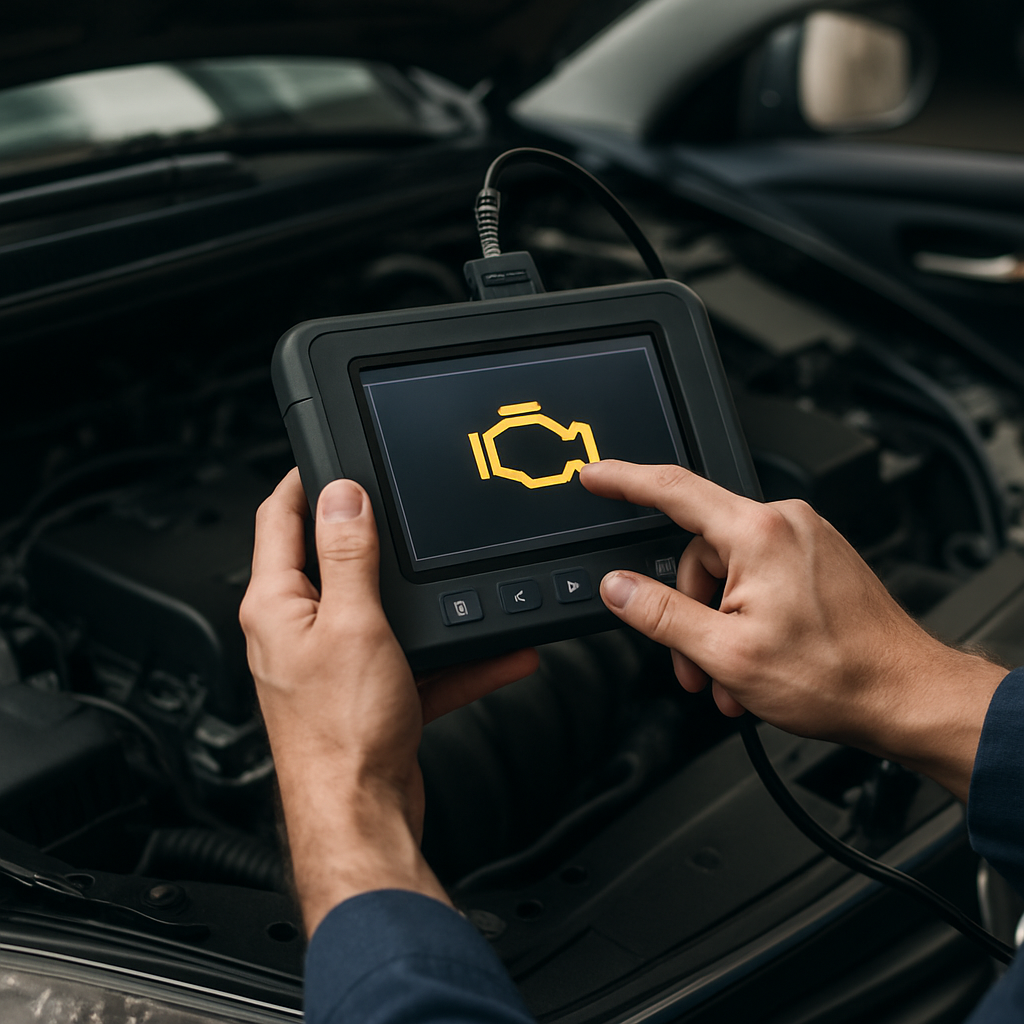
An automotive diagnostic trouble code (DTC) is a stored record indicating that a vehicle control module detected a condition outside its expected operating range. It is a starting point for diagnosis, not a confirmed repair instruction. A scan tool can retrieve the code and related data, but the underlying fault may involve a sensor, wiring, connector, mechanical problem, software issue, or another system influencing the reading.
That distinction matters when a warning light appears. Clearing a code may turn the light off temporarily, but it does not correct the condition that caused the module to store it. The sensible next step is to record the code, assess how the vehicle is behaving, and diagnose the fault before replacing parts.
What Is a Diagnostic Trouble Code?
Modern vehicles use electronic control modules to monitor engine, emissions, transmission, braking, body, and, increasingly, hybrid and EV systems. When a module identifies a signal or operating condition that does not meet its programmed expectations, it can store a diagnostic trouble code.
Many drivers encounter DTCs after the check-engine light illuminates, but a fault code is not limited to the engine. Depending on the vehicle and scan tool, technicians may be able to read codes from systems such as the powertrain, anti-lock brakes, airbag system, transmission, climate control, and body electronics.
OBD-II diagnostic tools are an important part of modern vehicle servicing because they provide access to trouble codes and other vehicle data. As an overview of OBD-II diagnostic tools notes, diagnostic equipment now ranges from Bluetooth readers to more comprehensive automotive diagnostic systems.
A Trouble Code Is a Clue, Not a Diagnosis
A DTC identifies the system or condition that prompted the module to flag a problem. It does not necessarily identify the failed part. For example, a code associated with an incorrect sensor signal may result from the sensor itself, damaged wiring, a poor electrical connection, an air or fluid leak, a mechanical fault, or a control-module issue.
That is why replacing the component named in a code without testing can be expensive and ineffective. A proper diagnosis normally considers the code’s status, accompanying codes, warning lights, symptoms, and live data where the available equipment supports it. A technician may then inspect the relevant circuit or system and confirm the root cause before recommending a repair.
This approach is especially useful with misfire-related faults. A random or multiple-cylinder misfire code can have several possible causes, so readers dealing with that specific issue can consult Premier Motoring’s guide to P0300 random or multiple-cylinder misfire diagnosis.
What to Do When You Read a Code
Start by writing down the complete code exactly as displayed, along with any plain-language description supplied by the scan tool. Also note whether the vehicle has a warning light, reduced performance, rough running, poor acceleration, starting trouble, unusual noises, or other symptoms. These details can make diagnosis more efficient.
- Record every stored code. Multiple codes may be related, and focusing on the first one shown can lead to the wrong conclusion.
- Check for obvious context. Consider recent repairs, a weak battery, water ingress, damaged wiring, loose connectors, or a change in how the vehicle drives.
- Do not clear codes before recording them. Erasing them may remove useful diagnostic information and make an intermittent problem harder to trace.
- Use the code to guide testing. Consult vehicle-specific repair information or seek professional diagnosis when the cause is unclear.
- Confirm the repair. After the actual fault is addressed, the vehicle may need a further scan or normal operating time to confirm that the condition has not returned.
A code reader can be useful for initial information, but capability varies widely. Some basic readers are focused on common powertrain faults, while professional equipment may offer broader module access, live readings, system tests, and guided diagnostic functions.
When a Fault Code Needs Prompt Attention
How urgently a DTC should be assessed depends on the warning displayed and the vehicle’s behaviour. A vehicle that runs normally may still need diagnosis, particularly if a warning light returns. More immediate attention is sensible when there is a marked loss of power, misfiring, stalling, severe hesitation, multiple warning messages, or a change in braking or steering behaviour.
Do not assume that every warning message is caused by a single failed sensor. Recent reporting on allegations involving certain 2025 Ram 1500 trucks illustrates how control-module, powertrain, and related-system concerns can be associated with warning lights, stored trouble codes, reduced-power operation, and other reported symptoms. Those are allegations in a proposed lawsuit, not a diagnosis for every truck; the report on the Ram 1500 claims provides the stated context.
Why Vehicle-Specific Diagnosis Matters
The same general type of code can lead to different diagnostic paths across manufacturers, engines, and model years. Vehicle-specific information matters because component layouts, software logic, known service procedures, and system design differ. For instance, a turbocharger-related code requires a different line of investigation from a misfire code, even if both can produce poor acceleration or a check-engine light.
For a model-specific example, Premier Motoring’s explanation of the Chevy Cruze turbo underboost code shows why symptoms and supporting checks matter alongside the code itself. The code narrows the investigation; it does not eliminate the need to establish why the expected operating condition was not met.
Can Newer Diagnostic Technology Find Problems Before a DTC Appears?
Potentially, although that capability depends on the vehicle, the available data, and the diagnostic platform. Traditional diagnostics often begin after a module has stored a fault code. Some fleet-focused systems are designed to analyse live vehicle signals and flag developing concerns before a warning light or DTC appears.
For example, Intangles says its fleet platform monitors more than 450 real-time engine signals and aims to identify developing issues before a conventional trouble code is triggered. Similarly, THINKCAR describes its T394 AI system as using live readings and system mapping to provide a suggested repair path. These are company claims about their respective products, rather than a substitute for confirming the cause of a fault.
Access to Diagnostic Information Remains Important
Modern repairs increasingly depend on access to vehicle data, diagnostic functions, and manufacturer repair information. The proposed Right to Equitable and Professional Auto Industry Repair Act, discussed in reporting on the REPAIR Act, is intended to improve access to vehicle data and repair tools for consumers and independent repairers. Whether a driver visits a dealer, independent workshop, or carries out suitable work at home, useful diagnostic information is central to identifying the actual fault rather than guessing at a replacement part.
The practical rule is simple: treat an automotive diagnostic trouble code as evidence, not a verdict. Record it accurately, consider the symptoms, investigate the relevant system, and confirm the cause before authorising or attempting a repair.