THE PREMIER MOTORING LIBRARY

Motoring guides

Warning lights, maintenance and everyday ownership. Find a useful starting point for your next conversation with a workshop.

Fuel Rail Pressure Too Low: P0087 Meaning, Causes and What to Do

Fuel rail pressure too low means the pressure measured or reported in the fuel rail is below the value expected for that vehicle and operating condition. It describes a condition, not a confirmed failed part: the cause could be a fuel-supply or pressure-regulation problem, or an inaccurate pressure-sensor signal. The code commonly associated with this… Read More: Fuel Rail Pressure Too Low: P0087 Meaning, Causes and What… »

What Is the Most Common Check Engine Light Cause—and What Should You Do?

A loose, missing or faulty fuel cap is a common and easy-to-check reason for a check engine light. A cap or related fuel-system seal that does not close properly may be associated with fuel-vapour-system faults. However, the available evidence does not establish that a fuel cap is the single most common cause across every make,… Read More: What Is the Most Common Check Engine Light Cause—and What… »

Toyota P0171 Code: Meaning, Causes, Fixes and Whether You Can Drive

P0171 means the engine management system has detected a system-too-lean condition on Bank 1. It describes a condition the system has detected; it does not identify a failed part or prove that a particular sensor needs replacement. The appropriate diagnosis and repair depend on the Toyota’s model, year and engine. What does P0171 mean on… Read More: Toyota P0171 Code: Meaning, Causes, Fixes and Whether You Can… »

2010 Honda Civic P0456: EVAP Leak Locations and What to Check

P0456 means the vehicle’s diagnostic system has detected a very small leak in the evaporative emissions (EVAP) system. It does not identify the failed part or pinpoint the leak on a 2010 Honda Civic. Possible areas to inspect include the fuel cap, filler neck, vapor hoses or lines, purge valve, vent valve, and canister, but… Read More: 2010 Honda Civic P0456: EVAP Leak Locations and What to… »

P0299 Turbo Underboost Code: Meaning, Causes, and What to Do

P0299 means the engine control system has detected that the turbocharger or supercharger is producing less boost than the level specified for that vehicle. It identifies an underboost condition, not a confirmed failed turbocharger or supercharger. Several issues can cause the same code, so the part at fault needs to be diagnosed before anything is… Read More: P0299 Turbo Underboost Code: Meaning, Causes, and What to Do »

2014 Chevy Silverado P0172 and P0175 Codes: Meaning, Causes and What to Check

On a 2014 Chevrolet Silverado 1500, P0172 means the engine control system has detected a fuel-trim condition that is too rich on bank 1; P0175 reports the corresponding condition on bank 2. These codes describe what the system has detected, not which component has failed. When both appear, a shared cause is worth investigating, but… Read More: 2014 Chevy Silverado P0172 and P0175 Codes: Meaning, Causes and… »

Why Your Car Makes Noise Over Speed Bumps: Common Causes and When to Get It Checked

An unfamiliar noise as your car goes over a speed bump can be associated with movement, looseness, wear, or contact in the suspension or steering system. A clunk, squeak, or creak can help describe the symptom, but sound alone cannot confirm which part—if any—has failed. The conditions in which it occurs are useful clues for… Read More: Why Your Car Makes Noise Over Speed Bumps: Common Causes… »

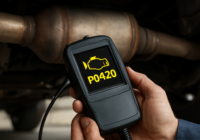
Catalyst System Efficiency Below Threshold: What P0420 Means

P0420 reports catalyst-system efficiency below the vehicle’s threshold. It is a diagnostic result, not a shopping list. The code alone does not establish that a catalytic converter or oxygen sensor must be replaced, and it cannot tell you whether your particular vehicle is safe to drive. What the warning tells you A vehicle’s on-board diagnostics… Read More: Catalyst System Efficiency Below Threshold: What P0420 Means »