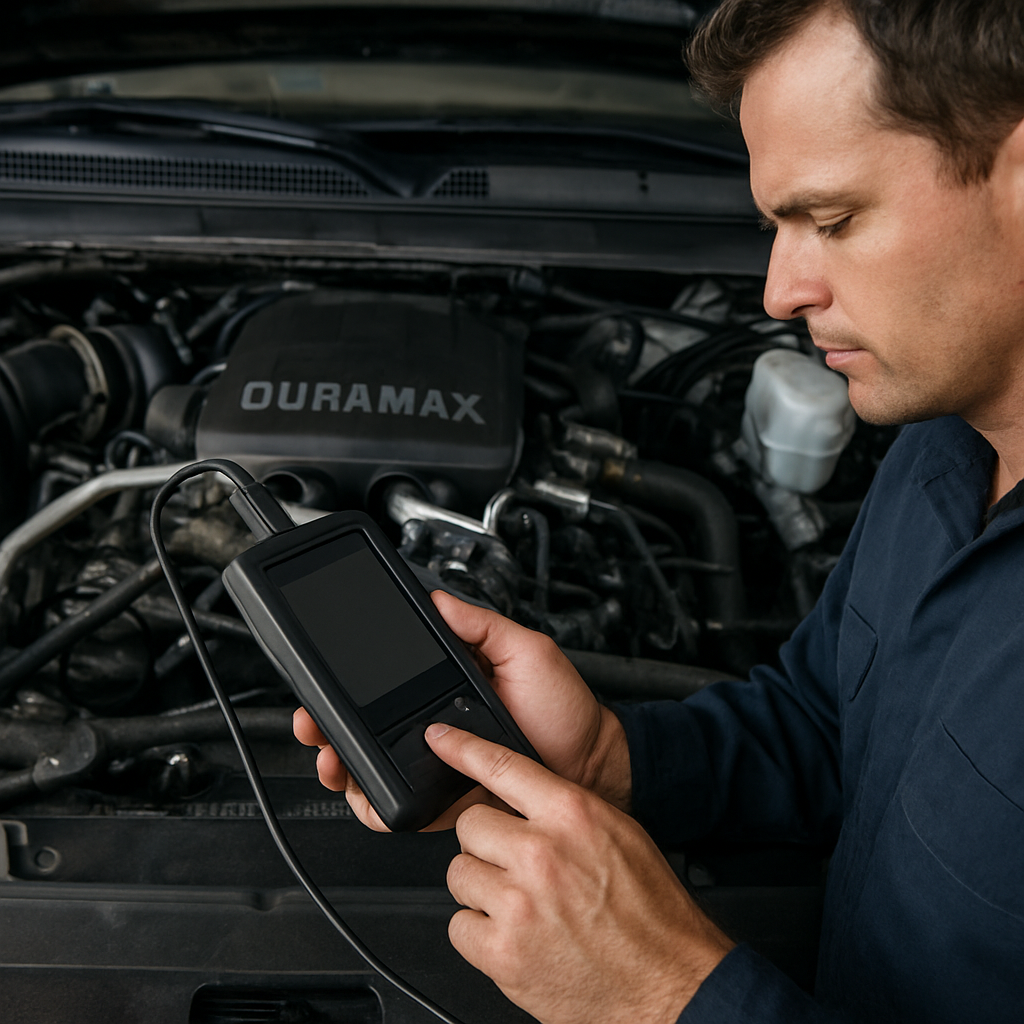
Low fuel-rail pressure on a Duramax is a detected operating condition, not proof of a failed regulator or injection pump. Identify the engine generation, preserve the full scan report and use its matching GM diagnostic information before authorising parts.
What does P0087 tell you?
GM’s 2009 LMM diagnostic summary describes P0087 monitoring as a comparison between measured and desired rail pressure. A pressure reading has to be interpreted under the specified operating conditions; an isolated number from another engine is not a universal pass/fail target.
Record related codes separately. A regulator-control circuit code and a rail-pressure sensor code do not describe the same condition as P0087.
Why the engine generation matters
GM bulletin 16-NA-102, in its May 2021 version, covers listed 2010–2016 Chevrolet and GMC vehicles with LML or LGH engines and hard-start/no-start concerns or specified pressure codes. It directs technicians to complete current service-information diagnosis before following its pump and contamination inspection path.
The bulletin distinguishes different debris findings; a small amount of road dirt introduced during disassembly does not justify its extensive fuel-system repair. This is not an LB7 instruction or an all-years Duramax repair recipe.
What should an owner ask the workshop?
- Which engine and diagnostic procedure apply to the VIN?
- What are the stored codes and conditions when the fault occurs?
- What test supports the proposed component replacement?
- If contamination is reported, what was found and how does it change the repair scope?
- How will the repair be checked and documented?
Can you investigate it at home?
You can collect service records and describe symptoms without opening the fuel system. Leave high-pressure connections and component tests to a properly equipped diesel technician. Do not loosen a rail fitting to look for fuel or diagnose a leak by touch.
If the truck loses propulsion, stalls or leaks fuel, stop safely and arrange assistance. Do not tow or deliberately load the truck to reproduce a fault on public roads.
Editorial correction — 3 November 2026: Replaced LB7 regulator assumptions with GM diagnostic context and clearly limited LML/LGH bulletin applicability. No universal pressure target or guaranteed component diagnosis is given.