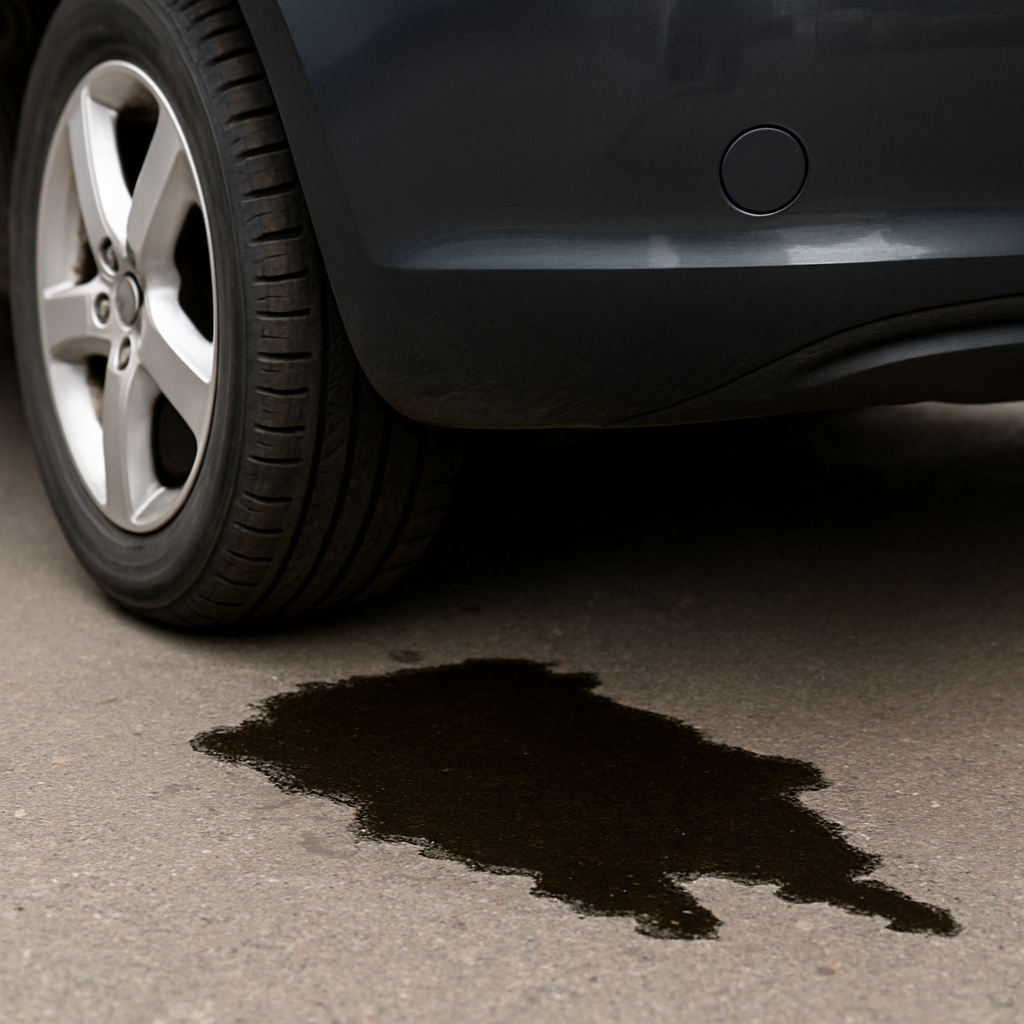
A fuel smell, wet patch or puddle beneath your car, an unexplained drop in the fuel gauge, or a hissing or whistling sound near the tank can indicate a possible fuel leak. However, none of these signs proves that the fuel tank itself is leaking: the source could be elsewhere in the fuel system. If you reasonably suspect an active fuel leak, do not continue driving; arrange professional assistance or recovery.
What are the signs of a leaking fuel tank?
Common warning signs include a fuel odour around or inside the vehicle, moisture or a puddle beneath it, and a fuel gauge that falls unexpectedly. A hissing or whistling sound near the tank area has also been reported as a possible clue. These signs need attention, but they do not diagnose a failed fuel tank.
- Fuel smell: A petrol smell around the car or inside the cabin is a warning sign. It does not identify the source or prove that fuel is escaping from the tank itself.
- Wetness or a mark beneath the car: A wet area or puddle may be consistent with a leak, but its appearance and position alone cannot confirm that the liquid is fuel or identify the failed component. A mark near the tank is a reason to have that area checked, not proof that the tank is leaking.
- An unexpected fuel-gauge drop: A sudden or unexplained change is a reason to investigate, particularly when it occurs alongside an odour or visible wetness. A gauge reading alone does not confirm a leak, and a fluctuating reading is not a diagnosis.
- Hissing or whistling near the tank: This has been reported as a possible sign of a problem, but a sound alone cannot establish that there is a leak or locate its source.
Repair-shop guidance identifies fuel odour, moisture beneath the vehicle and an unexplained fuel-gauge drop as potential warning signs. Another source notes that hissing or whistling near the tank area may also suggest a fault. These symptoms can justify an inspection, but they do not establish which component has failed.
A fuel smell inside the cabin should be treated as a warning, not as proof that the tank is leaking from the inside. The smell does not identify the leak location. Equally, the absence of a visible puddle does not rule a leak in or out.
How to check where a suspected fuel leak is coming from
Keep any owner-level check to observation from a safe position. If you notice a mark beneath a parked vehicle, note where it appears in relation to the car without touching the liquid or deliberately leaning close to smell it. A mark beneath the rear or bottom of the car may help a technician decide where to inspect, but it does not prove that the fuel tank is the source.
Do not crawl underneath the car, especially if it is supported only by a jack. Do not dismantle fuel-system components or attempt invasive testing or repairs based on a visual guess. A qualified repairer can inspect the fuel tank and fuel lines and determine whether the suspected source is the tank or another part of the fuel system.
An EVAP-system fault is also different from confirmation that liquid fuel is leaking. EVAP faults involve fuel-vapour control and may trigger a warning light, but they do not by themselves prove a leaking fuel tank. Read more about how an EVAP leak differs from a visible fuel leak, or see this guide to EVAP leak locations and checks.
If there is active wetness, a persistent fuel smell, or another reasonable reason to suspect a leak, arrange a professional inspection rather than trying to confirm it yourself.
Can you drive with a suspected fuel-tank leak?
No. Do not continue driving if fuel is actively leaking or you reasonably suspect a fuel leak. If you are already driving, stop in a safe place and arrange professional assistance or recovery rather than treating the vehicle as safe to drive.
A fuel smell or apparent leak should not be dismissed as minor. The absence of a puddle, warning light or other visible symptom is not evidence that the car is safe to continue driving. The available information identifies possible symptoms, but does not establish that any suspected fuel leak is safe to drive with.
A loose fuel cap and a suspected liquid-fuel leak are not interchangeable diagnoses. A loose cap can be associated with an EVAP fault or a check-engine light, but it does not explain active wetness or confirm the cause of a fuel smell. For that separate issue, see what a loose gas cap can mean for the check-engine light.
Can a leaking fuel tank be repaired?
Possibly, but the right repair cannot be chosen from symptoms alone. A technician must first identify the leak source and assess the tank and related fuel-system components. Depending on the diagnosis, the problem may involve the tank, a fuel line or another part of the system.
The available research does not establish which tank materials or types of damage can be repaired, or whether a particular fault requires a repair or component replacement. Do not attempt to patch, seal, weld or otherwise repair a suspected fuel-tank leak yourself. Ask a qualified repairer to diagnose the fault and explain the recommended work. A tank replacement should not be assumed before the source has been confirmed.
How much does it cost to fix a fuel leak?
A reliable price cannot be given without a diagnosis. The supplied information does not provide repair prices, labour times or cost comparisons. The final estimate depends on what an inspection finds, including whether the source is the fuel tank or another component such as a fuel line.
Ask the repairer for a diagnosis and an itemised estimate before authorising work. The estimate should identify the confirmed source of the leak and state whether the proposed work is a repair or replacement. Without that diagnosis, a price for a “fuel-tank leak” may be based on an assumption rather than the actual fault.
Sources
- Kell Radiator Service: Common Signs Your Gas Tank Is Leaking
- East Hills Jeep: What Is Your Car Leaking?
- Pro Automotive: What to Do If Your Car Is Leaking Gas When Parked