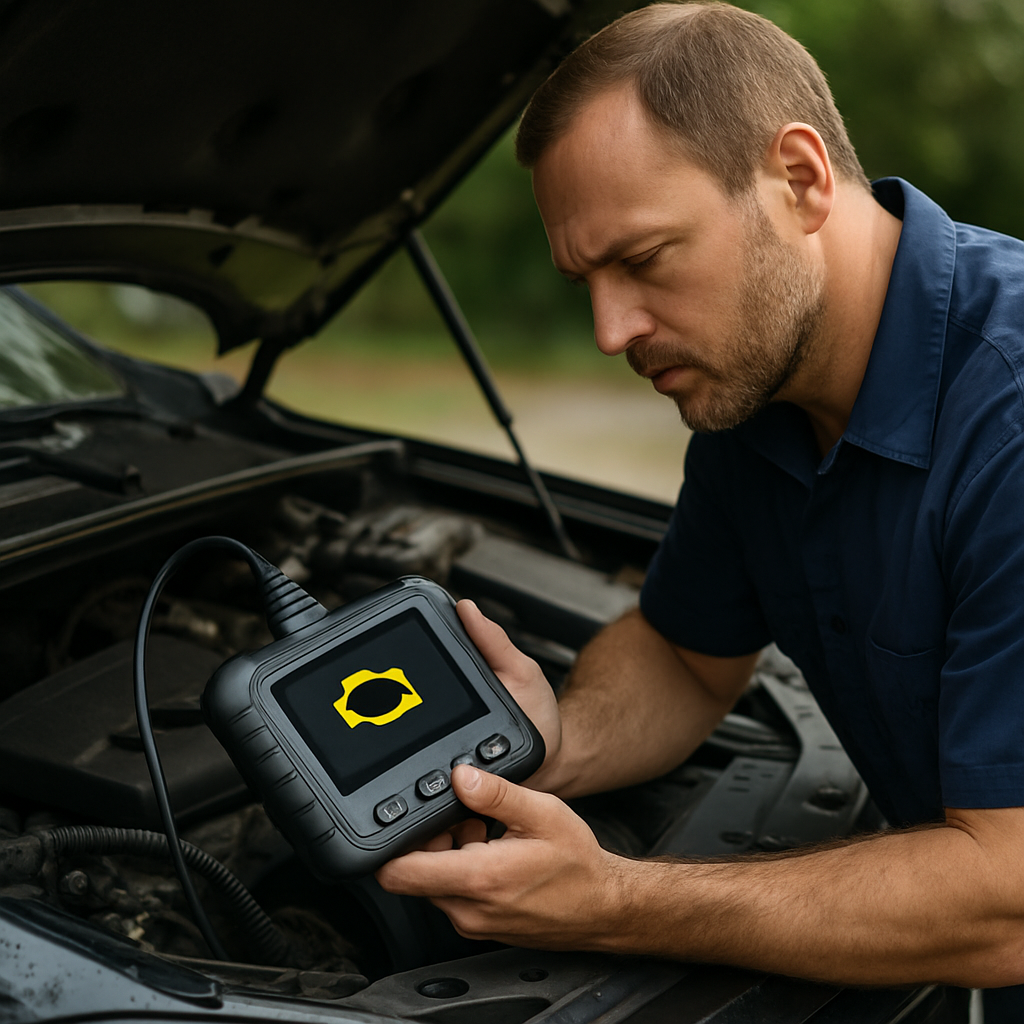
P0011 is the generic OBD-II code for “A” camshaft position timing over-advanced or system performance on Bank 1. It means the engine controller has detected that the monitored camshaft timing is more advanced than expected or that the variable valve timing (VVT) system is not performing as expected. The code identifies a detected condition—not a confirmed failed part—so it does not, by itself, mean the camshaft or a sensor needs replacing.
What Does P0011 Mean on Bank 1?
In the code description, “A” commonly refers to the intake camshaft. “Over-advanced” means its reported timing is ahead of the position the controller expects, while “system performance” describes a discrepancy between requested and detected operation. Exact component names and diagnostic procedures can vary by vehicle.
Bank 1 is the engine bank containing cylinder 1. The code does not tell you where that bank is physically located in a particular vehicle; consult vehicle-specific service information for that identification. A technician uses the code as a starting point for checking the timing-control system and its inputs, rather than as proof that one particular component has failed. The general code meaning is described by RepairPal’s P0011 reference and Auto Veteran’s explanation of P0011.
A search for “P0011 … Bank 1 nis” may be seeking Nissan information. The available evidence supports a generic explanation of P0011 only; it does not establish a Nissan-specific engine, component location, repair procedure, or model application. For those details, use the service information for the exact Nissan model, year, and engine, or ask a qualified technician.
What the Camshaft Does—and How It Relates to the Crankshaft
The camshaft is part of the engine’s valve-timing system. In an engine with VVT, the controller can adjust the camshaft’s angular position to change valve timing in response to operating conditions. The controller monitors the timing relationship between the camshaft and crankshaft and uses position signals to assess how the system is performing.
The camshaft and crankshaft are distinct components with separate position information in the diagnostic system. A P0011 code concerns the monitored camshaft timing or VVT performance; it does not prove that the camshaft itself is damaged. The VVT system uses an oil-control solenoid to direct engine oil to an actuator, which changes the camshaft’s angular position. The system’s layout and control strategy vary by vehicle. CarParts.com’s P0011 explanation describes this oil-control relationship.
Could a Camshaft Position Sensor Cause P0011?
The camshaft position sensor measures camshaft position and sends a signal to the powertrain control module (PCM). The crankshaft position sensor reports crankshaft position. A technician may check these signals when investigating P0011, but the code alone does not confirm that either sensor has failed.
A sensor or its wiring is one possible area to investigate. Other checks may involve the VVT oil-control solenoid, its wiring and connectors, oil condition, or the broader timing system. These are diagnostic possibilities, not conclusions that can be drawn from the code alone. For more on the sensor’s role and diagnosis, see our guide to camshaft position sensor symptoms and diagnosis.
Can You Drive With a P0011 Code?
The available evidence does not establish a universal rule that every vehicle with P0011 is safe—or unsafe—to drive. The code indicates a detected camshaft-timing or VVT concern, but it does not reveal the underlying fault or, by itself, determine how severely the vehicle is affected.
Do not assume the code is harmless or that continued driving is safe. Arrange diagnosis promptly, particularly if the vehicle is running abnormally or another warning is present. If the car exhibits a condition that makes it unsafe to control or operate, stop using it and seek qualified assistance. The code alone cannot establish a safe distance to drive or a timeline for when a fault might worsen.
Common P0011 Causes and How a Technician Diagnoses the Problem
P0011 is a diagnostic starting point, not a parts-replacement instruction. The controller sets it when the camshaft timing is detected as over-advanced or the system does not perform as expected. A sensible investigation checks basic oil conditions and then evaluates the relevant electrical, VVT, and timing components using the correct procedure for the vehicle.
- Check the engine oil level and condition. VVT operation depends on engine oil, so an incorrect oil level or oil in poor condition is an important first check. Follow the owner’s manual for the correct checking procedure and oil requirements. Our guide explains how to check your engine oil accurately.
- Inspect relevant wiring and connectors. A technician can look for problems in the circuits and connections serving the VVT system and position sensors. The correct inspection procedures and tests depend on the vehicle.
- Test the Bank 1 intake VVT or oil-control solenoid, where applicable. The controller operates this solenoid to supply oil to an actuator that adjusts camshaft position. A solenoid should be tested before it is replaced; P0011 alone does not establish that it is faulty. Learn more about how VVT solenoid problems are diagnosed.
- Evaluate camshaft and crankshaft position signals. The sensors and their circuits may need to be checked to establish whether the reported positions are reliable and consistent with the commanded timing.
- Continue with vehicle-specific VVT and timing diagnosis. If the basic checks do not explain the code, further diagnosis may be needed to assess the actuator and mechanical timing system. The appropriate tests depend on the vehicle’s design and service information.
Electrical testing, tests carried out with the engine running, and mechanical timing work should follow the correct vehicle-specific service procedure and be performed by someone with the necessary equipment and competence. Do not apply a test method or threshold from an unrelated vehicle as a universal rule.
How Is P0011 Fixed?
The fix depends on what testing confirms. If an oil issue is identified, correcting it may be part of the repair. If testing confirms a faulty VVT oil-control solenoid, that component may need repair or replacement. If the checks point elsewhere, the repair will need to address the confirmed fault rather than defaulting to a sensor, camshaft, actuator, timing component, or PCM replacement.
A broader camshaft-timing problem also needs vehicle-specific diagnosis; there is no universal repair recipe based on the code alone. If a technician confirms a timing-chain-related problem, repair requirements and costs will be specific to the vehicle. For context only, this timing-chain cost example for a 2017 Hyundai Elantra applies to that vehicle-specific subject, not to every car with P0011.
No reliable camshaft price or repair-cost estimate can be given from the available evidence: the vehicle and confirmed fault are not specified, and P0011 does not establish that the camshaft needs replacement. An estimate requires the exact vehicle and a diagnosis of the repair actually needed.
What Should You Do Next?
- Record P0011 and any other codes reported by the scan tool; do not treat one code as a complete diagnosis.
- Check the oil level and condition using the vehicle’s manual, and arrange prompt diagnosis if the code is present.
- Ask the technician to explain which checks confirmed the cause before authorising parts replacement.
- Use service information for the exact make, model, year, and engine, especially for component locations and test procedures.
- Do not continue driving if the vehicle is unsafe to control or operate; seek qualified assistance.