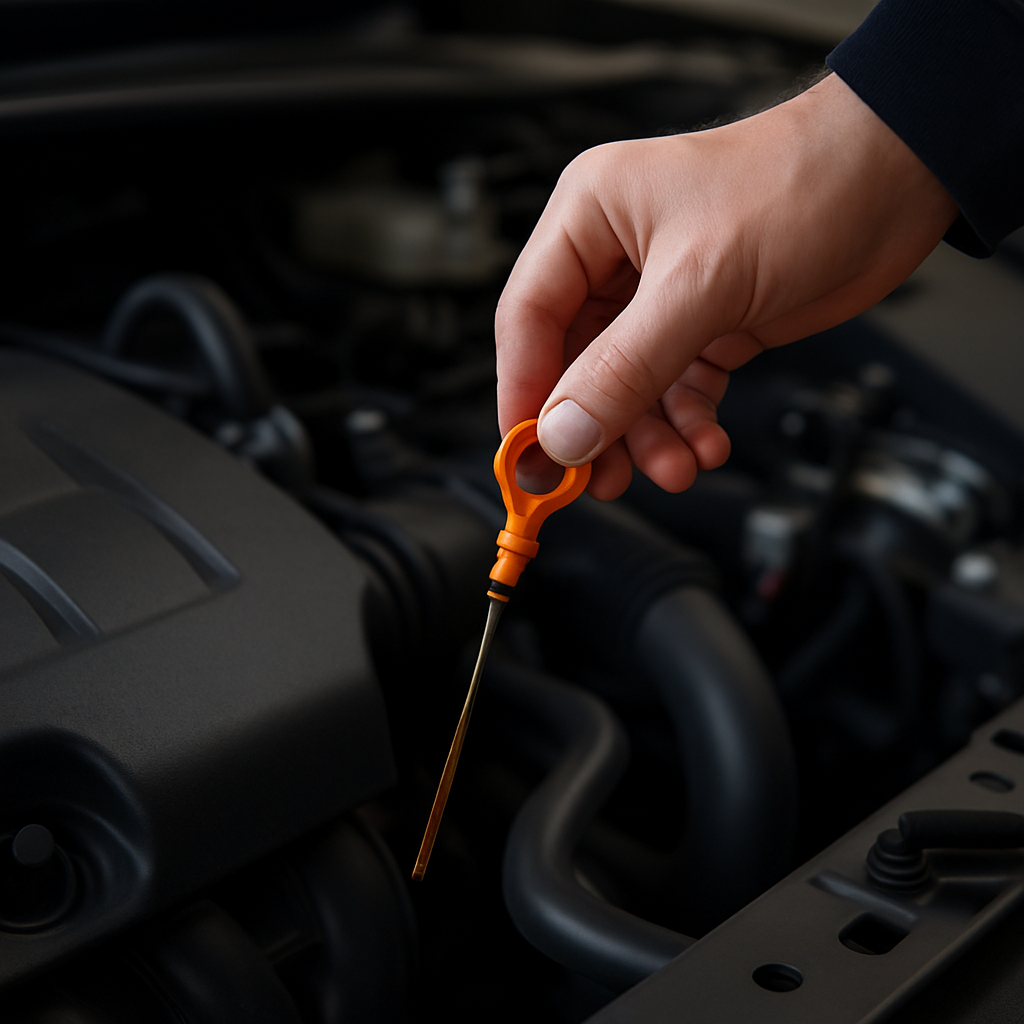
The short answer: there is no universal rule that engine oil must be checked hot or cold. Use the procedure in your vehicle’s owner’s manual. Consumer Reports notes that some vehicles specify checking after the engine has warmed up, while for most cars it is sensible to allow the engine time to cool before reaching into the engine bay. In every case, park on level ground first.
A cold-engine check can be entirely appropriate when your manual calls for it or when it does not require a warm-engine procedure. But “cold is always more accurate” is too broad: the correct timing, operating state and reading method are vehicle-specific.
Should You Check Engine Oil Hot or Cold?
Check it under the conditions specified by the vehicle manufacturer. That is the most reliable answer because oil-level procedures can differ between vehicles, including the required engine temperature, whether the engine should be running or switched off, and any timing instructions after driving.
For a routine check, these baseline conditions are well supported:
- Park on level ground. An uneven surface can affect the reading.
- Check the owner’s manual before choosing hot, warm or cold. Some vehicles have a warm-engine procedure; others do not.
- Give the engine bay time to cool where appropriate. This reduces the risk of burns when reaching around the engine compartment.
- Follow the manual’s stated engine-on or engine-off condition. Do not rely on a generic rule from a forum, video or another model’s handbook.
So, can you check your oil when the engine is cold? Yes—provided that matches your vehicle’s instructions. A cold check is not automatically wrong simply because another car may call for a warm check.
If you have just driven the car
Do not assume that every vehicle needs the same number of minutes before its oil can be checked. The available guidance supports allowing time for cooling for safety, but it does not establish one universal post-drive waiting period. Your manual is the authority for any vehicle-specific timing instruction.
This matters because a reading is only useful when it is taken under the conditions for which that vehicle’s level indication was designed. If the manual specifies a warm check, follow that process. If it specifies a cold check, use that instead. If you cannot find the procedure, consult the manufacturer’s manual or dealer support rather than guessing.
Why some vehicles specify a warm check
The important point is not that warm checking is inherently better; it is that some manufacturers instruct owners to do it that way. The reason to follow a warm procedure is therefore simple: it is the procedure specified for that vehicle. This article does not substitute a general engineering explanation for the instructions in the relevant manual.
Toyota, Ford and other make-specific questions
There is no single “Toyota rule” or “Ford rule” that safely covers every model year, engine, hybrid system and market. A procedure that applies to one vehicle may not apply to another. Check the owner’s manual for the exact Toyota or Ford you own, including its model year and powertrain.
The same applies to a Subaru Crosstrek. Without the official owner’s manual for the relevant Crosstrek model year and powertrain, it would not be responsible to give a Crosstrek-specific oil-check procedure here. Use the generic safety and level-ground guidance above, then follow Subaru’s instructions for that vehicle.
What about advice from Reddit or owner forums?
Community discussions can be useful for finding out that a particular model may have an unusual procedure, but they are not a substitute for the owner’s manual. Forum posts often compare different engines, years and markets without making those differences clear. Treat them as prompts to verify the official procedure, not as technical proof that your vehicle should be checked hot, cold, with the engine on or with it off.
A Safe, Accurate Basic Oil-Checking Sequence
- Find the owner’s manual procedure. Confirm the prescribed timing, engine temperature and engine-running condition.
- Park on level ground. This is a core condition for obtaining a meaningful reading.
- Allow cooling time where appropriate. Avoid reaching into a hot engine bay; hot engine components can cause burns.
- Identify the system your vehicle uses. It may have a conventional dipstick, an electronic oil-level monitor or another manufacturer-specific arrangement.
- Read the result according to the manual. Use the acceptable range and recheck process specified for your vehicle rather than applying generic dipstick advice.
- Use the specified oil and capacity information if oil is needed. Do not estimate the correct grade or quantity from a general article.
This is intentionally a bounded process. It avoids a common mistake: treating an oil-checking method from one vehicle as a universal service procedure.
How to Read the Oil Level and Avoid Overfilling
Before interpreting an oil level, establish whether your vehicle has a dipstick or an electronic monitoring system. Some newer cars use an electronic oil monitor rather than a traditional dipstick, as Consumer Reports explains in its guide to checking engine oil.
| System | What to do | What not to assume |
|---|---|---|
| Traditional dipstick | Use the owner’s manual for the specified checking conditions, acceptable range and interpretation. | That every dipstick uses the same mark names, target position or recheck method. |
| Electronic oil monitor | Use the vehicle’s specified display or procedure and follow the manual’s conditions for obtaining a reading. | That every vehicle has an oil-level display or that all diagnostic tools can access oil-level information. |
If your car has a dipstick
Where should engine oil be on the dipstick? The safe answer is: within the acceptable range described in the owner’s manual, using that manual’s procedure. Dipstick markings and instructions are not sufficiently standardized for a generic article to declare one mark or one exact position correct for every engine.
Do not add oil merely because a reading looks unfamiliar before confirming the correct vehicle-specific method. A reading taken on a slope, at the wrong temperature or under the wrong operating conditions may not be comparable with the manual’s specification.
If your car uses electronic oil monitoring
Electronic monitoring exists on some vehicles, but its availability is not universal. AutoZone’s Fix Finder information likewise states that certain reported statuses, including oil-level status, are not available for all vehicles. Use the information shown by your own vehicle and its manual; do not assume a scan tool or dashboard will provide a usable oil-level result on every car.
How much oil should you add?
Do not guess. Check the manual for the approved oil type, capacity information and the manufacturer’s level-checking procedure. Generic top-up amounts can lead to overfilling because engines, sumps and measurement systems vary.
If the oil level is below the acceptable range under the correct checking conditions, use only the oil specification required by the vehicle and follow the manual’s instructions for adding and rechecking. If you are unsure how to interpret the result, seek advice from a qualified workshop or the vehicle manufacturer rather than adding oil on the basis of an assumed capacity.
Oil Level Is Not Oil Pressure
An oil-level check and an oil-pressure warning address different things. A normal-looking oil level does not, by itself, prove that an oil-pressure warning is safe to ignore or diagnose the cause of that warning.
Safety note: if the vehicle displays an oil-pressure warning that tells you to stop the engine, treat that as different from ordinary maintenance and follow the vehicle’s warning instructions. For a fuller explanation of that situation, see our guide to what an “Oil Pressure Low—Stop Engine” warning means.
When an Oil Check Is Not Enough
A routine level check is useful maintenance, but it does not resolve every engine-related concern. For example, a check-engine light that appears after oil service is a separate diagnostic issue from simply establishing the oil level. If that is why you are checking the oil, read what to check if the engine light came on after an oil change.
Likewise, this article does not diagnose oil leaks or provide a generic list of leak symptoms. A suspected leak needs vehicle-specific inspection rather than a conclusion based only on an oil-level reading. Ford F-150 owners with a separate suspected-leak concern can refer to our conditional follow-up on Ford F-150 oil-leak diagnosis and repair guidance.
The Practical Bottom Line
Check engine oil hot or cold according to the owner’s manual—not according to a blanket internet rule. Park on level ground, allow the engine bay to cool where appropriate for safety, and use the procedure specified for your vehicle’s dipstick or electronic monitoring system. Do not invent a universal post-drive wait time, engine-on/off rule, dipstick target or top-up quantity. Those details can vary, and the manual is the source that makes the result meaningful.
Pingback: ABS and Traction Control Lights On? What It Means, Common Causes and What to Do - Premier Motoring Blog