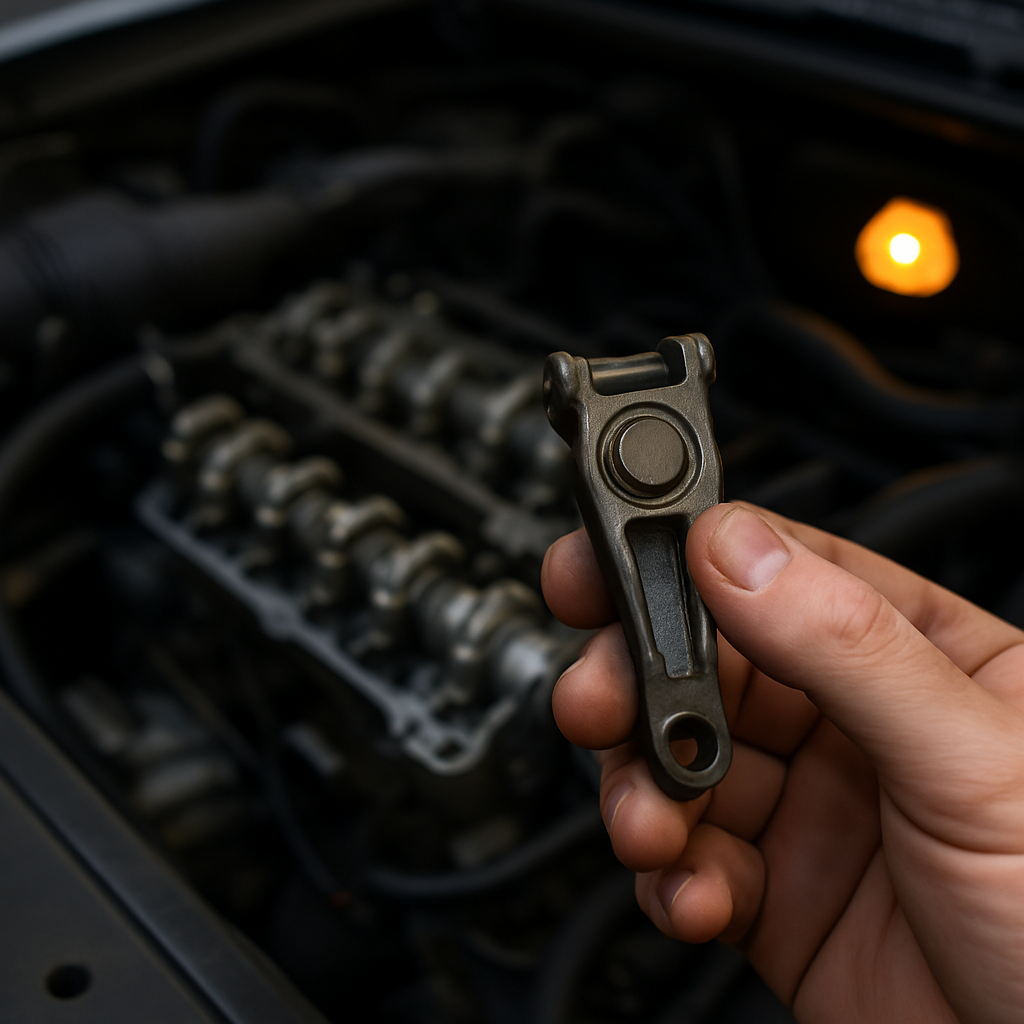
A rocker arm actuator or control-system fault can switch on the Check Engine Light and reduce engine performance. The vehicle may still run, but the symptoms and risk depend on what has actually failed: the actuator system, its oil supply or electrical controls, or a rocker arm itself. A fault code does not, by itself, prove that the actuator needs replacing.
What happens when a rocker arm actuator goes bad?
The engine computer monitors the rocker-arm control system and can store a diagnostic trouble code when it detects a circuit or performance problem. Depending on the fault, you may notice:
- A Check Engine Light.
- Reduced engine performance or a change in how the engine responds.
- Higher fuel consumption.
- A noticeable loud mechanical noise if rockers are stuck in the wrong position.
These symptoms do not identify the failed part on their own. A system fault may involve an oil-control component, pressure switch, wiring or oil condition, while physical damage to a rocker arm is a separate mechanical problem. The P2646 explanation from Kelley Blue Book describes possible performance loss, increased fuel use and noise when rockers are stuck. The vehicle may continue to run, but that does not establish that it is safe to keep driving or that damage is inevitable.
A control-system code should not be confused with confirmed physical rocker-arm failure. Mechanical damage can have more serious consequences, but the supplied evidence does not support treating catastrophic engine damage as the typical or certain outcome of every actuator fault. A technician needs to diagnose the specific vehicle and symptoms.
What does the rocker arm actuator system do?
The exact design varies by engine. Broadly, the engine computer monitors and controls the rocker-arm system. Some variable valve timing or lift systems use oil-control components and a pressure switch, but Honda VTEC is a vehicle-specific example—not a universal name or design for rocker-arm actuator systems.
Because the computer monitors system performance, a stored code may point to a detected circuit, switch or performance problem without identifying which component caused it. Other variable-valve-timing codes can appear in a related diagnostic context; for example, our guide to the P0011 code covers a different code and does not confirm a rocker-arm actuator failure.
What can cause a rocker arm actuator fault?
Possible causes include an oil-related problem, a faulty pressure switch or sensor, a faulty oil-control valve, an electrical connection issue, or sludge or varnish that interferes with movement. These are possibilities to investigate, not a ranked list or proof that the actuator itself has failed.
- Oil level, condition or pressure: Check the oil level and condition using the vehicle’s owner information. Low, unsuitable or degraded oil, or an oil-pressure problem, may affect operation. Oil level and oil pressure are not the same thing; a level check alone does not diagnose pressure.
- Oil-pressure sensor or switch: A faulty switch or its signal can contribute to a system fault. Its position and arrangement depend on the vehicle.
- Oil-control valve: A valve that is faulty or not operating as intended may affect the system.
- Wiring or connectors: A damaged wire, poor connection or other electrical fault can disrupt the signal or control circuit.
- Sludge or varnish: Deposits may interfere with the movement of system components.
The diagnostic discussion of P2646 causes describes oil condition, a pressure switch, an oil-control valve and wiring as potential checks, while noting that component layout differs between vehicles. A fault code alone is not a reason to replace a particular part. Diagnosis may require the correct vehicle-specific procedure, electrical checks and, where appropriate, oil-pressure assessment by a qualified technician.
What does a rocker arm actuator code for Bank 1 mean?
“Bank 1” identifies the bank of the engine monitored by the code; it does not establish that the actuator is defective. Use the exact stored code and the service information for the vehicle, because “stuck on”, “stuck off”, circuit and performance descriptions are not interchangeable.
For example, P2646 is described as an “A” rocker-arm actuator control-system performance or stuck-off fault for Bank 1. P2652 is described in the supplied reference as a “B” rocker-arm actuator system stuck condition for Bank 1. These descriptions are not a universal diagnosis, and the exact code wording and test procedure should be checked for the vehicle.
For Honda Accord and Civic owners, some Honda applications use VTEC terminology. In the described arrangement, the rocker-arm oil-pressure switch may be built into the VTEC assembly. That does not establish the location, cause or repair for every Accord or Civic model year. Toyota owners should likewise use the exact Toyota code definition and service information: the available research does not establish a Toyota-specific diagnosis or repair. In any make, wiring, oil pressure, switches, valves or mechanical binding may be involved.
Where is the rocker arm actuator located?
There is no single location that applies to every vehicle. The component arrangement varies by make, model, year and engine system. In the Honda VTEC example described above, the rocker-arm oil-pressure switch may be integrated into the VTEC assembly; other arrangements may put a sensor or switch elsewhere, including on the engine block.
Consult the correct vehicle-specific diagram or service information before trying to identify or remove a component. Do not assume that a part shown for another model or engine is in the same place on your vehicle.
Can you drive with a bad rocker arm actuator—and for how long?
The vehicle may continue to run, but prolonged driving with a P2646-type system fault is not recommended. Continuing to operate an engine that is running poorly or making a loud mechanical noise may risk further damage. Arrange prompt diagnosis and avoid unnecessary driving, especially if performance has dropped substantially or the engine is noisy.
There is no safe universal mileage or time limit for driving with this fault. A stored code without obvious symptoms is not the same situation as a noisy or severely impaired engine, but neither lets you assume the vehicle is safe. If operation becomes noisy, severely impaired or otherwise unsafe, stop driving and seek professional assistance.
How much does it cost to replace a rocker arm actuator?
No reliable price estimate can be given from the available evidence. The code may ultimately be traced to something other than the actuator—such as a pressure switch, oil-control valve, wiring fault or oil-related issue—so diagnosis should come before pricing a replacement. The repair cost will depend on the vehicle and the component or fault confirmed during diagnosis. Ask for an itemised estimate based on your exact make, model, year and engine.
What should you do next?
- Check the engine oil level and condition using the vehicle’s owner information, and address any obvious oil-level issue appropriately.
- Record the exact diagnostic code rather than relying only on a general description such as “rocker arm actuator Bank 1”.
- Arrange vehicle-specific diagnosis to check the relevant oil-control components, pressure switch, wiring and other possible causes.
- Avoid unnecessary driving while the fault is unresolved, particularly if the engine is noisy or performance is substantially reduced.
The right repair depends on the diagnosis, not just the code label. A qualified technician can use the vehicle’s specific service information to determine whether the issue is electrical, oil-related, a control component or mechanical.