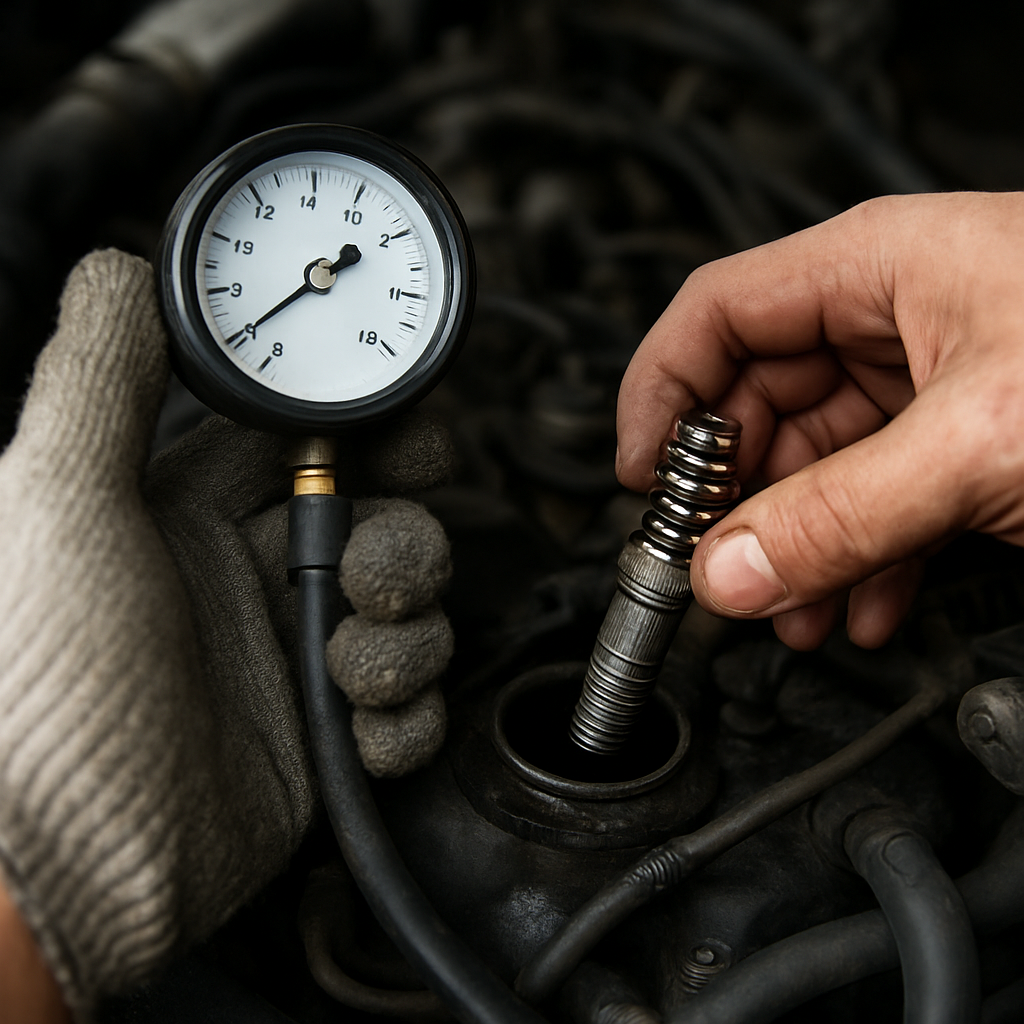
If an engine oil-pressure relief valve stays open when it should be regulating pressure, oil can bypass the pressure circuit instead of helping the system maintain the pressure the engine needs. Actual oil pressure may be low, build slowly or, in a severe case, be absent. If the engine continues to run with inadequate pressure, lubricated parts such as bearings and valvetrain components may be damaged. These symptoms can have other causes, however, so they do not prove that the relief valve has failed.
If the oil-pressure warning comes on or low pressure is confirmed, stop the engine as soon as it is safe to do so and arrange a diagnosis. Do not continue driving on the assumption that the problem is only a sensor.
What happens when an oil-pressure relief valve is stuck open?
An oil pump’s relief valve helps control pressure by opening when pressure reaches its designed control range. If it remains open when it should be closed, oil can continue to bypass the pressure circuit, making it harder for the lubrication system to maintain pressure. A valve opening normally at its intended control point is not, by itself, a fault.
Possible signs include an oil-pressure warning, a low reading on a mechanical pressure gauge, delayed pressure build-up, pressure below the engine’s specification at hot idle, or pressure that does not recover as expected as engine speed rises. Ticking or other lubrication-related noise may also occur. None of these signs is unique to a stuck-open relief valve. The symptoms and other possible causes of a stuck-open oil-pump relief valve should be considered alongside a proper pressure check.
Low pressure can reduce lubrication to engine components. Continuing to run the engine in that condition risks damage, including damage to bearings or valvetrain parts, but damage is not inevitable in every case. The pressure specification and expected readings depend on the engine; there is no single pressure value that applies to every vehicle.
What are the symptoms on a Polaris RZR 800?
The general warning signs to take seriously are the same as for other engines: an oil-pressure warning, slow pressure build-up, a low mechanical pressure reading, pressure below the applicable specification, or lubrication-related noise. However, the available research does not establish RZR 800-specific symptom thresholds, failure rates, pressure specifications or differences between model years. These general signs should not be treated as a confirmed RZR diagnosis.
The available information also does not verify the relief-valve location or removal procedure for an RZR 800, a 2012 RZR 800, a Polaris Ranger 800 or a Ranger 900. It does not establish an upgrade or part fitment for those vehicles. Use service information for the exact model year and engine, or ask a qualified technician; do not infer a location or repair procedure from another Polaris model.
How do you confirm low oil pressure and rule out a sensor fault?
A dashboard warning or gauge reading indicates a possible problem, but it cannot by itself confirm that actual oil pressure is low or identify a failed relief valve. A faulty oil-pressure sensor or gauge is one possible explanation for an incorrect indication; actual low pressure is another. A suspected sensor fault should not be used to dismiss a warning before pressure has been checked.
When a warning or related symptom is present, have actual pressure measured with appropriate equipment and compared with the manufacturer’s specification for that engine. A low mechanical pressure reading supports the conclusion that pressure is genuinely low, but it still does not identify the cause. The appropriate test equipment and procedure depend on the vehicle, so a qualified technician may be needed.
How can you tell whether the relief valve is stuck open?
Persistent low pressure, slow pressure build-up or pressure that remains below specification as engine speed changes can be consistent with a relief valve stuck open. They are not a universal hands-on test and do not establish that diagnosis. Other possible causes include:
- Low engine-oil level or oil with the wrong viscosity for the vehicle.
- A clogged oil-pickup screen or a suction leak at the pickup tube.
- A worn oil pump or excessive bearing clearance.
- A faulty oil-pressure sensor or gauge, if low pressure is indicated rather than confirmed.
A sensible first step is to check the oil level and confirm that the oil meets the vehicle’s specified requirements. If a warning remains or symptoms are present, verify actual pressure against the correct vehicle-specific specification. The lubrication system and relief valve can then be inspected as appropriate. Symptoms alone cannot distinguish these causes, and the available information does not provide a universal valve test or model-specific removal instructions.
Do not force, drill or improvise the extraction of a stuck component. Access, inspection and repair depend on the engine and require the applicable service information. For practical guidance on responding to a warning, see what to do when the oil-pressure warning says to stop the engine.
Is an oil-pump relief valve the same as an oil-filter bypass valve?
No. An engine oil-pump relief valve and an oil-filter bypass valve are different components, even though both relate to oil flow. The pump relief valve helps regulate pressure in the lubrication system. A filter bypass valve provides a route for oil around the filter in certain conditions; if it is stuck open, filtration may be compromised. That does not make it the same fault as an oil-pump relief valve stuck open, and the effect depends on the system design. Oil-filter pressure-relief failures and their possible effects are a separate issue from diagnosing the engine’s oil-pump relief valve.
What does it mean if the pressure relief valve is leaking?
“Leaking” can mean two different things. Oil may be visibly escaping outside the engine, or oil may be bypassing internally through a valve that is not sealing or regulating as intended. Internal bypass can contribute to low oil pressure. A visible external oil leak, however, does not by itself show that the relief valve is faulty, and a stuck-open valve does not necessarily produce an external leak.
Identify the exact source of an external leak before attributing it to the relief valve. The available information does not establish a vehicle-specific leak location or repair. If the leak is accompanied by an oil-pressure warning or confirmed low pressure, stop running the engine as soon as safely possible and arrange a diagnosis.
Can you open the oil-pressure relief valve yourself?
There is no safe, universal instruction for opening an engine oil-pressure relief valve: its design and service procedure depend on the vehicle and engine. Do not force or manipulate the valve based on a generic procedure. Consult the correct service manual or have a qualified technician inspect it.