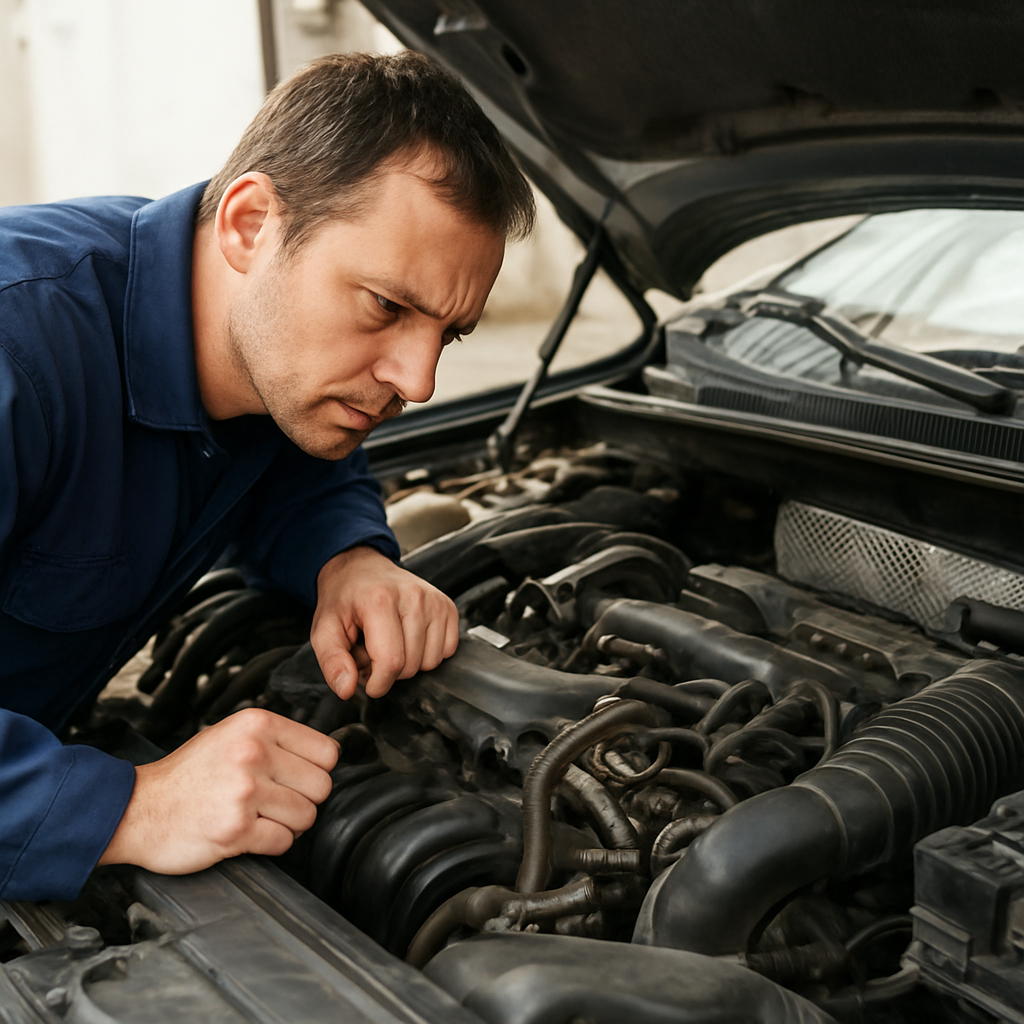
A rattle when you first start your car can have several causes, including an oil-fed timing component taking time to build pressure, a loose heat shield or exhaust part, or a worn starter component. The sound alone cannot identify the fault. A rattle that fades as the engine settles is not necessarily harmless or fixed, so note when it happens and whether it is becoming more frequent, louder or persistent.
Why a car may rattle briefly when started
After a car has been parked, some components that rely on oil pressure may take a short time to build pressure again. That can be one explanation for a brief cold-start rattle, but it does not account for every noise and does not prove that the engine is in good condition. A loose heat shield or exhaust component can also vibrate as the engine starts and the engine’s movement changes.
Worn starter components are another possibility. The sound may be most noticeable as the engine cranks or just as it starts, but the timing of the noise is not enough to confirm a starter fault. A technician will need to locate the noise and assess the vehicle.
If the noise fades as the engine warms or settles, that describes a symptom pattern rather than proof that the underlying issue has gone away. Our guide to an engine rattle that goes away after startup covers that pattern in more detail. For additional background, Meineke’s overview of possible car-rattle causes discusses startup noises, starter components and exhaust-related rattles.
A brief rattle that remains unchanged is different from one that lasts longer, becomes louder or happens more often. Arrange a professional inspection promptly if the noise persists, worsens or comes with other symptoms. There is no universal time limit for a normal rattle, and a sound alone is not enough to determine whether a car is safe to drive.
Could a timing chain or tensioner be rattling?
It is possible. On some engines, a timing-chain tensioner relies on oil pressure. If a worn tensioner loses pressure while the car is parked, it may take time to pressurise after start-up; while it does, the chain may rattle. This is a possible explanation, not a diagnosis, and the mechanism should not be assumed to apply to every engine.
A loose or failing timing chain can lead to serious engine damage if the problem is ignored. A start-up rattle by itself does not show that the chain is faulty or about to fail, but a noise that persists, worsens or becomes more frequent should be checked promptly by a professional. Tom’s Auto Center’s discussion of start-up rattles and Woodie’s explanation of brief engine rattles describe this possible oil-pressure-related mechanism.
What an engine rattle can mean, including at idle
“Engine rattle” describes a sound, not a confirmed failed engine part. A noise that seems to come from the engine bay can also be produced by something external, such as a loose heat shield or an accessory-driven component. Worn lifters or other valve-train components are among the possibilities mentioned in an expert response about an engine start-up rattle, but those possibilities cannot be confirmed from the sound description alone.
A rattle that continues while the engine is idling is different from one heard only during cranking or initial start-up. Note whether it remains at idle, changes as engine speed changes, or occurs only when the engine is first started. Share those details, along with any other symptoms, with a technician. An idle rattle should not automatically be treated as harmless or as proof of internal engine damage.
Why a rattle may appear when accelerating
A rattle under acceleration can come from a component vibrating more as engine load increases; it is not automatically an internal-engine problem. Possible sources include a loose or misaligned heat shield, another exhaust component, internal damage or looseness in the catalytic-converter assembly, or a worn transmission mount. These are possibilities, not conclusions based on the symptom.
Compare the conditions carefully: does the sound happen only at start-up, continue at idle, or return when you accelerate? Note whether it changes with engine load and where it seems loudest. If the car rattles both at start-up and under acceleration, those could be related symptoms or separate noises; the pattern alone cannot tell you which. Arrange an inspection rather than assuming continued driving is safe.
For a focused discussion of that operating condition, see more about rattling when accelerating. A damaged catalytic-converter assembly is only one possible exhaust-related source, not a diagnosis; this separate guide explains the risks of driving with a broken catalytic converter.
If the rattle is more noticeable at low speeds
A rattle while driving slowly does not, by itself, identify a particular fault. Loose exhaust parts or heat shields are among the broad possibilities for driving rattles, which may be more noticeable at particular speeds or on rough terrain. Pay attention to whether the noise changes with vehicle speed, engine load or road surface, and describe that pattern to a repair professional. A low-speed rattle alone is not enough to determine whether the car is safe to drive.
What the apparent location of a front-side rattle can — and cannot — tell you
If a rattle seems to come from the front passenger side, that perceived location does not identify a failed component. A loose heat shield or exhaust part near the engine or exhaust system could be among the possibilities, but there is no reliable passenger-side-specific diagnosis based on the sound location alone.
Note whether the noise occurs at start-up, while idling, during acceleration or over bumps, and whether it changes as the car moves. If it persists or gets worse, have a technician locate it. Do not reach around hot or moving parts to try to find the source.
If the rattle seems to come from the rear of the car
A rattle heard at the back while driving could involve a loose exhaust component or heat shield, or a worn suspension part, but the apparent rear location alone does not confirm any of these. Notice whether it occurs over bumps or rough ground, at a particular speed, or when accelerating. If the noise persists or worsens, or appears to involve the suspension, arrange a professional inspection. Do not crawl beneath the car to investigate.
Why the rear may rattle over bumps
A rear rattle over bumps can have several possible sources. Worn suspension parts, including struts, bushings or mounts, may rattle on rough terrain; a loose exhaust or another unsecured component is also possible. The symptom does not prove that the suspension is faulty.
Pay attention to whether the sound happens on bumps specifically and whether it is accompanied by a change in how the vehicle handles. Have persistent or worsening noise inspected, particularly if handling seems different. A sound alone does not establish a safe-to-drive threshold, and suspension work should not be attempted beneath an unsupported vehicle.
What to note before speaking to a technician
- When the rattle occurs: during cranking, just after start-up, at idle, under acceleration or while driving.
- Whether it happens only on a cold start, fades, continues or returns later.
- Whether the sound changes with engine speed, acceleration, vehicle speed, road surface or bumps.
- Where it seems loudest, while remembering that the apparent location does not confirm the source.
- Whether the noise is becoming louder or more frequent, or is accompanied by other symptoms.
These observations can help a repair professional narrow down what to inspect, but they are not a substitute for diagnosis. Avoid working around a running engine, touching hot exhaust parts or getting beneath a vehicle that is not properly supported.