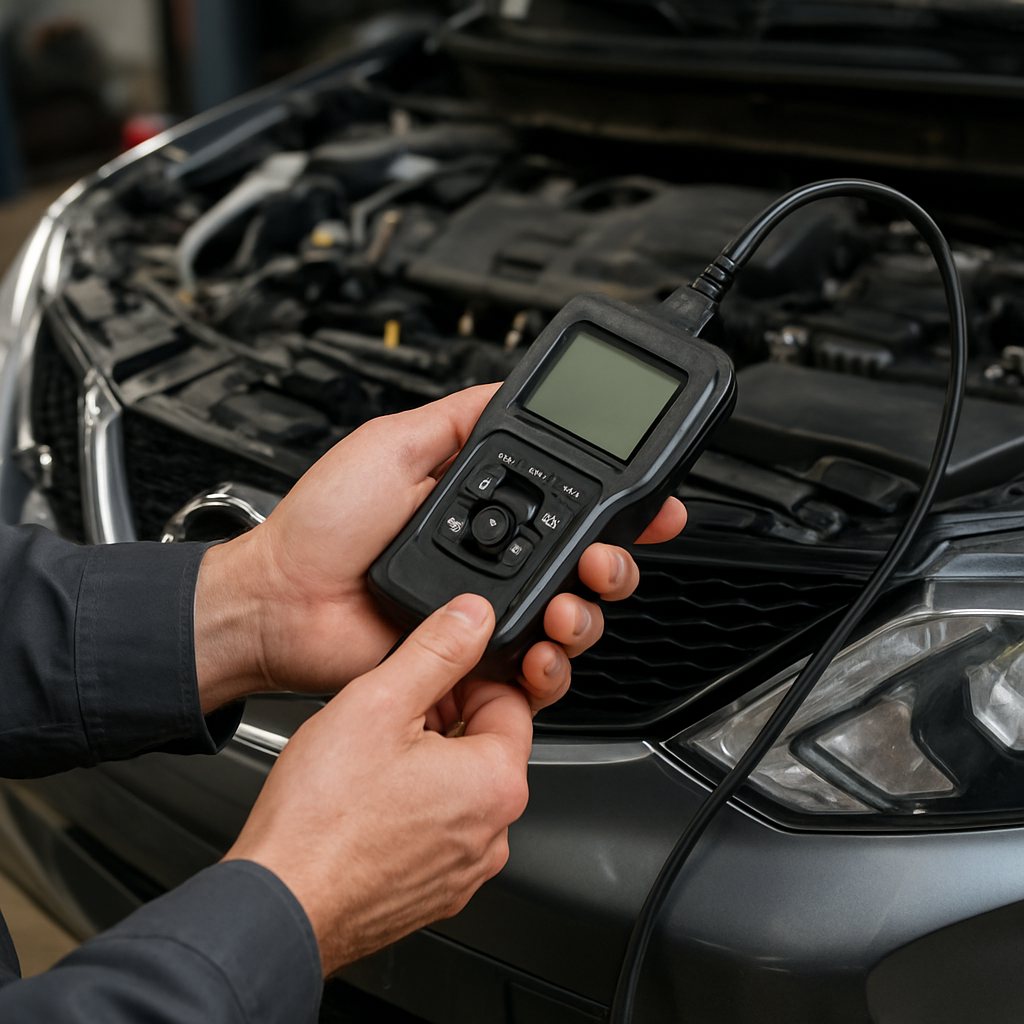
P0444 on a Nissan means the engine computer has detected an open electrical circuit in the EVAP purge-control-valve circuit. The purge-control solenoid is one possible cause, but the code does not prove that the valve has failed or is mechanically stuck. Damaged wiring, a loose connection or corrosion can also interrupt the circuit, so diagnosis should come before parts are replaced.
The EVAP system captures fuel vapour and routes it to the engine for controlled combustion. P0444 concerns the electrical circuit that controls the purge valve; it is not, by itself, confirmation of a general EVAP leak or an incorrect purge-flow problem. For more background, see how EVAP leaks are diagnosed. A related but different EVAP code is P0455.
What P0444 means on a Nissan—and how to diagnose it
P0444 is generally defined as an open circuit in the EVAP purge-control-valve circuit. In practical terms, the control circuit is not showing the electrical continuity or operation the vehicle computer expects. A general P0444 code reference and an explanation of the circuit-open definition describe this electrical fault. Nissan-specific details, including the exact component arrangement and test procedure, can vary by model, year and engine.
A check-engine light may illuminate, and the fault may prevent an EVAP emissions monitor from completing or contribute to an emissions-test failure. Neither outcome is guaranteed for every vehicle or inspection system. The code identifies a circuit condition; it does not, on its own, identify the failed part.
Likely causes
- A failed purge-control solenoid: The valve’s electrical winding or internal connection may have failed. A Nissan Altima-focused repair reference also identifies the purge valve and its wiring as likely areas to investigate, but that model-specific context should not be applied automatically to every Nissan.
- Damaged or open wiring: A broken, chafed or otherwise damaged wire can interrupt the circuit. Rodent damage is one possible source of wire damage, not a diagnosis.
- A connector problem: A connector that is loose, corroded or damaged may prevent a reliable electrical connection.
- A fault elsewhere in the circuit: The vehicle’s model-specific wiring and control system need to be checked before concluding that the valve itself is responsible.
Although broad EVAP information may discuss gas caps and leaks, P0444 points first to the purge-control electrical circuit. Do not replace a gas cap, canister or other EVAP component as a presumed fix without evidence that it is faulty. If you are investigating a separate warning-light concern, this guide explains when a loose gas cap can trigger a check-engine light.
A sensible diagnostic order
- Confirm the code. Use a suitable scan tool to verify P0444 and record any companion codes. Other codes may affect the diagnostic approach.
- Check the connector and visible wiring. With the vehicle safely parked and the engine off, look for an unplugged, loose or visibly damaged connector, damaged insulation or corrosion. Do not pull on wires or probe terminals without the correct instructions.
- Use the correct Nissan wiring information. A technician should check the relevant circuit using service information for the exact Nissan model, year and engine. Appropriate electrical tests can establish whether continuity and the expected supply or control signal are present. Pin numbers, test values and locations should not be guessed from a generic guide.
- Test the valve and circuit before replacing parts. Follow the model-specific service procedure to determine whether the solenoid or another part of the circuit is at fault. A code reader alone cannot confirm which component has failed.
- Repair the confirmed fault and recheck. A confirmed damaged wire or connector may need repair; a confirmed failed valve may need replacement. Afterwards, use an appropriate scan-tool check and follow the applicable Nissan procedure to confirm the repair. Do not assume an emissions monitor will complete within a particular time.
Do not assume the purge valve is in the same place on every Nissan. One Nissan Q&A describes a location near the rear, but that is not enough to establish a universal location. Check vehicle-specific service information before looking for or removing the valve.
Why might P0444 remain after replacing the purge valve?
Replacing the valve may not resolve P0444 if the actual fault is in the connector, wiring or another part of the circuit. The replacement part could also be faulty or unsuitable, or the original diagnosis may have been incomplete. These are possibilities, not a confirmed explanation for any individual vehicle. If the code returns, have the circuit and the replacement part tested rather than replacing another component by guesswork.
Can you unstick an EVAP purge valve?
P0444 is an electrical circuit-open code; it does not prove that the valve is mechanically stuck. The available evidence does not establish a safe, effective procedure for freeing a stuck valve. Do not soak or spray the valve with penetrating fluid based on an anecdote. Have the component tested using the correct service information so an electrical fault can be distinguished from a mechanical problem.
Can you drive with a bad EVAP purge valve?
P0444 does not confirm that the purge valve is bad: wiring or a connector can produce the same circuit fault. The available information supports a check-engine light and possible EVAP-monitor or emissions-test consequences, but it does not establish that every vehicle with this code is safe to drive or define one risk level for all Nissan models.
Base your decision on the vehicle’s actual condition, not the code alone. If it has additional running problems, or you are unsure whether it is behaving normally, arrange prompt professional assessment. A technician can check whether the cause is limited to the EVAP circuit or whether another fault is also present.
Does P0444 mean the same thing on a VW?
The general P0444 definition is an open electrical circuit in the EVAP purge-control-valve circuit, as described in general code references. That broad definition does not establish where the relevant component is on a Volkswagen, which wires or tests apply, or which part needs repair. Those details require the exact VW model, year and engine, together with the applicable Volkswagen service information. Do not transfer Nissan component locations or repair steps to a VW.
Is P0441 the same as P0444?
No. P0441 is a different diagnostic code, and the information available here is specific to P0444. It does not support identifying the most common cause of P0441, so do not use the P0444 circuit diagnosis to infer what is wrong with a vehicle showing P0441.
What should you do next?
Start by confirming the code and checking for obvious connector or wiring damage. If the fault is not clear, ask a qualified technician to test the circuit and purge valve using information for your exact Nissan. The repair could involve a confirmed valve failure or a confirmed wiring or connector fault; the code alone cannot decide between them.
A repair cost cannot be estimated responsibly without knowing the vehicle and the confirmed fault. The required work could differ substantially between a valve replacement and diagnosis or repair of wiring, and the available information does not establish vehicle-specific parts prices or labour times. Likewise, do not assume a particular emissions-test outcome or monitor-completion timetable; confirm the repaired system with an appropriate scan-tool check and follow the relevant service procedure.