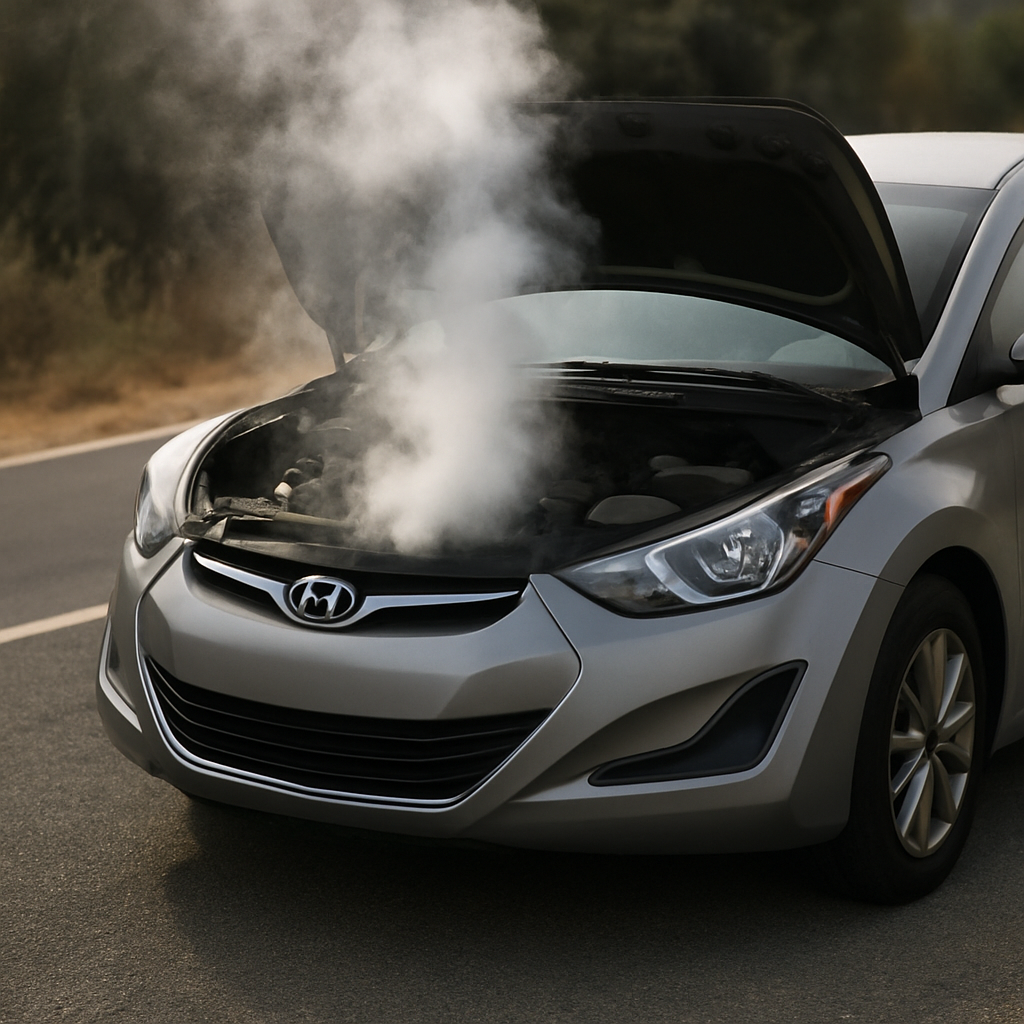
Common possible causes of a 2015 Hyundai Elantra overheating include low coolant from a leak, a radiator fan or airflow problem, a thermostat that does not open properly, a radiator issue, or a water-pump or other coolant-circulation problem. These are general cooling-system possibilities, not proof of a defect affecting every 2015 Elantra, and the available sources do not establish a frequency ranking for this model year. If the temperature warning or gauge indicates overheating, pull over somewhere safe and arrange diagnosis rather than continuing to drive.
Common causes of 2015 Hyundai Elantra overheating
RepairPal identifies coolant leaks, radiator-fan problems, and thermostat failure among possible causes of Elantra overheating. Its list, along with general automotive guidance, also points to radiator and water-pump problems. The symptoms can overlap, so the list is a starting point for diagnosis—not a verdict about which part has failed.
- Low coolant or a leak: Coolant may escape through a hose, radiator, water pump, or another part of the engine cooling system. In a sealed cooling system, a coolant level that keeps dropping can indicate a leak. Adding coolant may restore the level temporarily, but it does not identify or repair the cause. AAA explains that low coolant and leaks can lead to overheating.
- Radiator fan or restricted airflow: A fan fault or something obstructing airflow through the radiator can reduce the system’s ability to shed heat. A fan or airflow issue is one possibility, but overheating alone does not confirm it.
- Thermostat failure: A thermostat that fails to open can restrict coolant flow through the system and contribute to overheating.
- Water-pump or circulation problem: A failed water pump can impair coolant circulation. Other cooling-system faults can also affect circulation, so the pump should not be assumed to be the cause based on the temperature warning alone.
- Radiator problems: A damaged or restricted radiator may interfere with heat transfer or coolant flow.
General automotive sources also raise restricted coolant passages, air trapped in the cooling system, an incorrect coolant mixture, and head-gasket trouble as possible causes of overheating. These are additional possibilities—not established recurring defects in the 2015 Elantra. A technician may need to inspect the system to determine what is actually happening.
If the car has a visible leak, look for its location only after the vehicle has cooled, and do not touch hot components. If coolant is leaking below the exhaust manifold, see our guide on what to do if coolant is leaking below the exhaust manifold; that location is not evidence of a known 2015 Elantra failure point.
If your Elantra overheats while driving
Overheating while driving does not, by itself, identify a failed fan, thermostat, water pump, or head gasket. The same general cooling-system causes can be relevant, but the available evidence does not establish a cause or diagnostic pattern unique to overheating on the move. When the temperature warning or gauge indicates overheating, pull over somewhere safe and stop driving. Arrange professional diagnosis if the warning persists or returns.
Do not keep driving just because the car still moves or the coolant reservoir appears full. A full-looking reservoir does not rule out a circulation problem or another fault. Never open the radiator or coolant-system cap while the engine is hot: the system may be pressurised, and hot coolant can cause serious burns. Once the vehicle is fully cool, you can look for visible signs of a leak, but leave diagnosis and repairs to a qualified technician where needed.
If you are comparing symptoms in different conditions, read our guide to why a car may overheat at idle. Idle overheating and overheating while driving do not necessarily have the same cause.
Bad thermostat or water pump? What the symptoms can—and cannot—tell you
The parts have different jobs: a thermostat that fails to open can restrict coolant flow, while a failed water pump can impair coolant circulation. Either type of problem can contribute to overheating, but the supplied sources do not provide a dependable symptom-by-symptom test for distinguishing them on a 2015 Elantra.
Overheating alone, a reservoir that looks full, or the length of time the car has been running cannot reliably identify which component has failed. A leak, radiator or fan issue, or another circulation problem may cause overlapping symptoms. A cooling-system diagnosis is preferable to replacing parts based on a guess; RepairPal’s overview of Hyundai Elantra overheating causes likewise lists several possible faults rather than one definitive cause.
What should you check first?
Do not inspect or open a hot, pressurised cooling system. After the vehicle has cooled fully, a cautious visual check for obvious coolant leaks may help you explain the problem to a repair shop. If the coolant level appears low or has fallen again, do not treat topping it up as a fix: have the cause investigated. Follow the vehicle owner’s manual for any permitted owner checks, and avoid reaching near moving or hot engine components.
Describe to the technician when the warning appeared and whether you noticed visible coolant, but treat those details as observations rather than a diagnosis. If the vehicle indicates overheating, stop safely and arrange professional help; do not assume it is safe to continue driving.
Is overheating a known 2015 Elantra defect, and was there a recall?
The available evidence describes general cooling-system causes, but it does not establish a model-wide overheating defect or show how frequently any one cause affects the 2015 Elantra. It also does not establish whether an engine- or overheating-related recall applies to a particular car. Check the vehicle identification number (VIN) with Hyundai or an official government recall lookup for current, vehicle-specific recall information. A general overheating problem is not, by itself, evidence of a recall.
The supplied evidence also does not identify the 2015 Elantra’s single most common problem overall. This guide is focused on overheating, and the available reliability information is not enough to rank the car’s problems.