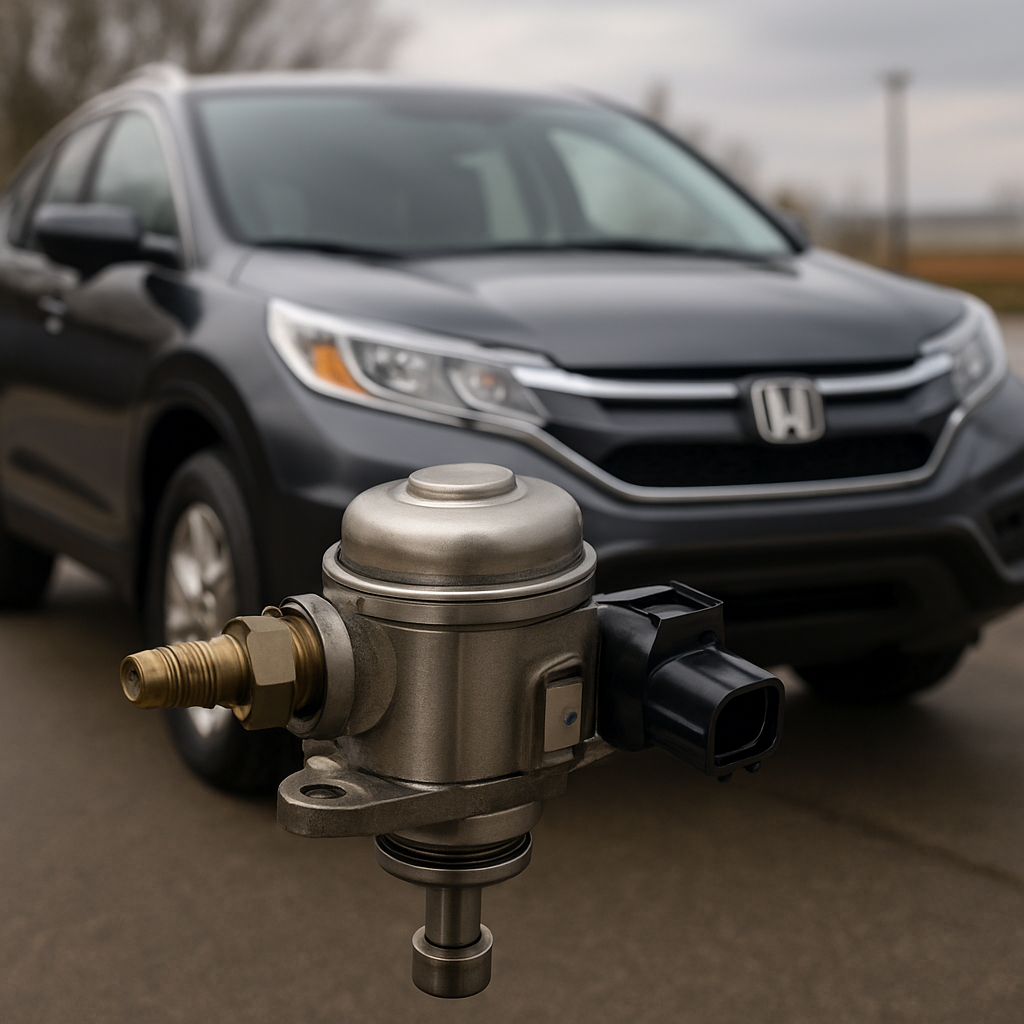
No. A standard 2016 Honda CR-V does not use the direct-injection high-pressure fuel pump that many newer petrol engines have. Its fuel system uses an electric low-pressure pump in the fuel tank to supply the engine’s port fuel-injection system. If you are trying to buy or diagnose a ‘high-pressure fuel pump’, first confirm the vehicle year, engine, and VIN: the part description may be incorrect, or the fault may lie elsewhere in the fuel, ignition, or air-intake system.
Why the part listing may be confusing
High-pressure fuel pumps are fitted to direct-injection engines, where fuel must be delivered to the injectors at very high pressure. They are typically driven mechanically by the engine. The 2016 CR-V’s conventional petrol fuel-injection arrangement is different, so searching for a high-pressure pump can produce unsuitable parts listings or advice intended for another Honda engine.
For a 2016 CR-V, a listing should identify the component more precisely, such as the in-tank fuel pump module, fuel pump assembly, fuel-pressure sensor, injector, or fuel line. Do not order a part solely because the catalogue says it fits a Honda CR-V; check the engine application and the supplier’s VIN compatibility information first.
Symptoms that can be mistaken for a fuel-pump failure
A weak or interrupted fuel supply can cause a long crank, a no-start condition, hesitation, loss of power, stalling, or a check-engine light. None of those symptoms proves that the fuel pump has failed. Similar complaints can result from a discharged battery, poor electrical connections, an air leak, contaminated fuel, an ignition fault, or an engine-management issue.
If the CR-V cranks normally but starts only intermittently, begin with the basic checks described in our guide to intermittent cranking but no-start problems. The aim is to establish whether the engine lacks fuel, spark, air, compression, or the correct control signal before replacing parts.
How to diagnose a suspected fuel-delivery problem
Start by scanning for stored and pending diagnostic trouble codes, even if the warning light is not currently illuminated. Record the codes and freeze-frame data before clearing anything. A misfire code, for example, identifies an operating problem but does not automatically condemn the fuel pump. Our overview of P0300 random and multiple-cylinder misfire diagnosis explains why ignition, air, fuel, and mechanical causes all need consideration.
A competent diagnosis normally includes checking battery condition, relevant fuses and relays, wiring and connector condition, and whether the pump is being commanded to run. A technician can then test fuel pressure and delivery using the correct equipment and service information. Pressure readings should be interpreted against the specification for that exact engine, not against figures quoted for a direct-injection Honda.
- If there is no pump command, the problem may be electrical or control-related.
- If the pump has power and ground but does not operate correctly, the pump module or its connections may need further testing.
- If fuel delivery is satisfactory, attention should move to ignition, air metering, injector operation, and engine mechanical condition.
Can you drive with suspected fuel-pump trouble?
A CR-V that stalls, loses power unexpectedly, smells strongly of fuel, or will not accelerate reliably should not be treated as dependable transport. Loss of power in traffic can put you and other road users at risk. Avoid repeated cranking if the engine will not start, particularly if there is a petrol smell, and arrange diagnosis instead.
If the vehicle merely feels flat or intermittently hesitates, do not assume fuel delivery is responsible. A broader look at sputtering and no-start symptoms may help you describe the behaviour accurately when booking the car in.
Replacement: use the correct fuel-pump assembly
When testing confirms a pump fault, the replacement required for a 2016 Honda CR-V is generally the appropriate low-pressure in-tank fuel-pump assembly or a serviceable component within that system, depending on the diagnosis and parts catalogue. Fuel-system work carries fire risk and may require access to the tank area, so it is usually best left to a qualified technician with the correct safety equipment.
Do not substitute a so-called high-pressure pump, fit a universal unit without confirmed compatibility, or replace the pump simply because the engine has a fuel-related fault code. A code can point to a circuit, pressure condition, mixture problem, or misfire; testing is what identifies the failed part.
What will the repair cost?
A reliable cost cannot be quoted without a confirmed fault and an exact parts application. The total can vary with the chosen pump assembly, labour access, diagnostic time, local labour rates, and whether wiring, a connector, contamination, or another fault is found. Ask for a written estimate that separates diagnosis, parts, labour, and any additional recommended work.
Check recall and service information by VIN
Do not assume that a fuel-system symptom means there is a recall or service campaign. Recalls and service actions are VIN-specific, and eligibility can depend on the vehicle’s history and market. Use the vehicle’s VIN to check current outstanding recall information with Honda or the relevant national vehicle-safety authority, and ask a dealer whether any applicable service information relates to the reported symptom.
The key point is simple: a 2016 Honda CR-V owner looking for a high-pressure fuel pump is usually looking for the wrong component. Confirm the engine and diagnosis first, then source the correct low-pressure fuel-system part only if testing supports replacement.
Pingback: 1970 Ford Mustang Boss 429: Specs, Horsepower, Values, and Buying Advice - Premier Motoring Blog