Category Archives: Diagnostics & Maintenance

Ford P0657 Code: Meaning, Causes and What to Check
Ford code P0657 means Actuator Supply Voltage “A” Circuit/Open. It identifies a fault detected in a monitored electrical circuit; by itself, it does not prove that a particular transmission solenoid, wiring harness or powertrain control module (PCM) has failed. What does Ford code P0657 mean? In the Ford-specific description provided by AutoCodes’ Ford P0657 reference,… Read More: Ford P0657 Code: Meaning, Causes and What to Check »


Ford Explorer Common Problems by Year: What Buyers Should Know

There is no single Ford Explorer problem that the available evidence establishes as the most common across every model year. The concerns documented here vary by generation: a used-car guide reports possible transmission trouble in 2002–2005 models and a potentially dangerous cabin-fume concern in qualifying 2011–2019 models. Early launch-quality concerns were also reported for the… Read More: Ford Explorer Common Problems by Year: What Buyers Should Know »

Car Won’t Shift Into 4th Gear? Likely Causes and What to Check

If your car will not shift into 4th gear, it does not automatically mean that the whole transmission has failed. For automatic transmissions, possible causes raised by the available repair information include an incorrect transmission-fluid level or poor fluid condition, incorrect or overfilled fluid, wiring faults, a speed-sensor fault, or a problem with a shift… Read More: Car Won’t Shift Into 4th Gear? Likely Causes and What… »

Audi A4 Turbo Failure Symptoms: Warning Signs and How to Confirm Them

Possible signs that an Audi A4 turbo is failing include sluggish acceleration, an unusual whine or whistle, other abnormal noises, exhaust smoke, rising oil use, and a check-engine or EPC warning. However, none of these signs alone confirms turbocharger failure. A qualified diagnosis, which may include a diagnostic scan and appropriate boost-system testing, is needed… Read More: Audi A4 Turbo Failure Symptoms: Warning Signs and How to… »

Why Is My Subaru Squealing? Common Causes and What to Check

A squealing or squeaking noise from a Subaru can come from more than one area. The supplied sources identify a belt as one possible source when a high-pitched chirping or squealing seems to come from beneath the bonnet. They also mention brake-pad wear as a possible cause of squeaking associated with braking, and a wheel-bearing… Read More: Why Is My Subaru Squealing? Common Causes and What to… »

P0341 Code: Common Causes, Diagnosis and What to Check

P0341 means the engine computer has detected an inconsistent, implausible or out-of-range signal associated with camshaft position. It does not confirm that the camshaft position sensor itself has failed: wiring, connections, mechanical timing or variable valve timing (VVT) problems can produce a similar result. The code is a diagnostic clue, so the cause should be… Read More: P0341 Code: Common Causes, Diagnosis and What to Check »

2015 Buick Encore Transmission Problems: Common Symptoms and What to Check

Reported transmission-related concerns for the 2015 Buick Encore include rough shifting and slipping, plus minor-problem categories involving the gear selector and linkage, transmission computer, transmission sensor or solenoid, and clutch adjustment. These are categories listed by Consumer Reports, not a ranking of the most frequent failures or proof that every 2015 Encore has a transmission… Read More: 2015 Buick Encore Transmission Problems: Common Symptoms and What to… »

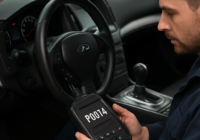
P0014 on a 2008 Infiniti G35: What It Tells You and What to Do Next

P0014 is a powertrain diagnostic trouble code, but the supplied material does not provide the factory definition or diagnostic procedure for a 2008 Infiniti G35. In particular, it does not verify the relevant camshaft, bank, engine side or failed component for this model. A scan result on its own is therefore not a diagnosis and… Read More: P0014 on a 2008 Infiniti G35: What It Tells You… »

Why Your Accelerator Pedal Vibrates When Accelerating: Causes and What to Check

A vibration felt through the accelerator while you speed up can be transmitted from the engine or drivetrain, but the pedal sensation alone cannot identify a failed part. Possible causes include an inner CV joint or axle problem, a damaged driveshaft, worn engine mounts or an engine misfire. If vibration continues at a steady road… Read More: Why Your Accelerator Pedal Vibrates When Accelerating: Causes and What… »