Category Archives: Diagnostics & Maintenance

Lexus “Engine/EV Control System Malfunction”: What the Warning Can—and Cannot—Tell You
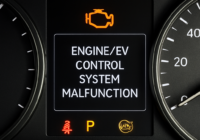
An “engine/EV control system malfunction” message is not, by itself, a diagnosis. The information supplied does not establish a reliable Lexus-wide list of symptoms, causes or associated warning lights for this wording. Its meaning may depend on the model, model year, powertrain and the other messages or warning lamps present. In particular, this phrase should… Read More: Lexus “Engine/EV Control System Malfunction”: What the Warning Can—and Cannot—Tell… »
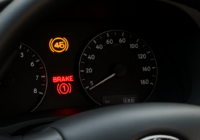

Toyota Sienna ABS and Brake Warning Lights On: What to Do Next

If the ABS warning light and brake warning light illuminate together in a Toyota Sienna, treat the combination as a braking-system warning that needs prompt attention. The lamps alone do not identify the failed part, and their exact meaning can vary by Sienna model year. Do not assume that a wheel-speed sensor, ABS actuator, brake-fluid… Read More: Toyota Sienna ABS and Brake Warning Lights On: What to… »

Ford F-150 Transmission Reset: Adaptive Learning and Safe Next Steps

There is no single verified transmission-reset procedure that applies to every Ford F-150. The correct approach depends on the truck’s model year, transmission and the type of reset being considered. Before attempting one, identify the vehicle configuration and consult Ford service information that specifically applies to it. A reset should not be treated as a… Read More: Ford F-150 Transmission Reset: Adaptive Learning and Safe Next Steps »

Toyota Corolla Shaking at Idle: Possible Causes and What to Do

A Toyota Corolla that shakes at idle may have more than one possible explanation, and the symptom alone cannot identify the faulty part. RepairPal lists old engine mounts, a worn belt-driven engine accessory such as an alternator, and a warped harmonic balancer among common reasons for engine vibration in a 2013 Toyota Corolla. Those items… Read More: Toyota Corolla Shaking at Idle: Possible Causes and What to… »

What Does P0430 Mean on a Ford F-150? Causes and What to Check

P0430 means the powertrain control module has judged the catalytic-converter system on Bank 2 to be operating below its required efficiency threshold. It reaches that conclusion by comparing oxygen-sensor information from before and after the converter. A worn converter is one possible cause, but the code alone does not prove that the converter has failed.… Read More: What Does P0430 Mean on a Ford F-150? Causes and… »

Allison Transmission Fault Code P0657: Meaning, Causes and What to Check

P0657 is generally defined as Actuator Supply Voltage “A” Circuit/Open. It means a control module has detected a fault in an electrical supply circuit associated with an actuator; it does not, by itself, prove that an actuator or transmission component has failed. The available code references explain P0657 as a general OBD-II code, but do… Read More: Allison Transmission Fault Code P0657: Meaning, Causes and What to… »

Vauxhall Vivaro P0657 Code: Meaning and What to Check

P0657 is generically defined as “Actuator supply voltage – circuit open”. It indicates that the engine or powertrain control system has detected an open-circuit condition affecting an actuator supply-voltage circuit. However, this description does not identify the exact circuit or component involved on a Vauxhall Vivaro, and it does not prove that a particular part… Read More: Vauxhall Vivaro P0657 Code: Meaning and What to Check »

P0 657 on a Vauxhall Vivaro: How to Verify the Fault Code

A reported “P0 657” fault code cannot be reliably defined for a Vauxhall Vivaro from the information available. The spacing may be significant: it could be a scanner’s presentation of a standard-looking diagnostic code, an incomplete reading or a code accompanied by further manufacturer-specific information. Do not approve a repair or replace parts until the… Read More: P0 657 on a Vauxhall Vivaro: How to Verify the… »