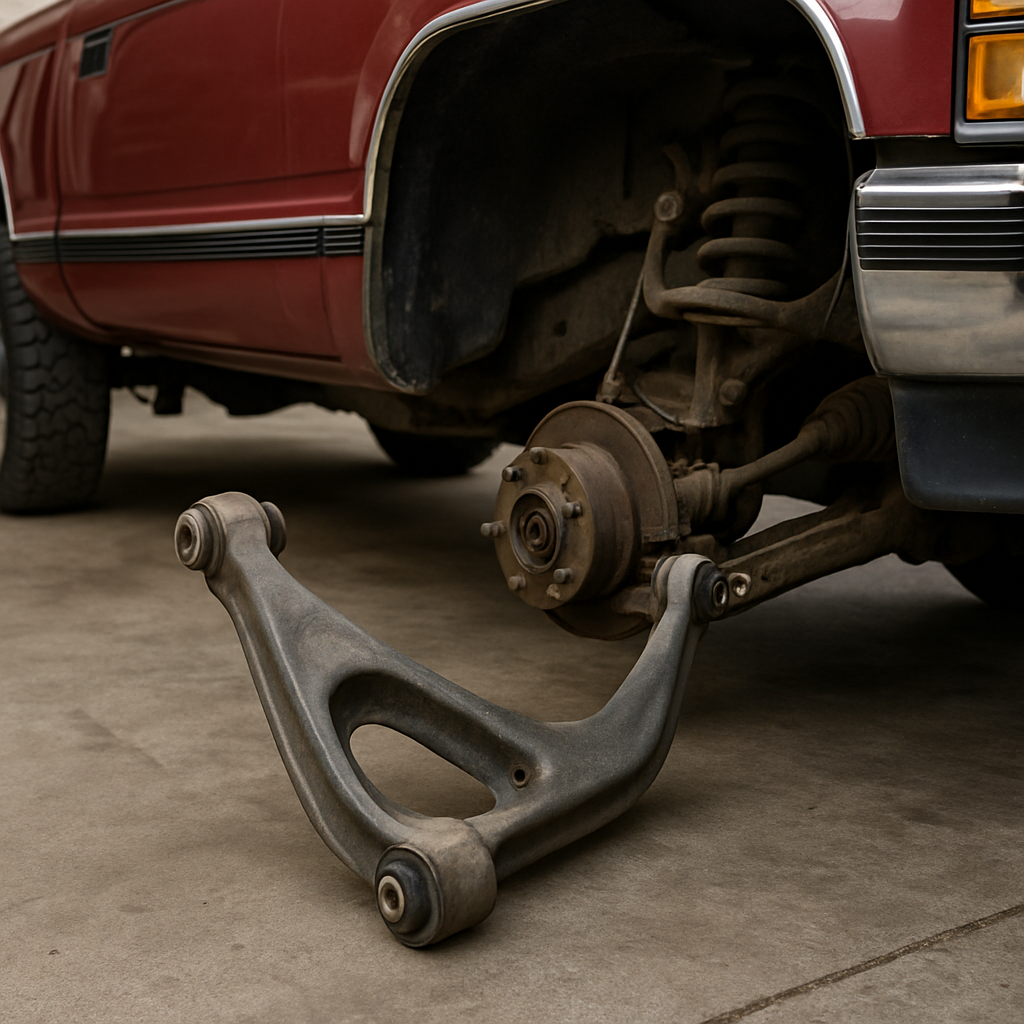
For an 1988-1998 Chevy K1500 4×4, the front lower control arms are not interchangeable with the more readily available two-wheel-drive C1500 arms. The K1500 uses a torsion-bar independent front suspension, so finding a usable replacement often means confirming the exact donor application or rebuilding a sound original arm with new bushes and the required ball-joint work. Do not order on year alone, and do not assume an arm that looks similar will fit.
Why 88-98 K1500 lower control arms are difficult to find
Owners searching for 88-98 K1500 lower control arms frequently find plenty of C1500 listings, complete upper-arm kits, and individual bushes, but far fewer clearly identified replacement lower arms for the four-wheel-drive truck. That difference matters: a C1500 front lower arm is for a different suspension arrangement. For example, the Moog listing commonly found in searches identifies its RK620299 lower arm as a part for the 1988-1998 Chevrolet C1500, not the K1500 4×4.
The K-series application is tied to the truck’s torsion-bar IFS layout. Kryptonite’s GM truck catalogue likewise identifies its relevant 1988-1998 applications as Chevy and GMC 4×4 torsion-bar IFS trucks, while distinguishing K1500 products from heavier K2500 and K3500 applications. That is a useful reminder that K-series suspension parts are fitment-specific; a 1/2-ton K1500 should not be treated as identical to a K2500 simply because both are four-wheel drive.
What to confirm before buying a lower control arm
Use the vehicle’s year, K1500 designation, four-wheel-drive configuration, and the side of the vehicle as the starting point. Then compare the prospective arm directly with the one removed from your truck. This is especially important with used OEM parts, incomplete listings, and trucks that may have had suspension work in the past.
- Drivetrain: confirm it is for a K1500 4×4, not a C1500 two-wheel drive.
- Vehicle class: verify K1500 fitment rather than assuming a K2500 or K3500 arm will interchange.
- Side and complete configuration: check left versus right where applicable, the ball-joint provision, mounting points, and the torsion-bar-related features against your original part.
- Condition of a used arm: reject one with cracks, heavy corrosion at structural areas, distorted mounting points, damaged threads, or an altered ball-joint area.
- What is included: establish whether bushes, hardware, and a ball joint are supplied, or whether they must be transferred or renewed separately.
Enthusiast discussions illustrate why visual similarity is not enough: in one GMT400 compatibility conversation, an owner reported that a 1999 arm appeared different at its ends despite matching spacing. Treat that as a prompt to inspect dimensions and attachment details, not as proof of interchangeability. The discussion is available in this GMT400 lower-control-arm compatibility thread.
Lower control arm, bushes, and ball joints: identify the failed part
A complete lower arm is not automatically required because the front suspension has developed play. The arm itself may remain serviceable while its bushes or ball joint need attention. Conversely, fitting new bushes into a bent, badly corroded, or damaged arm does not restore the suspension properly.
Have the front end inspected before buying parts. A technician can check for movement at the ball joint and bushes, inspect the arm for structural damage, and look for related wear in the upper control arms, steering linkage, and other suspension components. This is particularly worthwhile on a 1997 or 1998 Chevy K1500 4×4, where age, corrosion, and previous repairs may all affect the result.
Signs that merit an inspection
- A clunk or knock over bumps, during braking, or when changing direction.
- Wandering, pulling, or an unstable feel at the steering wheel.
- Uneven front-tyre wear or an alignment that will not hold.
- Visible splitting, displacement, or deterioration of the lower-control-arm bushes.
- Visible damage or severe corrosion on the arm itself.
These signs do not prove that the lower arm is at fault. They overlap with worn upper control arms, ball joints, tie-rod ends, wheel bearings, and alignment problems, so replacement should follow an inspection rather than guesswork.
1998 Chevy K1500 lower control arm bushing replacement
Bushing replacement can be a sensible route when the original 4×4 lower arm is straight and structurally sound. It is not a casual driveway task: the lower arm is part of a torsion-bar suspension system, and removal, bush installation, and reassembly require the correct equipment, safe vehicle support, and model-specific service information.
Do not work beneath a truck supported only by a jack, and do not improvise around torsion-bar load. A workshop familiar with older GM trucks can determine whether the bushes can be renewed successfully, whether the ball joint also needs attention, and whether sourcing another arm is the safer option. If the arm is being removed, replacing visibly worn related components at the same time may avoid paying for a second alignment and dismantling job later, but only after those parts have been assessed.
How upper control arms differ from K1500 lower arms
Aftermarket upper control arms are much easier to find in searches for 88-98 Chevy K1500 4×4 suspension parts, particularly for lifted trucks. That availability does not solve a lower-control-arm problem. Upper and lower arms have different jobs, attachment points, and fitment requirements.
Some aftermarket upper-arm products explicitly limit fitment to K1500 trucks below a specified GVW and exclude K2500 and K3500 models. Check the manufacturer’s stated application rather than transferring a fitment assumption from an upper-arm kit to the lower arm. The Kryptonite catalogue’s K1500 fitment notes are an example of why the truck’s series and configuration must be checked carefully.
Choosing between an OEM used arm and rebuilding your original
For a damaged or unavailable 88-98 K1500 4×4 lower control arm, a clean OEM used arm can be a practical option if it is verified against the original and inspected closely. Online marketplaces do list original K1500 suspension pieces, but a listing title alone is not a fitment guarantee; one current marketplace category includes K1500 torsion-bar crossmember and lower-control-arm hardware among mixed OEM listings. Inspect photographs, ask for identifying details, and compare the part before committing to it. See the range of OEM K1500 control-arm and suspension listings with that caution in mind.
Rebuilding your original arm preserves known fitment, provided the arm passes a structural inspection. A replacement arm may be preferable when the original is bent, cracked, badly corroded, or has damaged mounting or ball-joint areas. In either case, fit quality bushes and ball-joint components appropriate to the arm, retain or replace hardware as required by the applicable service information, and arrange a professional front-wheel alignment once the work is complete.
Final checks after K1500 lower control arm work
Before returning the truck to normal use, make sure every fastener and suspension component has been assembled to the correct Chevrolet service specification for that vehicle. The steering wheel should be centred after alignment, and the truck should be checked for abnormal noises, pulling, or changed ride height on a cautious road test. If the result is anything other than stable and predictable, stop driving it hard and have the installation inspected. Suspension work on an OBS Chevy K1500 is safety-critical; careful fitment verification and a proper alignment matter as much as locating the arm itself.
Pingback: What to Know About Health Concerns Gb 6 for Family Care and Modern Consumer Health - Premier Motoring Blog