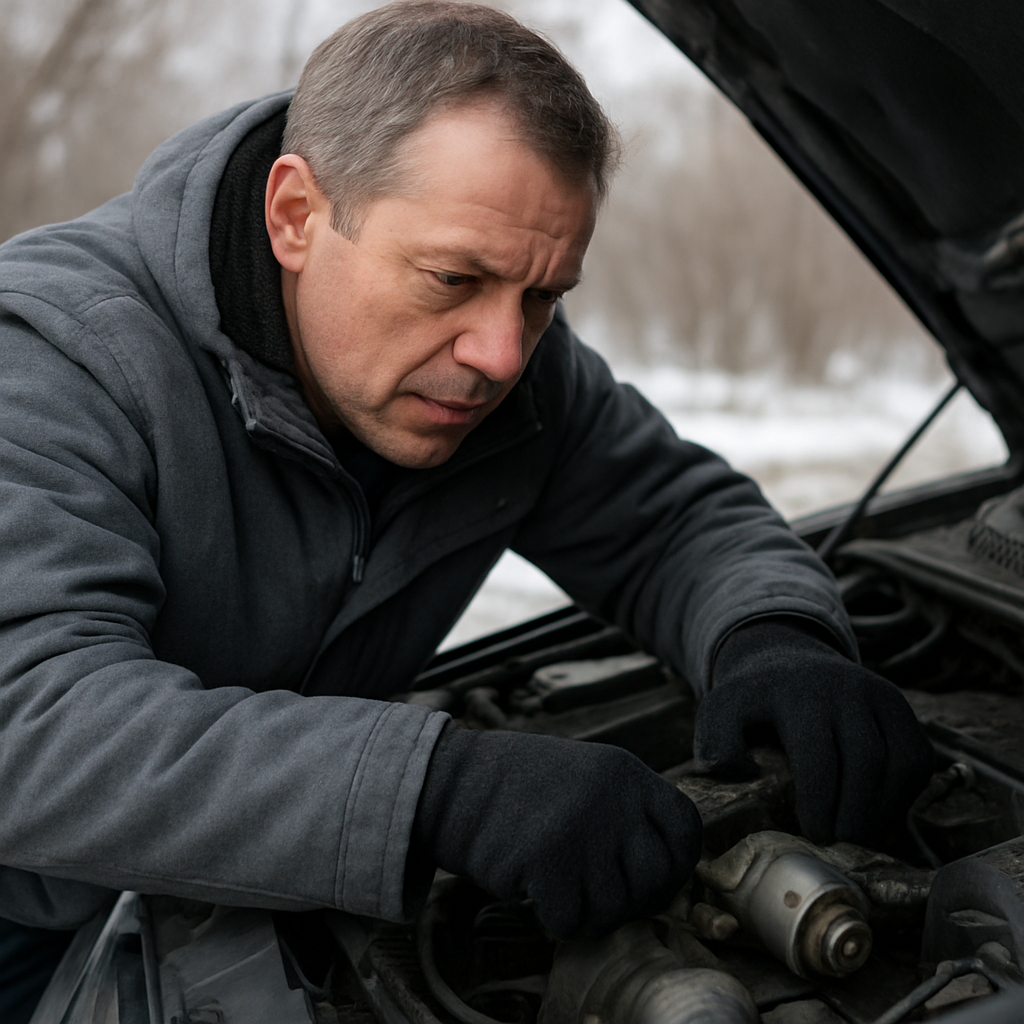
A grinding sound during a cold start can be caused by the starter failing to engage or disengage cleanly. The starter gear engages with the engine to turn it over; if it does not release promptly as the engine catches, the gears may grind. This is a plausible explanation rather than a confirmed diagnosis: sound alone cannot identify the faulty component, and other noises require separate assessment.
Why a car may grind during a cold start
When you turn the key or press the start button, the starter gear engages with the engine so that it can crank. AutoZone’s repair guidance on cold-start grinding describes a starter that fails to disengage as a possible source of grinding. A technical discussion of startup grinding likewise identifies delayed starter disengagement as one possibility. The noise may occur as the engine catches, when the starter should be releasing.
Owner discussions report that the symptom can seem worse in cold weather, including one concerning a Honda Fit. Those reports do not establish that low temperature itself is the cause, however, or that the same explanation applies to every vehicle. A repair-shop overview of startup grinding also identifies a worn or failing starter as a possible cause, not a diagnosis for an individual car.
A brief metallic scrape or grinding sound describes the symptom, but it does not prove which part has failed. Repeated grinding may raise concern about wear at the point where the starter and engine gears engage, but forum discussions cannot establish the condition of a particular vehicle or predict the repair it needs. Do not repeatedly start the car simply to reproduce the noise. If it happens again, record it if it is safe to do so and arrange an inspection by a qualified technician.
What it means if the noise stops—or continues after startup
The timing of the noise is important. Note exactly when it begins and ends:
- Only while cranking: The noise is linked to starter operation, so starter engagement or release is one possibility to discuss with a technician.
- As the engine catches, then stops: Delayed starter disengagement remains a possibility. A brief noise does not mean that an underlying issue is harmless or has corrected itself.
- After the engine is running, or until the car warms up: This differs from a noise limited to cranking. The available evidence does not establish the cause, so it should not automatically be blamed on the starter or on a particular engine component.
If the sound continues after the engine starts or fades only as the vehicle warms up, document that pattern and seek diagnosis rather than guessing at the cause. A recurring noise can still need attention even when it goes away on its own. If the sound is more of a rattle after the engine starts, see how startup rattling differs from grinding.
If a Honda grinds on cold starts
A starter engagement or disengagement issue is one possible explanation for a Honda, as it is for other vehicles. The available Honda-specific material is an owner discussion about a Honda Fit; it is not manufacturer guidance and does not prove a Honda-wide defect. It also does not establish a particular model’s cause, a VTC-actuator fault, a recall or a recommended repair.
When booking an inspection, provide the technician with the exact model year and engine, the outside conditions, how long the noise lasts, and whether it occurs during cranking or after the engine catches. A sound description alone cannot confirm a model-specific fault.
What to note before an inspection
Useful details can help a technician distinguish a startup-related noise from one that continues while the engine is running. Record or note:
- Whether the sound starts while the key or start button is activating the starter, at the instant the engine catches, or after the engine is already running.
- How long it lasts and whether it stops immediately, continues, or fades as the vehicle warms up.
- Whether it happens on every cold start or only occasionally, and the temperature or other conditions when it occurs.
- The vehicle’s make, model, year and engine.
If the noise is accompanied by a separate issue such as prolonged or difficult cranking, that is not the same symptom as grinding during starter engagement. For background on that separate issue, read about other causes of hard starting in cold weather. If the car clicks and does not start rather than grinding, see what to check when a car clicks but will not start.
Grinding during startup does not by itself confirm engine failure or a transmission fault. A discussion of starter and engine-gear engagement is not a diagnosis of transmission grinding. If the sound recurs or persists after the engine is running, have the vehicle assessed rather than relying on the noise description to decide what has failed or whether the car is safe to drive.