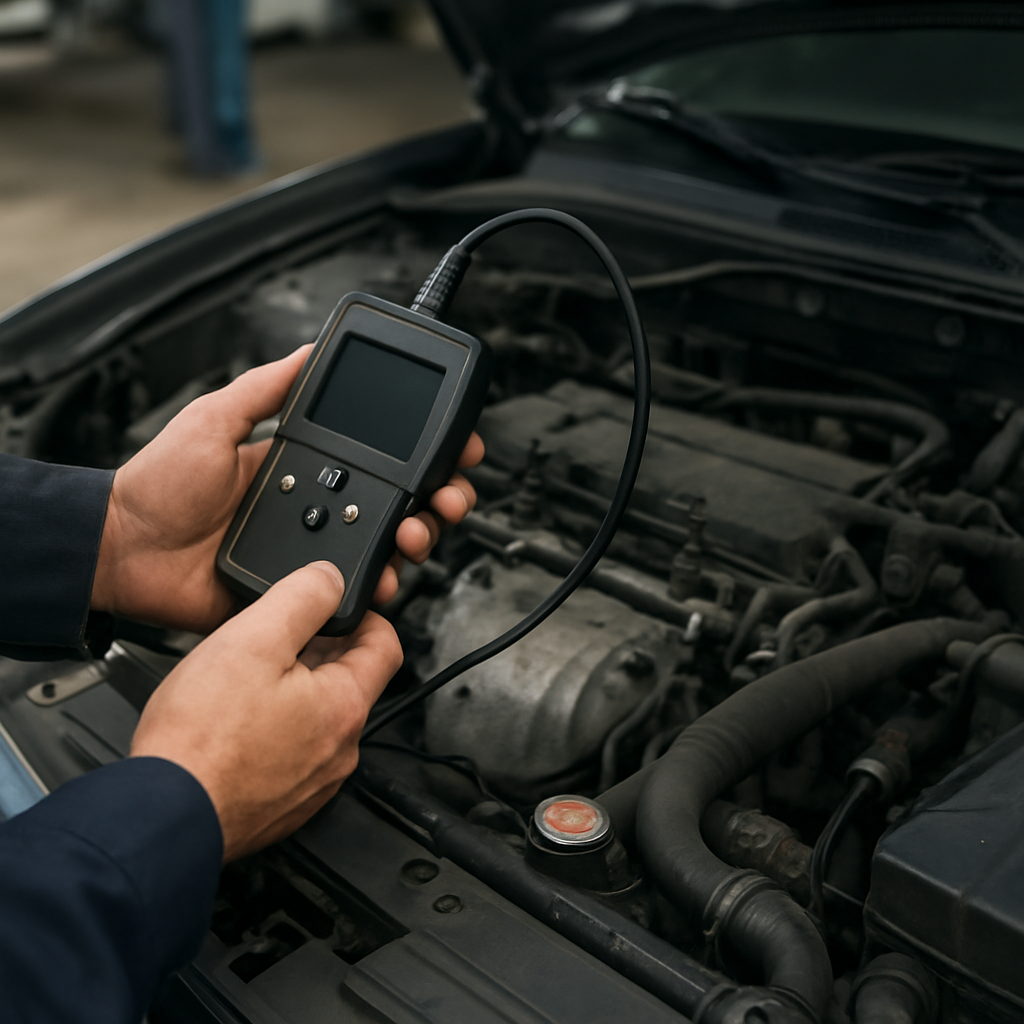
P0128 means the engine coolant temperature has remained below the temperature the vehicle’s control system expects under thermostat regulation. In plain terms, the engine is not reaching its expected operating temperature. A thermostat stuck partly or fully open is a common cause, but the code does not by itself confirm that the thermostat has failed.
P0128 is a standardised OBD-II code, so its basic meaning is the same on a 2007 Civic as on other vehicles, including a 2010 Civic. The cause and repair details can still vary by vehicle and engine. The available information does not establish a 2007 Civic-specific temperature threshold or repair procedure.
What P0128 means on a 2007 Honda Civic
The engine-management system has detected that coolant temperature is below the expected thermostat-regulating temperature. This describes a temperature-performance condition, rather than diagnosing one particular failed part. The P0128 explanation for Honda Civics describes the same general condition and notes that thermostat, cooling-system and temperature-sensor issues can all be relevant.
If you are asking about P0128 on a 2010 Honda Civic, the basic code definition is the same. That does not mean that a 2010 and a 2007 Civic necessarily use identical diagnostic thresholds, components or repair steps.
Common causes and signs to check
A thermostat that is stuck partially or fully open is the leading possibility in the supplied Honda-wide information. It can allow coolant to circulate before the engine has warmed sufficiently. It is a common cause, not a confirmed diagnosis for every 2007 Civic showing this code.
Other possible causes include:
- Low coolant or a cooling-system leak: These can affect cooling-system operation and the reliability of temperature readings.
- Air trapped in the cooling system: Air pockets can interfere with coolant circulation or temperature readings.
- A faulty engine coolant temperature (ECT) sensor: The sensor may report a temperature that does not accurately reflect the engine’s actual condition.
- Sensor wiring or harness problems: A poor connection or wiring fault can affect the temperature signal sent to the engine-management system.
- Less-established possibilities: The Civic source also lists a cooling-fan fault or an intake-air-temperature (IAT) sensor issue. Neither should be assumed to be the cause on a 2007 Civic without testing.
Possible clues include slower-than-usual warm-up, a heater that stays cool, or higher-than-expected fuel consumption. These symptoms can help guide diagnosis, but none proves that a particular part has failed. The Honda-wide P0128 overview also identifies a thermostat stuck open as a common cause while listing an ECT sensor fault as another possibility.
How to diagnose and fix P0128
It is better to establish why the engine is not reaching the expected temperature than to replace the thermostat solely because P0128 is stored. A sensible diagnostic order is:
- Check the coolant level and look for leaks. Check the coolant only when the engine is cold, and look for visible signs of leakage. Never open a hot, pressurised cooling system.
- Consider whether air may be trapped. If coolant has been lost or the system has recently been serviced, a technician may need to assess whether air in the system is affecting operation.
- Verify the temperature readings. A technician can use a scan tool to review live ECT data as the engine warms and compare it with other available temperature information.
- Inspect the sensor circuit. If readings appear implausible, inspect the ECT sensor and its wiring or harness before deciding which part to replace.
- Confirm the suspected fault before repairing it. If testing supports a thermostat that is allowing coolant to circulate too early, thermostat replacement may be appropriate. If testing instead identifies low coolant, a leak, trapped air, a sensor fault or wiring damage, that issue should be corrected.
A separate P0128 diagnostic overview for a 2022 Civic describes using scan-tool temperature data, but it is not a verified procedure or specification for a 2007 Civic. The supplied information does not establish the 2007 model’s component locations, coolant specification, bleeding procedure, torque settings or repair time. If you do not have the tools or experience to diagnose the fault or work on the cooling system, ask a qualified technician to do it.
Clearing the code or fitting a part without confirming the cause does not show that the fault has been fixed. After a repair, have the code status checked and confirm that the temperature condition has been resolved.
What might a P0128 repair cost?
As broad U.S. independent-shop estimates, the supplied Honda-wide source lists about $80–$350 for a thermostat repair and $80–$250 for an ECT sensor repair. These are not verified quotes for a 2007 Honda Civic, and they are not guaranteed prices. The final bill can vary with the confirmed cause, parts, labour rates, location and any additional cooling-system work.
Other causes, such as a leak or wiring fault, may lead to a different estimate. Ask the repairer to explain the diagnosis and provide an itemised estimate before authorising parts replacement.
Is P0128 serious, and can you drive with it?
The supplied Honda-wide guidance describes short-term driving as possible in most cases, but that does not guarantee that a particular 2007 Civic is safe to drive. P0128 indicates that the engine is not reaching its expected operating temperature; the code alone does not mean the engine is overheating. Still, arrange diagnosis and repair promptly. Leaving the underlying fault unresolved can have consequences and may contribute to an emissions-test failure.
There is no evidence here to set a safe number of miles, days or trips. Do not continue driving if the engine is overheating, coolant is being lost or the temperature behaviour is abnormal. Stop safely and seek professional assistance in those circumstances. A diagnostic code by itself cannot establish that a vehicle is roadworthy. For broader warning-light decisions, see what to do when the engine management light is on.
Will P0128 clear itself, or can the fault fix itself?
The supplied information does not establish when a P0128 code or warning light might clear, or whether the underlying cause will resolve without repair. Do not rely on the light going out as proof that the fault has been fixed. Have the vehicle checked with a scan tool to confirm whether the code is active, pending or stored, and ask for the cause to be diagnosed rather than assuming it has repaired itself.