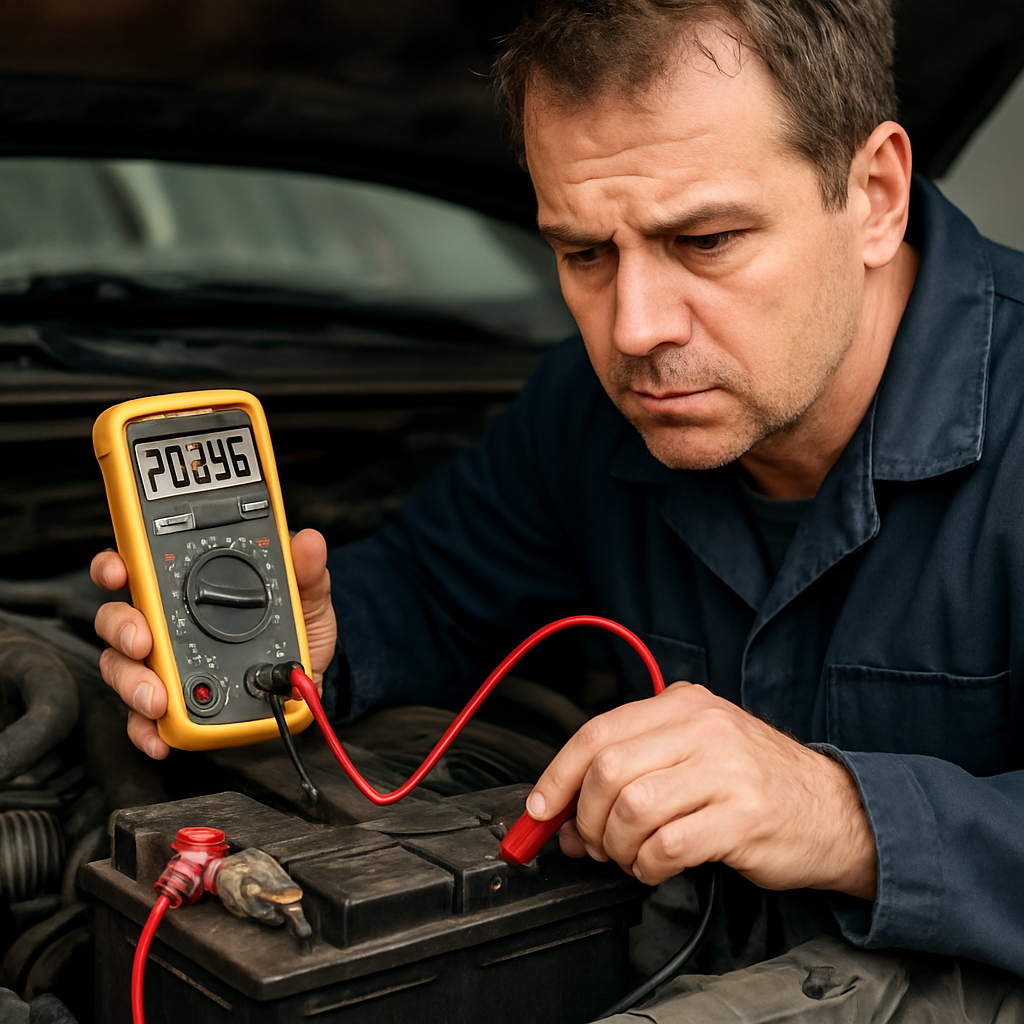
Yes, a weak battery may contribute to a P0335 code indirectly if low voltage while starting affects whether the engine computer receives a usable crankshaft-position signal. But P0335 does not prove the battery is bad, and it does not automatically mean the crankshaft position sensor has failed. The battery, connections, and sensor circuit all need to be checked before replacing parts.
Can a bad battery cause P0335?
P0335 means the engine computer has detected a problem with the crankshaft position sensor A circuit. A weak battery or low voltage during cranking may affect signal detection, but that is a possible contributing factor—not a diagnosis. A code can also appear because of a faulty sensor, damaged wiring, a poor connector, or another problem in the signal system. Guidance on P0335 and low cranking voltage describes this battery connection as indirect.
If the code appeared after a flat battery, jump-start, or difficult start, check the battery’s condition, its terminal connections, and how the engine cranks. Those circumstances make a power-supply issue worth investigating, but timing alone does not establish that the battery caused the code. If a battery or connection problem is corrected, clear the code with an appropriate scan tool and check whether it returns. Clearing a code—or disconnecting the battery—does not repair an underlying fault.
The same general answer applies to Toyota, Nissan, Ford, and Chevrolet: low voltage may be relevant, but the information available here does not establish a brand-specific rule or procedure. Diagnosis can vary by year, model, and engine, so use the vehicle’s service information rather than assuming one test or repair applies to every vehicle.
What P0335 means and how to diagnose it
The crankshaft position sensor provides an engine-position signal used by the engine control module. P0335 identifies a fault in the sensor A circuit or signal; it does not identify the failed component by itself. As Edmunds’ explanation of P0335 makes clear, the code refers to a crankshaft-position-sensor circuit malfunction, not a confirmed need for sensor replacement.
Possible causes include a failing sensor; wiring that is damaged, open, or shorted; a loose, corroded, or otherwise poor connector; or a damaged reluctor or tone wheel that affects the signal. An ECM input or calibration concern is also possible, though it should not be assumed without testing. These alternatives are why replacing the sensor solely because P0335 is present can miss the actual fault. For more detail on signs and checks for a failing crankshaft position sensor, see our related guide.
A sensible diagnostic order is:
- Record the codes and symptoms. Note whether the engine cranks slowly, is difficult to start, stalls, or runs unevenly, and whether other codes are present.
- Check the battery and connections. If starting has been slow or the battery has recently gone flat, have its condition and the starting system assessed. Inspect accessible terminals for looseness or corrosion, following the vehicle’s instructions.
- Inspect the sensor circuit. Look for damaged wiring, a loose connector, corrosion, or signs of poor contact. An apparent sensor fault can originate elsewhere in its circuit.
- Test the signal and related components. If the basic checks do not explain the code, a technician can follow vehicle-specific procedures to assess the sensor, wiring, and reluctor or tone-wheel system. ECM diagnosis may also require specialist equipment.
Testing methods and specifications vary by vehicle, so do not rely on a generic pinout, resistance value, or voltage limit. The P0335 troubleshooting overview from CarParts.com also notes that a circuit code can involve more than the sensor itself. The repair should match the confirmed cause: it might involve correcting a power or connection problem, repairing wiring, replacing a failed sensor, or addressing a reluctor or control-module issue.
How serious is P0335, and can you keep driving?
How serious the code is depends on the underlying fault and the vehicle’s behaviour. A crankshaft-position signal problem can be associated with stalling or a no-start condition, but those outcomes are not inevitable. A warning light with no obvious symptoms does not, by itself, confirm that the vehicle is safe to drive or predict what will happen next.
Arrange prompt diagnosis. If the engine stalls, runs unreliably, or may not restart, stop somewhere safe and arrange qualified assistance rather than continuing to drive. There is no universal safe driving distance that can be determined from P0335 alone.
How much does it cost to fix P0335?
There is no reliable dollar estimate, parts price, or labour time available here, and the code alone is not enough to price a repair. The work could be as different as resolving a battery or connection issue, repairing wiring, replacing a sensor, addressing a reluctor problem, or investigating an ECM-related fault. The vehicle’s year, model, and engine also matter.
Ask for a diagnosis and an itemised estimate for your specific vehicle before authorising parts replacement. Where applicable, ask the repairer to distinguish the diagnostic charge from the proposed repair cost. A quote should explain what testing identified the fault; a sensor should not be treated as the automatic fix.
Will a bad crankshaft sensor drain the battery?
P0335 alone does not establish the cause of a battery that keeps going flat, and the available information does not confirm whether a crankshaft sensor or its circuit is responsible for a key-off battery drain. Battery-drain diagnosis is a separate issue from finding the cause of P0335, so neither should be assumed to explain the other. If the battery continues to drain, see our guide to investigating a battery that keeps draining and arrange an appropriate diagnosis.