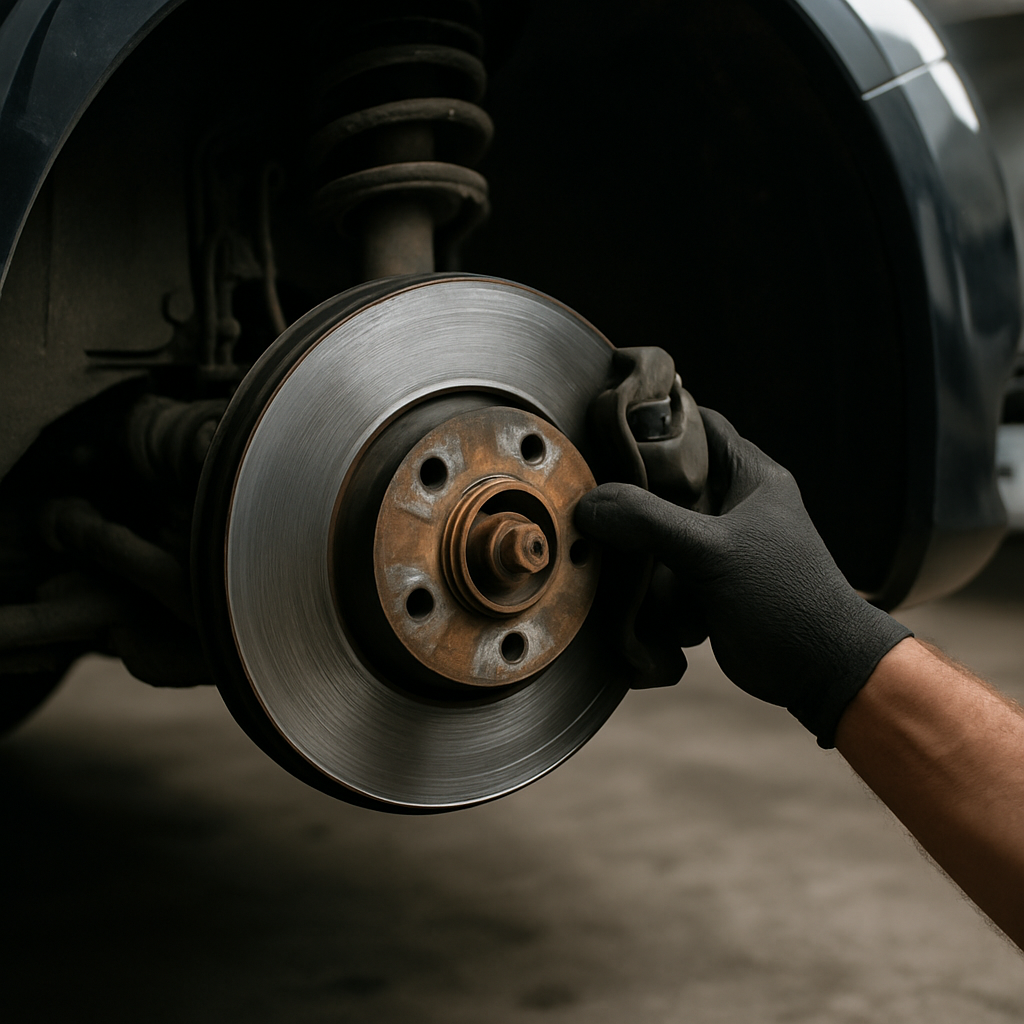
A squeal you hear while the car is moving that stops when you press the brake pedal is a useful clue, not a diagnosis. Brake-pad vibration or contact can produce a high-pitched noise, and applying the brakes changes the pressure and contact at the wheel, which may alter or suppress it. Dust or debris, moisture or surface rust, worn or glazed parts, and brake hardware or installation issues are all possible causes; the sound alone cannot confirm which is responsible or show that the brakes are safe.
Why would a squeal stop when I press the brake pedal?
Brake pads and discs can vibrate as they meet, creating a squeak or squeal. When you apply the pedal, the braking force changes how the parts contact one another. That change may stop the vibration making the noise, even though it does not prove that the underlying cause has gone away.
Possible contributors include pad vibration, dirt or debris between the pad and disc, moisture or light surface rust, worn pads, glazing, or a problem with brake hardware or installation. These causes can produce similar sounds, so a noise that stops under braking does not identify a particular failed part. Nor can it establish pad thickness or rotor condition. RAC and CRC discuss several possible causes of brake squeal, including several of these contributors.
Pay attention to when the sound starts and stops, whether it changes after rain or washing, and whether braking feels different. If it continues or keeps returning, arrange an inspection rather than assuming that pressing the pedal has fixed it.
Does it squeal while braking, or stop squealing when you brake?
These are different symptom patterns. A squeal while the car is moving that stops when you press the pedal is not the same as a squeal or whistle that starts or continues during braking. Drivers may describe either high-pitched sound as squeaking, squealing or whistling, but the description alone does not identify its source.
A noise during braking can also have several possible explanations, including pad vibration, dust or debris, moisture, wear, or glazed surfaces. A brief squeak as you come to a stop is not, by itself, proof of a particular defect. Persistent noise, or any change in braking performance, makes professional assessment more important. RAC’s guide to squeaky brakes covers noise associated with moisture, debris, wear and new brake parts.
If your sound happens mainly as the car accelerates or moves slowly, rather than being clearly linked to brake application, see our guide to squeaking noises when accelerating at low speed. It is a related troubleshooting guide, not confirmation of what is causing your noise.
What if the brakes or pads are new?
Some noise after new brake parts are fitted can occur while the surfaces bed in. RAC describes bedding-in noise as a possibility, but it should not be assumed that every continuing squeal is normal. Follow the vehicle or installer’s guidance; do not try to bed brakes in with aggressive or repeated hard stops. If a bedding-in process is recommended, it should only be done in a safe environment with awareness of other road users.
Noise that persists, gets worse, or begins after recent brake work can justify a check of the installation and hardware. The timing makes this worth investigating, but it does not prove that the parts were fitted incorrectly. Firestone says new-brake noise should decrease as surfaces wear in and suggests having the brakes checked if the noise does not fade after a few days or worsens. Treat that as general guidance, not a universal timetable for every vehicle.
Can brakes squeal even when the pads seem good?
Yes. A pad that looks acceptable does not establish the condition of the entire braking system, and a visual impression may not reveal the source of the noise. Other possibilities include:
- Debris: Dirt or a small piece of debris between a pad and disc can make noise.
- Moisture or light surface rust: Damp conditions can leave a temporary film on the discs.
- Glazing: Overheating can leave pad or disc surfaces glazed and contribute to noise.
- Vibration or hardware issues: Pad vibration, loose or incorrectly fitted hardware, or problems at moving contact points may be involved.
CRC also identifies debris, glazing, and dry caliper slides or contact points as possible contributors. Lubrication, where appropriate, concerns specified brake contact points; it is not a reason to apply lubricant to the pad or disc friction surfaces. An informal forum suggestion about loose or incorrectly fitted hardware is not a verified diagnosis. If the noise persists or its cause is unclear, have the brakes inspected rather than replacing pads or discs solely because of the sound.
Is it safe to drive with squealing brakes?
The noise alone cannot certify that a car is safe to drive, even if it stops when you press the pedal. RAC’s general guidance is that a squeak may not be urgent when braking performance is unaffected, but persistent noise should be checked. That is not a guarantee about an individual vehicle.
Arrange prompt professional assessment if braking feels reduced or different, or if a high-pitched squeal becomes a deep grinding sound. Worn pads may need replacement, and grinding can indicate metal-to-metal contact; reduced stopping power can also mean a longer stopping distance. If braking performance is impaired, do not continue driving as normal—seek professional help to determine the safest next step.
Will the squeaking eventually stop?
Sometimes. RAC notes that moisture or light surface rust after rain, washing or damp parking may cause a brief noise that clears after a few normal applications of the brakes. Noise from new parts may also subside during bedding-in. Neither outcome is guaranteed.
A continuing cause—such as wear, debris, glazing, or a hardware or installation issue—may not resolve on its own. Have persistent or worsening noise checked, and do not wait to see whether it disappears if braking performance is affected.