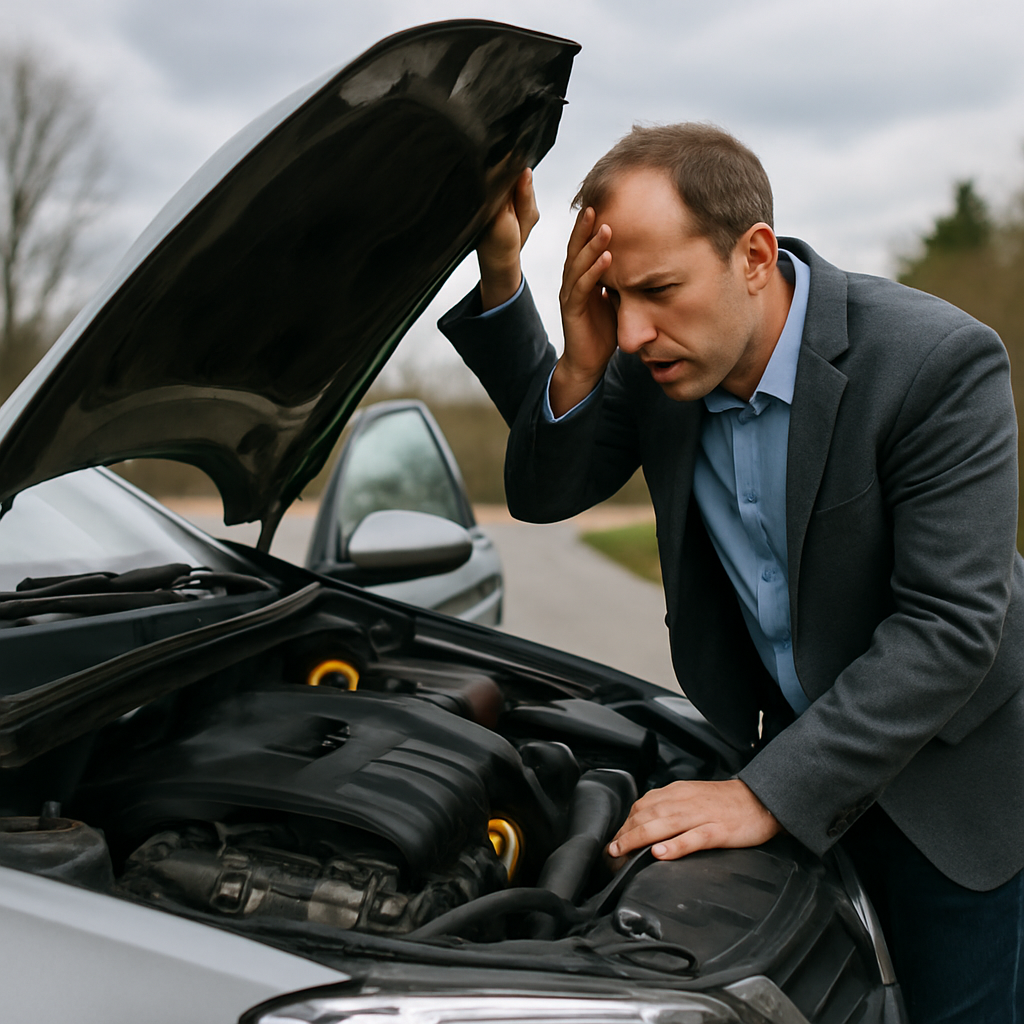
If your car has stopped moving while the engine is still running, treat it as a potential drivetrain fault and get somewhere safe if you can do so without forcing the vehicle. An engine that revs but produces no movement commonly points to a transmission, clutch, gear-selection, driveshaft, or axle problem. If the engine has also lost power or stalls, the fault may instead be in the engine or fuel-management system.
What is it called when a car is running but not moving?
It is usually described as a loss of drive or a loss of propulsion. In an automatic, the engine may idle or rev normally, but the transmission is not transferring torque to the driven wheels. In a manual vehicle, a worn or failed clutch can produce the same symptom.
The distinction matters. A car that will not move in Drive or Reverse is more likely to have a transmission, selector, driveline, or axle fault. A car that barely responds when you press the accelerator may have an engine-power problem, even though it is technically still in gear.
Why did my car suddenly stop moving while driving?
A sudden loss of movement can occur when a component between the engine and wheels can no longer transmit power. The engine may continue running because it is separate from the system that puts that power to the road. Do not keep accelerating in an attempt to make the car catch; this can worsen some transmission or clutch faults.
If the vehicle slows or stops but the engine continues to run, switch on the hazard lights, steer to a safe place only if the car still responds predictably, and arrange recovery. If it happens in live traffic, on a motorway, or where you cannot move the vehicle safely, contact emergency assistance rather than attempting roadside repairs.
Common reasons an engine runs but the car will not move
Transmission fluid, hydraulic pressure, or internal transmission trouble
Automatic transmissions rely on the correct fluid condition and pressure to apply internal clutches and engage gears. Low fluid, a leak, overheating, a valve-body or pressure-control fault, or internal wear can lead to slipping, delayed engagement, or a complete loss of drive. One repair guide also identifies old transmission fluid and linkage faults among possible reasons a vehicle runs but does not move, although neither symptom confirms the failed part on its own.
Only check transmission fluid if your vehicle manufacturer provides a safe procedure. Many newer vehicles have no conventional dipstick and require a specified temperature, fluid type, and filling method. Guessing at the level or adding an unsuitable fluid can create further problems.
Failed clutch or clutch-control fault in a manual vehicle
On a manual car, a worn clutch disc, pressure-plate problem, hydraulic fault, or broken clutch cable can prevent engine power reaching the gearbox. The engine speed may rise sharply with little or no increase in road speed. A burning smell, a very high clutch bite point, or difficulty selecting gears can be useful clues, but a workshop inspection is needed to establish the cause.
Gear selector or linkage problem
The gear lever can appear to be in Drive, Reverse, or a manual gear while the transmission itself is not fully selected. This may involve an external cable or linkage, an electronic selector system, or an internal transmission issue. A loose, unusually stiff, or imprecise gear lever is worth reporting to the recovery operator or technician.
Broken driveshaft, CV joint, differential, or axle
On front-, rear-, and four-wheel-drive vehicles, the driveline has several mechanical links between the transmission and wheels. A broken driveshaft, failed constant-velocity joint, damaged axle, or differential problem can remove drive even while the engine and gearbox appear to engage. Clunking, grinding, vibration, or a bang immediately before the loss of movement can help narrow the diagnosis.
Engine power loss rather than a true loss of drive
If the car does move but will not accelerate properly, the issue may be insufficient engine power rather than the transmission. Fuel delivery, airflow measurement, throttle control, and engine-management faults can cause poor response or stalling. A dealership service overview of reasons an engine may stall while driving includes fuel-system, mass-airflow-sensor, and transmission-related problems as possible areas to investigate. A warning light or stored fault code can give a technician a useful starting point, but it does not prove that one component needs replacement.
My car will not move in Drive or Reverse: what does that suggest?
No movement in either Drive or Reverse makes a single-wheel traction issue less likely and raises suspicion of a broader transmission, selector, clutch, or driveline fault. However, the exact diagnosis depends on the vehicle and its layout. A front-wheel-drive car, rear-wheel-drive car, four-wheel-drive vehicle, and hybrid can fail in different ways.
Before assuming the transmission has failed, check only the obvious external points: confirm the parking brake is released, ensure the selector display agrees with the gear selected, and look for warning messages, a puddle of fluid, or smoke. Do not crawl beneath the vehicle, disconnect cables, or attempt to move it by repeatedly selecting Drive and Reverse.
What to do at the roadside
- Protect yourself and other road users. Use hazard lights and move to a safer position only if the vehicle can do so reliably.
- Note the symptoms. Record whether the engine revs, whether any gear engages, whether Drive and Reverse behave differently, and whether there were noises, smells, warning lights, or fluid leaks.
- Do not force the accelerator. High revs with no movement can add heat and damage to a slipping transmission or clutch.
- Use the correct recovery method. Tell the recovery provider that the engine runs but the vehicle has lost drive. Some vehicles must be transported with their driven wheels off the road or on a flatbed; follow the owner’s handbook for your model.
- Arrange proper diagnosis. A workshop can scan for fault codes, inspect for leaks and driveline damage, verify selector operation, and carry out transmission tests where appropriate.
How a technician diagnoses a car that starts but will not drive
A useful diagnosis begins by separating an engine-performance problem from a power-transfer problem. The technician will normally confirm the complaint, inspect for obvious fluid leaks or damaged driveline parts, check warning lights and stored diagnostic codes, and assess whether the selected gear is actually being commanded and engaged.
Further testing can include checking fluid condition where the vehicle permits it, examining shift linkage or selector data, and inspecting axles, joints, and mounts. Internal transmission tests may be required if the engine runs normally, the selector operates correctly, and there is still no drive. A broad online discussion of a car that idles but does not move in Drive illustrates how this symptom can have several explanations; it is not a reliable basis for choosing a replacement part.
Can you keep driving if the engine revs but the car will not move?
No. A vehicle that has lost drive is unsafe and unpredictable in traffic, even if the engine runs smoothly. Continued attempts to drive it can leave you stranded in a dangerous position and may worsen an underlying clutch or transmission issue. Recovery is the sensible choice, especially if there is smoke, a burning smell, grinding, a fluid leak, or a transmission warning message.
If the engine has shut off while driving but starts again, that is a different symptom pattern. It may involve fuel, air, electrical, or engine-management faults rather than a simple loss of drive, and it still warrants prompt diagnosis. Do not rely on a temporary restart as proof that the fault has gone away.
What the repair may involve
The repair depends entirely on the confirmed fault. It may be as limited as correcting a leak or adjusting a selector mechanism, or it may require clutch work, axle or driveshaft replacement, or transmission repair. A general troubleshooting video on vehicles that start but will not move highlights the value of identifying whether the problem is loss of engine power or loss of drive before pursuing repairs.
Ask the garage to explain what tests support its diagnosis, whether there are related fault codes or leaks, and whether the proposed repair addresses the cause rather than only a symptom. That approach is particularly important when a car stopped moving with the engine still running, because the same outward symptom can originate in several very different systems.
Pingback: Honda Ridgeline Oil Change Extra Costs: What Should Be on the Bill? - Premier Motoring Blog
Pingback: Mazda CX-70 vs CX-90: Size, Seating, Price, and Which SUV Suits You - Premier Motoring Blog
Pingback: 1965 Buick Riviera Gran Sport: Specifications, Features, and Buying Advice - Premier Motoring Blog