Author Archives: PMB

Chrysler Pacifica Interior Lights Won’t Turn Off: What to Check First and When to Get Help

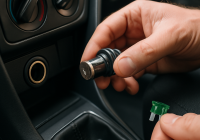
If your Chrysler Pacifica interior lights will not turn off, do not immediately assume that a bulb, fuse, door switch, or control module has failed. “Interior lights” can mean overhead lamps, map lamps, cargo-area lamps, ambient lighting, instrument-panel illumination, or even other systems that remain active after shutdown. The supplied evidence does not include the… Read More: Chrysler Pacifica Interior Lights Won’t Turn Off: What to Check… »

Nissan Altima Transmission Fluid Change: What to Verify Before Service

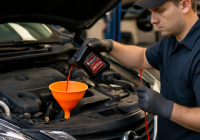
A Nissan Altima transmission fluid change should not be booked, performed, or priced as a one-size-fits-all job. Before any fluid is added or replaced, confirm the vehicle’s model year, engine, exact transmission application, and Nissan-specified fluid requirement in the applicable owner documentation or factory service information. That verification matters because a generic “transmission service” quote,… Read More: Nissan Altima Transmission Fluid Change: What to Verify Before Service »

Steering Wheel Shakes When Braking at High Speeds: Causes, Checks and Fixes

If your steering wheel shakes when braking at high speeds, the first area to inspect is usually the front brake system—particularly the brake rotors (also called discs), pads and caliper movement. An uneven braking surface or uneven braking force can create a pulse that travels through the pedal, steering gear and steering wheel. However, the… Read More: Steering Wheel Shakes When Braking at High Speeds: Causes, Checks… »

Oil Pressure Low—Stop Engine: What It Means, What to Do, and Common Causes

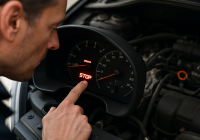
An “Oil Pressure Low—Stop Engine” message is an oil-pressure warning, not simply a routine oil-change reminder. It can mean the engine is not receiving sufficient lubrication pressure, although a faulty sensor, switch, or wiring circuit can also produce an inaccurate warning. Treat it as urgent until the cause has been established: pull over safely as… Read More: Oil Pressure Low—Stop Engine: What It Means, What to Do,… »

P0300 Random/Multiple Cylinder Misfire Detected: Meaning, Causes, Symptoms and What to Do

P0300 means the vehicle’s computer has detected a random or multiple-cylinder misfire. In plain English, one or more combustion events are not contributing normally, but the code does not identify a failed part by itself. Worn spark plugs, an intake-air leak, an air/fuel-mixture problem and damaged wiring are among the possible causes. Record any other… Read More: P0300 Random/Multiple Cylinder Misfire Detected: Meaning, Causes, Symptoms and What… »

Grinding Sound When Turning the Steering Wheel: Causes, Checks and When to Stop Driving

A grinding sound when turning the steering wheel is a symptom rather than a diagnosis. It can come from a wheel bearing, a CV joint or axle, hydraulic power-steering components on vehicles fitted with them, steering or suspension joints, a strut mount, brake hardware, or something physically rubbing at a wheel. The important clues are… Read More: Grinding Sound When Turning the Steering Wheel: Causes, Checks and… »

P0300 Random/Multiple Cylinder Misfire Detected: Meaning, Causes, Symptoms and What to Do

P0300 means the vehicle’s OBD-II system has detected an engine misfire occurring randomly and/or across more than one cylinder, rather than consistently identifying one cylinder alone. A misfire is a cylinder failing to make its normal contribution to combustion and engine power. Broadly, that can happen when spark, fuel delivery or compression is absent or… Read More: P0300 Random/Multiple Cylinder Misfire Detected: Meaning, Causes, Symptoms and What… »

Steering Wheel Shakes at High Speeds: Likely Causes, Checks, and Fixes

A steering wheel that shakes at high speeds is a symptom, not a diagnosis. Tyre and wheel concerns—including incorrect inflation, worn or damaged tread, and wheel imbalance—are sensible places to inspect first, particularly when the vibration happens while cruising. But brake problems, acceleration-related engine or engine-mount vibration, a bent axle or damaged driveshaft, and steering… Read More: Steering Wheel Shakes at High Speeds: Likely Causes, Checks, and… »

Steering Wheel Makes a Rubbing Noise When Turning: Causes, Checks, and When to Stop Driving

A steering wheel that makes a rubbing noise when turning can be caused by several different systems, including the steering assist, steering column, upper strut-bearing area, and front wheel-end or driveline components. The sound alone cannot identify the failed part. The most useful first clue is when it happens: while parked, only once the vehicle… Read More: Steering Wheel Makes a Rubbing Noise When Turning: Causes, Checks,… »