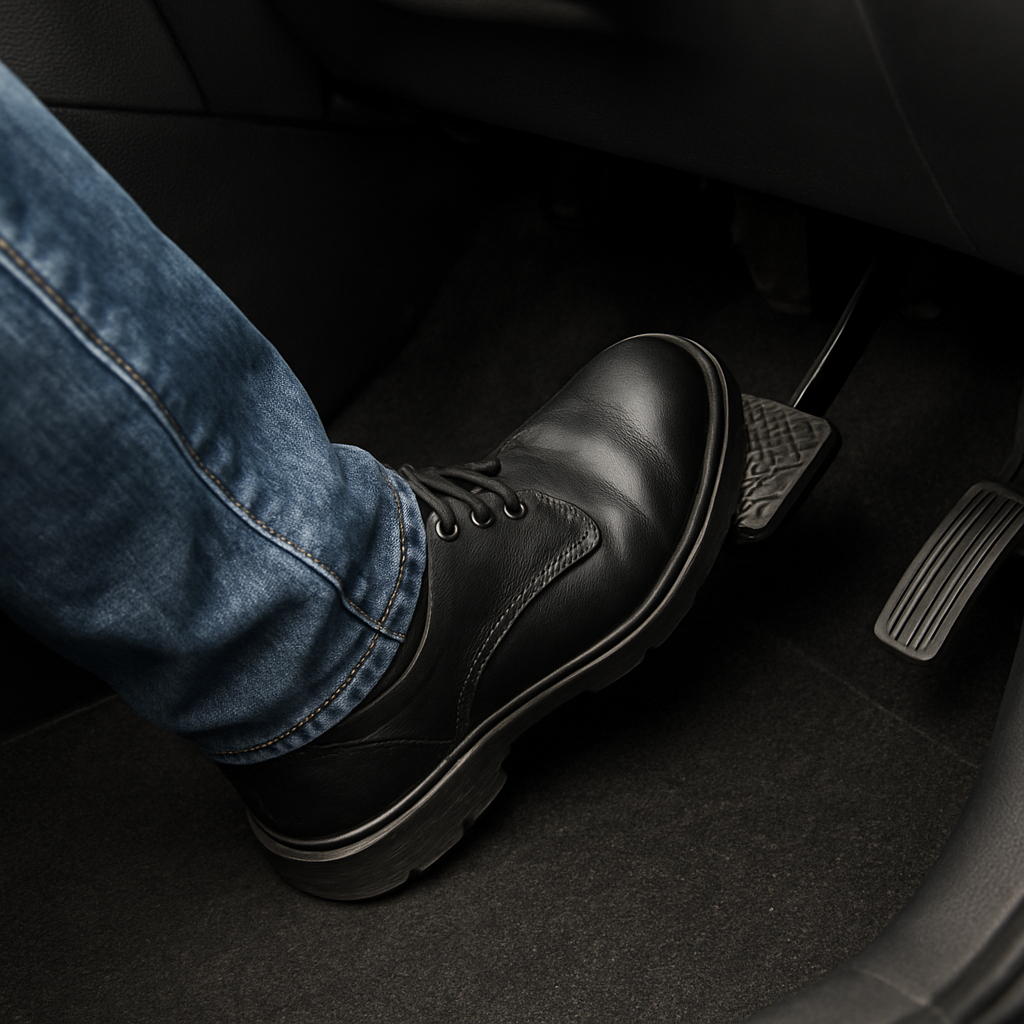
A soft or spongy brake pedal can mean the braking system is not building hydraulic pressure as it should. Air in the hydraulic system is a common cause, but fluid loss and other faults can feel similar, so pedal feel alone cannot identify the problem. Because braking performance may be reduced, treat a newly soft, low or sinking pedal as a safety concern and arrange immediate inspection.
Is a soft brake pedal dangerous—and should you drive?
A low or soft brake pedal needs immediate inspection. If the pedal reaches the floor, braking response has changed, or brake fluid is visibly leaking, stop using the vehicle and seek professional assistance. If braking is compromised, arrange vehicle recovery rather than testing the brakes on public roads.
If you can check the reservoir safely, its level may be useful information for a technician. However, a normal-looking fluid level or no visible leak does not rule out a fault. Wagner Brake’s guidance on spongy brakes advises immediate inspection for a soft or low pedal.
What a soft brake pedal feels like—and what can cause it
A pedal may feel unusually soft or spongy, offer less resistance than usual, travel farther before the brakes respond, or sink lower than normal when pressed. A pedal that reaches the floor is a particularly serious low-pedal symptom. These are clues to a problem, not a diagnosis.
Possible causes include air in the hydraulic system, a brake-fluid leak, a damaged brake line, a master-cylinder fault, or a problem in the ABS hydraulic assembly. Brake-fluid condition or the use of an incompatible fluid can also be relevant. Air is common, but a soft pedal does not prove that air is present.
- Air in the system: Air can interfere with hydraulic pressure and make the pedal feel spongy. It may remain after hydraulic work if the system was not properly bled.
- Fluid loss or a damaged brake line: A leak can reduce hydraulic pressure and produce a soft pedal. A damaged brake line is one possible source of fluid loss, but the source of a leak must be identified by inspection.
- Master cylinder or ABS hydraulic assembly: A master-cylinder fault may affect pressure even when no external leak is obvious. An ABS hydraulic assembly contains valves and solenoids; an internal fault, corrosion, or debris in the fluid may affect its operation. These components require proper diagnosis rather than a conclusion based on pedal feel alone.
- Brake-fluid condition or compatibility: Moisture in brake fluid can be relevant to a soft-pedal complaint. Fluid types are not interchangeable by guesswork: DOT 5 silicone fluid does not mix with DOT 3 or DOT 4 fluid and may cause system problems. Check the vehicle manual for the specified fluid. If the wrong fluid may have been added, see what to do if the wrong fluid was added to the brake system.
For more detail on potential causes, see Master Power Brakes’ explanation of soft brake pedals.
Brake pedal goes to the floor, but the fluid is full: what that can mean
A full-looking reservoir does not prove that the hydraulic system is sound. It does not rule out an internal fault, such as a possible master-cylinder problem, or a leak elsewhere in the system. Nor does it identify which component has failed.
If the pedal reaches the floor, stop using the vehicle and arrange immediate professional inspection or recovery, even if the reservoir appears full. Do not treat the fluid level as a reason to dismiss a floor-reaching pedal.
Spongy brakes with no air in the lines: other possibilities
Air is a common cause, but it is not the only one. If the pedal remains spongy after bleeding, that does not by itself prove the bleeding was incomplete. A fluid leak, damaged brake line, master-cylinder fault, brake-fluid issue, or fault in the ABS hydraulic assembly may produce a similar symptom.
Pedal feel alone cannot confirm an ABS fault. If bleeding has not resolved the symptom, have a qualified technician diagnose the hydraulic system rather than replacing parts based on the symptom alone.
How spongy brakes are fixed—and when bleeding may help
Bleeding the brakes removes air from the hydraulic system and may help when air is the cause, including after hydraulic components have been replaced and the system was not properly bled. If a soft pedal becomes firmer after gentle pumping, air may be involved, but this is not a definitive diagnosis. Pumping is not a repair and does not make a low or sinking pedal safe.
Bleeding will not repair a leak, damaged brake line, master-cylinder fault, or other faulty component. Any underlying fault must be identified and repaired. Brake-system and ABS bleeding requirements vary by vehicle, so follow vehicle-specific service information or use a qualified technician. Do not rely on a universal bleeding sequence or a guessed fluid specification.
Why brakes may feel spongy after a pad replacement
A spongy pedal after pad replacement should not be assumed to be caused by the pads themselves. The relevant question is whether the work also involved opening the hydraulic system or replacing another hydraulic component. Air can become trapped if hydraulic work was performed and the system was not properly bled.
Check what work was carried out and whether the correct vehicle-specific procedure was followed. If the pedal remains soft, have the repair and braking system inspected. Do not use the vehicle if the pedal is low or sinking, or if braking performance has changed.
What if the pedal feels soft only when turning?
A brake-pedal change that occurs while turning cannot be diagnosed from that symptom alone. Do not assume that a steering or suspension fault is responsible. A changing or soft brake pedal still needs prompt professional inspection, especially if braking response is affected.
Is it normal for a brake pedal to be hard?
Pedal firmness varies between vehicles, and a hard pedal cannot be diagnosed from feel alone. If the pedal feel has changed or braking response is affected, check the vehicle manual and arrange a qualified inspection.
How much does it cost to fix a brake-fluid leak?
Repair cost depends on the source of the leak, the vehicle, and local labour rates. A leak can involve different parts of the braking system, so have the source identified and request an estimate before authorising repairs. Do not delay inspection of a soft pedal or visible brake-fluid leak while waiting for a price.