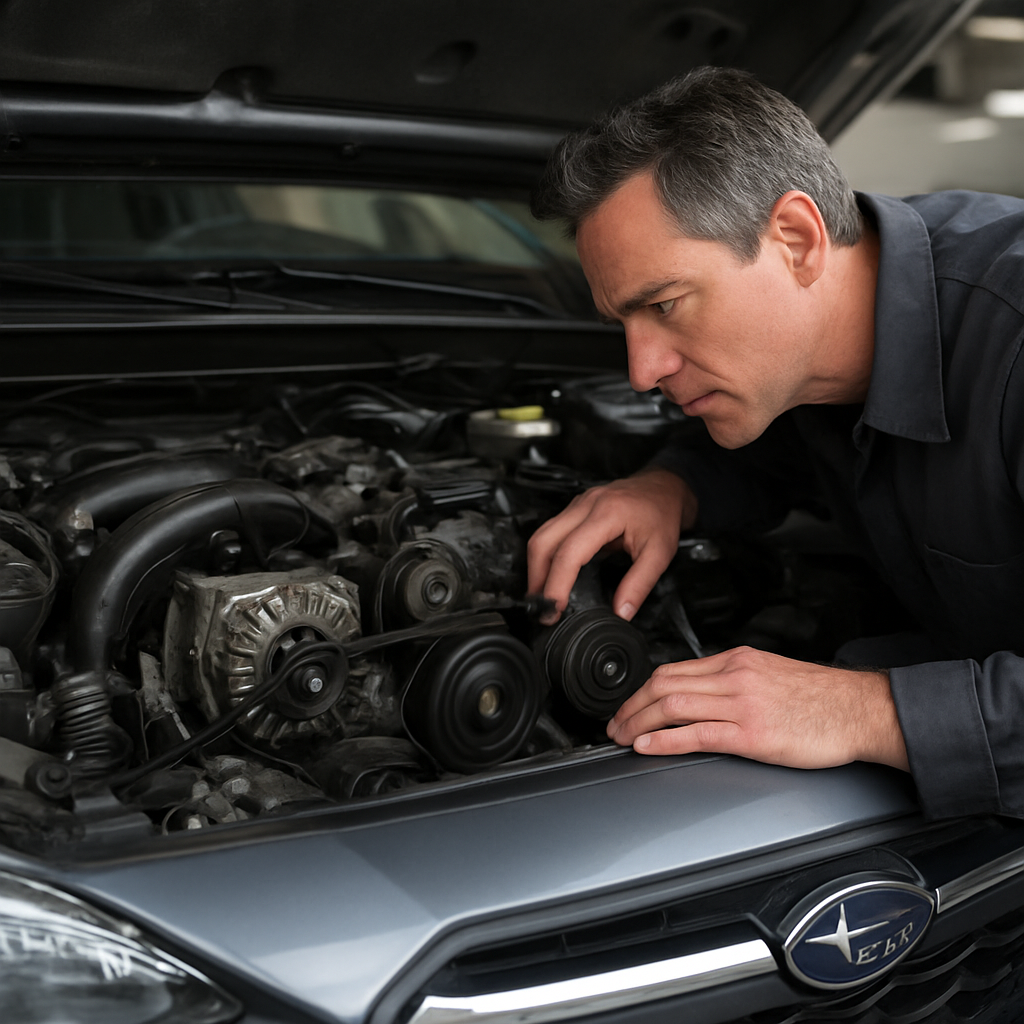
A squealing or squeaking noise from a Subaru can come from more than one area. The supplied sources identify a belt as one possible source when a high-pitched chirping or squealing seems to come from beneath the bonnet. They also mention brake-pad wear as a possible cause of squeaking associated with braking, and a wheel-bearing issue as one possible source of noise associated with turning.
These are useful clues, not a diagnosis. A sound alone cannot confirm which component is responsible, whether a part has failed, or whether the vehicle is safe to continue driving.
What could be causing your Subaru’s squealing or squeaking noise?
A high-pitched sound from beneath the bonnet
A high-pitched chirping or squealing that appears to come from beneath the bonnet may indicate a belt-related issue. Freehold Subaru’s guidance on maintenance-related sounds identifies belts as a possible source of this type of noise.
That observation does not identify a particular belt or prove that a belt is the cause. The available information does not support diagnosing a specific pulley, tensioner or other component from the sound alone. A technician would need to inspect the vehicle to establish the source.
A squeak associated with braking
If the noise occurs when you apply the brakes, brake-pad wear is one possibility. The supplied Forester troubleshooting discussion mentions brake-pad wear as a possible source of squeaking.
However, noise alone cannot confirm the condition of the brake pads or show whether the braking system is operating correctly. If the sound changes or stops when you brake, our guide to why a car’s squeal may stop when braking may provide useful general context. It does not confirm the cause of the noise on your Subaru.
A noise associated with turning
A noise that seems to come from a wheel area or occurs while turning may involve a wheel bearing, according to the supplied troubleshooting source. This is only one possibility and should not be treated as proof that a bearing has failed.
Make a note of which direction you are turning when the sound occurs and where it appears to come from. Those details can help a qualified technician narrow down the investigation.
What should you note before arranging an inspection?
Your observations can help a technician investigate efficiently, but they are not a substitute for a proper inspection. Without distracting yourself while driving, try to note:
- Where the sound seems to originate, such as beneath the bonnet, near a wheel or elsewhere on the vehicle.
- When it happens: at start-up, while driving, during braking or while turning.
- Whether it is constant, intermittent or limited to particular driving conditions.
- Whether the sound is becoming louder, more frequent or more severe.
- Whether the brake pedal, braking response or general vehicle behaviour feels different.
Do not rely on the apparent location or timing of the noise alone to identify a failed part. Similar sounds can have different causes, and the supplied evidence does not establish a Subaru-specific fault or a particular repair.
Is there a difference between squealing and squeaking?
Not necessarily in a diagnostic sense. The supplied sources use “high-pitched chirping” and “squealing” when referring to a possible under-bonnet belt issue, while using “squeaks” in connection with possible brake-pad wear and wheel-bearing noise.
They do not establish a standard acoustic difference between the words “squealing” and “squeaking”. The term used to describe the sound is less useful than explaining where it seems to come from and when it occurs.
What this information cannot establish
The available evidence does not show that these possible causes are unique to Subaru, to a particular Subaru model or to a particular model year. It also cannot identify the most common problem with a Subaru Crosstrek, as it provides no Crosstrek-specific reliability or fault-frequency data.
Buzzing should also be treated as a separate symptom. The supplied sources address squealing, chirping and squeaking, but do not provide enough information to diagnose a buzzing noise or to apply the possible belt, brake or wheel-bearing explanations to it.
When should you seek professional help?
Arrange prompt professional inspection if braking feels different or impaired, or if the noise is severe, worsening or accompanied by any change in the way the vehicle drives. Do not use the noise alone to decide that the car is safe to drive. If you are uncertain about the brakes or the vehicle’s condition, seek professional advice before continuing to use it.