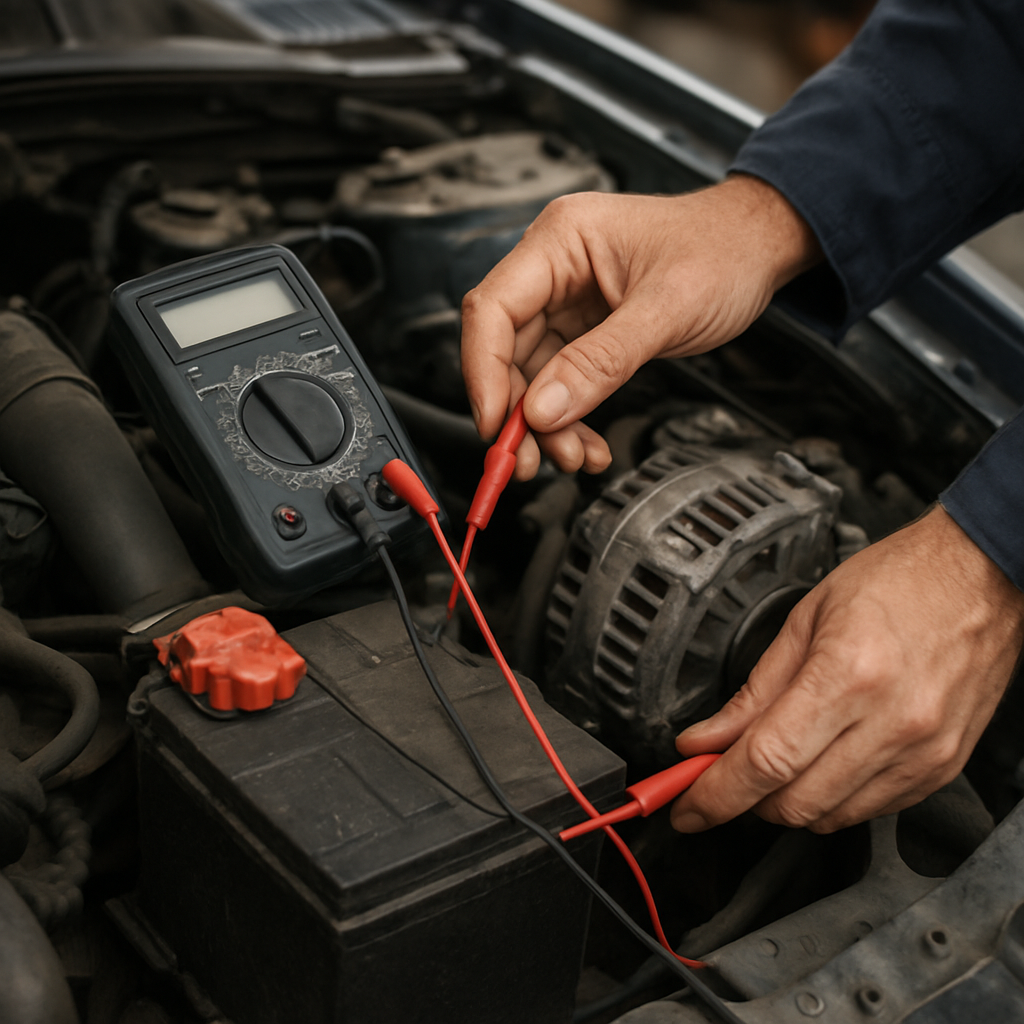
If your battery is not charging, the cause may be the alternator, its drive belt, a loose or corroded connection, damaged wiring, a fuse or charging-control fault, or a weak battery. A warning light or a discharged battery does not, by itself, prove the alternator has failed. Testing the battery and charging system is needed to identify the cause.
Why an alternator may not charge the battery
The alternator supplies electrical power while the engine is running and helps recharge the battery. A fault anywhere in that process can leave the battery low, even if the alternator itself is working.
- Worn or damaged alternator components: Internal parts such as brushes or bearings can wear and reduce or stop the alternator’s output. Fluid contamination can also damage internal components.
- A regulator or charging-control problem: The regulator helps control charging output, but its arrangement varies by vehicle. A regulator fault is one possibility; it is not the only explanation for a no-charge condition.
- A broken or slipping drive belt: Many alternators are belt-driven. If the relevant belt is damaged or slips, the alternator may not be driven properly and may not generate power. Belt arrangements differ between vehicles. If you notice a cold serpentine-belt squeal, read more about what a cold serpentine-belt squeal can mean; a squeal alone does not confirm a charging fault.
- Loose, corroded or damaged connections: Corrosion or a poor connection at the battery terminals, alternator output cable, plug-in connector or ground can interrupt charging. Wiring and connectors can also be damaged.
- A blown fuse or other electrical fault: A fuse or fault elsewhere in the charging circuit can stop power from reaching the battery. Fuse locations and circuit designs are vehicle-specific.
- A battery or battery-sensor issue: A weak or damaged battery may not accept or retain charge. On vehicles equipped with battery monitoring, inaccurate sensor feedback can also affect charging control.
- Vehicle-specific electronic control: Some vehicles use computer-controlled charging rather than relying only on a regulator at the alternator. The supplied source describes PCM-controlled charging in many Dodge, Jeep and Chrysler vehicles, but this does not apply to every vehicle. These faults need diagnosis using the vehicle’s specific system information.
These are possible causes, not a diagnosis. Replacing the alternator solely because the battery is discharged or a warning appears can miss a fault elsewhere in the circuit. The vehicle-dependent charging-control issues discussed for some Dodge, Jeep and Chrysler models are one example of why the system design matters.
Signs that the charging system may not be keeping the battery charged
A battery that repeatedly becomes discharged is a reason to check the battery and charging system. An alternator warning light can also indicate a possible charging-system problem, although warning-light behaviour varies by vehicle. Neither sign confirms that the alternator itself is faulty: a bad connection, belt, battery or control-circuit issue can produce a similar problem.
Symptoms alone cannot reliably identify which part has failed. The battery and charging circuit should be assessed rather than choosing a replacement part based on one sign.
Bad battery or bad alternator: what the evidence can tell you
The alternator generates electrical power for the vehicle and helps charge the battery; the battery stores electrical energy and supplies it when needed. A flat battery or a no-start condition can result from a problem with either one, or from another fault that prevents charging.
An alternator with worn internal components, a regulator problem or a slipping drive belt may not charge effectively. By contrast, a battery can become weak or discharged even when the alternator is functioning. Corroded battery connections, frequent short trips, leaving a vehicle parked for long periods and electrical accessories left on can all contribute to battery discharge. The battery may also be unable to retain charge because of its own condition.
For more detail on the relationship between these faults, see how a bad alternator can drain a battery. A battery test and a charging-system test answer different questions, so both may be needed before deciding which part requires attention.
What to check before replacing parts
You can start with a cautious visual inspection, following your vehicle’s instructions and avoiding moving engine components. If they are accessible, look for corrosion or looseness at the battery terminals and visible alternator connections. Check the alternator drive belt for visible damage or signs that it may be slipping, where the belt can be inspected safely.
A visible problem may point to an area that needs repair, but cleaning or tightening a connection is not a confirmed fix unless that connection was actually causing the fault. A visual inspection also cannot confirm that the alternator is producing the correct output.
Diagnosis may require testing the battery and the charging circuit with suitable equipment. A technician can assess the system according to the vehicle’s specifications and charging strategy. If the fault is inaccessible, involves wiring or electronic controls, or remains after basic checks, seek qualified diagnosis rather than replacing parts by guesswork.
Do not treat disconnecting the battery while the engine is running as a recommended alternator test: the information available here does not establish that procedure as safe or valid for your vehicle. Likewise, a visual check or an improvised test without suitable equipment cannot confirm charging output. A voltage reading also needs to be interpreted using the correct test conditions and vehicle-specific information; there is no universal threshold established here for diagnosing every vehicle.
Why a new alternator may still leave the battery uncharged
A replacement alternator does not rule out a fault elsewhere in the charging system, and the fact that a new unit is installed does not by itself show that it is defective. Before replacing more parts, have the following checked:
- Whether the alternator’s main output cable and plug-in connector are secure and undamaged.
- Whether the alternator and battery grounds are sound.
- The battery’s condition and its ability to accept and retain charge.
- The belt drive, where the alternator is belt-driven.
- Relevant fuses and wiring for the charging circuit.
- Any battery-sensor feedback or computer-controlled charging features fitted to that vehicle.
An incorrectly connected replacement or a poor ground could prevent charging, but installation error should not be assumed without inspection. Some vehicle-specific control faults require diagnostic checks beyond a visual inspection. Confirm the cause with appropriate testing before fitting another component.
What to do next
If the battery keeps going flat or a charging warning remains on, arrange for the battery and charging system to be checked. The evidence available here does not establish a safe driving distance for a vehicle with a suspected charging fault, so do not rely on a general assurance that it is safe to continue driving. Follow vehicle-specific guidance and seek professional help if the fault is unresolved.