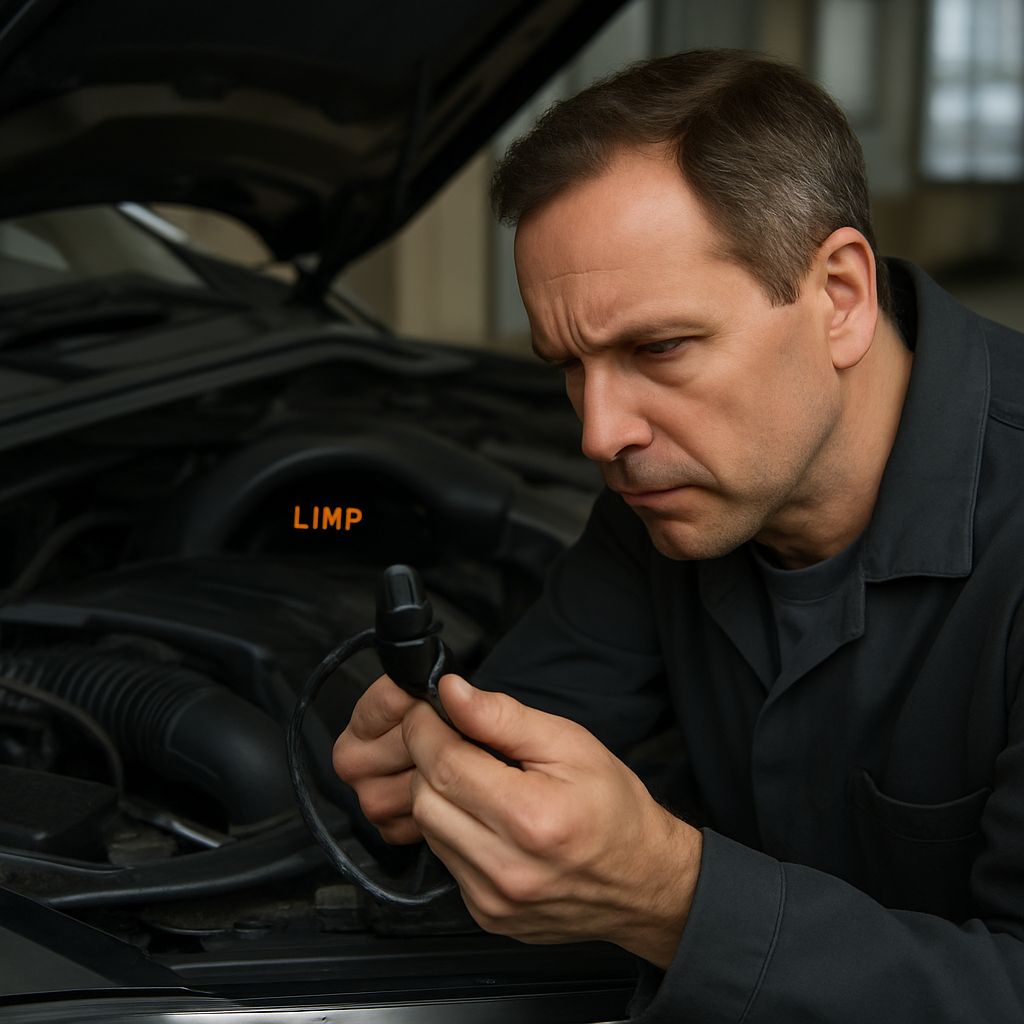
Yes, a bad speed sensor can be associated with limp mode, but it does not cause it on every car. The outcome depends on the vehicle’s control strategy and on which sensor or signal is affected. A transmission speed sensor and a wheel-speed sensor are different components, and a fault in either is not automatic proof of why a vehicle has entered limp mode.
What is limp mode?
Limp mode is a protective response in which a vehicle may limit engine power or transmission operation after its control system detects a fault it considers significant. Its purpose is to limit operation while the problem is addressed; it does not identify the failed component, and it does not mean the vehicle is safe to keep driving in every situation. Kelley Blue Book explains that limp mode can be triggered by faults in different vehicle systems and may require diagnosis using the vehicle’s computer system.
In other words, limp mode is a symptom or response, not a diagnosis of a speed-sensor fault. The same restricted performance can have more than one possible cause.
Can a bad speed sensor cause limp mode?
It can, particularly where the vehicle’s control system relies on the affected speed signal to monitor or manage engine or transmission operation. However, the available evidence supports a possibility, not a universal rule. A fault involving a transmission speed sensor may be relevant to transmission operation, while a wheel-speed sensor belongs to a different system. Online reports linking wheel-speed faults with transmission limp mode are anecdotal and should not be treated as proof that every car responds this way.
A wheel-speed sensor fault may also be relevant to ABS or traction-control warnings. Those warning lights do not, by themselves, confirm that a particular sensor has failed. For more context, see what ABS and traction-control warning lights can mean.
A fault code or warning related to speed-sensor data is a useful diagnostic clue, but it does not prove the sensor itself is defective. A connector or wiring fault, another electrical issue, or a separate engine or transmission problem may need to be checked. The vehicle-specific fault information and diagnosis matter more than the warning alone.
What are the signs of a bad speed sensor?
Possible signs include transmission-related issues and an erratic speedometer reading. These symptoms can occur with a faulty speed sensor, but neither confirms the cause: other electrical, engine, or transmission faults may produce similar problems. The symptoms and their severity can also vary by vehicle.
Rather than replacing a sensor based only on a symptom, have the relevant fault codes read and the sensor circuit and related systems assessed. A scan tool or diagnostic process may need to access more than the engine-control system. You can read more about how to tell whether a speed sensor is bad, while keeping in mind that symptoms are not the same as a confirmed diagnosis.
What can happen when a transmission speed sensor goes bad?
A faulty transmission speed sensor may be associated with transmission-related problems, an erratic speedometer reading, or limp mode, depending on the vehicle and the affected signal. These are possible effects, not guaranteed outcomes. The available evidence does not support predicting a specific gear, shift behaviour, or warning light for every car.
Similar symptoms can also come from wiring or other electrical faults, or from a different transmission or engine problem. The cause should be confirmed before a part is replaced; a speed-sensor-related code or drivability symptom alone is not enough to establish that the sensor has failed. CarParts.com discusses transmission issues and erratic speedometer readings among possible speed-sensor symptoms.
What other sensors or faults can cause limp mode?
A speed sensor is only one possible lead. Depending on the vehicle, examples of sensor- or control-related faults that may contribute to limp mode include problems involving throttle- or pedal-position sensors, transmission-related sensors, oxygen sensors, and boost-control components. These are examples, not a complete list or a universal diagnostic rule.
Limp mode may also be associated with broader problems such as transmission faults, overheating, fluid problems, or electrical and wiring issues. Kelley Blue Book and Seacoast Mazda describe limp mode as a response to faults across more than one system. The presence of limp mode alone cannot distinguish among them; vehicle-specific fault information and diagnosis are needed to narrow down the cause.
Can you test, locate or fix a transmission speed sensor yourself?
There is no reliable universal multimeter test to provide without knowing the vehicle, transmission, sensor type, and circuit specifications. A suitable test method and expected readings depend on that information, so do not rely on generic probe locations or resistance or voltage figures. Use the correct service information for the vehicle or have a qualified technician test the circuit.
The sensor’s location also varies by vehicle and transmission; there is no single location that applies to every car. The supplied information does not support a universal replacement or repair procedure either. First, confirm whether the sensor, its wiring, or another system is actually at fault. For a vehicle-specific location or repair, the make, model, year, and transmission are needed.
Can limp mode go away by itself?
There is no universal answer from the available information: it does not establish whether or when limp mode will clear on a particular vehicle. A change in symptoms or a temporary return to normal operation does not prove that the underlying fault has been fixed. Do not rely on restarting or resetting the vehicle as a repair; arrange diagnosis of the cause.
What should you do next?
Have the vehicle’s relevant fault codes and symptoms assessed before replacing a speed sensor. Diagnosis should consider the sensor and its circuit, as well as possible wiring, electrical, engine, and transmission faults. If the vehicle has severe power loss, abnormal transmission behaviour, overheating, or another serious warning, seek prompt professional assessment and do not assume it is safe to continue driving.