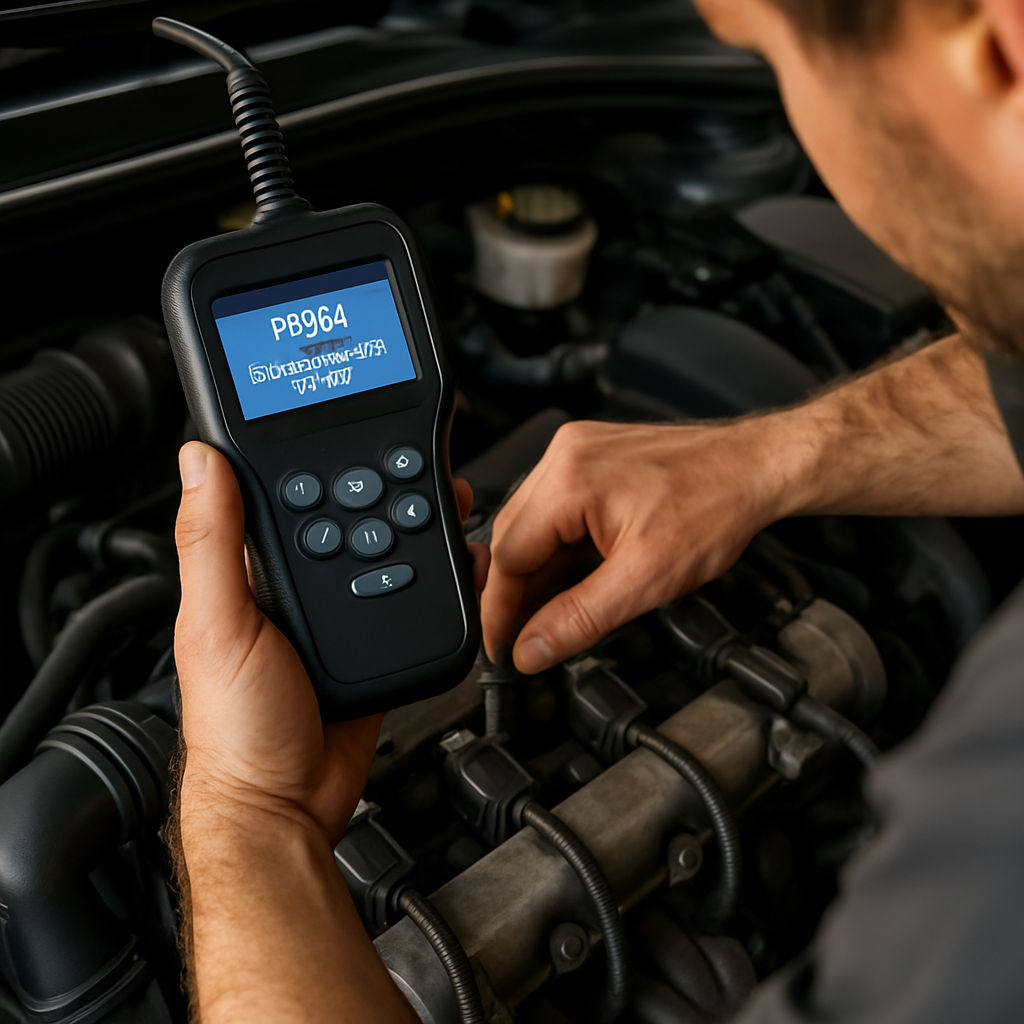
P0304 means the engine control module (ECM) has detected a misfire associated with cylinder 4. It tells you which cylinder is misfiring, not which part has failed. An ignition fault, fuel-delivery problem, air leak or internal engine issue could be responsible, so the code needs diagnosis before parts are replaced. [Edmunds explains the P0304 code].
What P0304 Means and What to Do First
A cylinder misfires when combustion in that cylinder is not happening consistently or effectively. The code identifies cylinder 4 as the one where the misfire was detected; it does not confirm that the spark plug, ignition coil, fuel injector or any other component is faulty.
Record the code and any symptoms, and arrange an appropriate diagnosis. Clearing the code does not repair the underlying fault, and it may return if the cause remains. One source advises limiting driving while the issue is addressed, but the available information does not establish that every vehicle with P0304 is safe to drive or provide a universal drive-or-stop rule. If you are unsure whether your vehicle can be driven, seek advice from a qualified technician rather than relying on the code alone. [AutoBarn’s P0304 guidance].
P0304 is cylinder-specific. By contrast, a P0300 random or multiple-cylinder misfire code indicates a different misfire pattern. Neither code, on its own, identifies the failed part.
Where Is Cylinder 4?
There is no single physical position for cylinder 4 that applies to every vehicle. Its location depends on the engine and vehicle configuration. Before inspecting or disconnecting anything, identify the exact engine and check the vehicle’s service information or ask a qualified technician to locate the cylinder.
Correct identification matters: a cylinder-specific inspection or component-swap test can lead to misleading results if the wrong cylinder is selected.
Symptoms of a Cylinder 4 Misfire
Symptoms vary, and some vehicles may show a code without every symptom below. Possible signs include:
- Rough or uneven idling
- Hesitation or poor acceleration
- Loss of engine power
- Reduced fuel efficiency
- Unusual engine noises
- Stalling
- A check-engine light, which may flash in some cases
These symptoms do not prove that cylinder 4 is the source or identify a particular faulty part. They should be considered alongside the stored code and diagnostic test results. [FS1’s P0304 symptom overview] and [OBDeleven’s P0304 guide] describe symptoms that can accompany the code.
Common Causes of P0304
Several faults can interrupt combustion in one cylinder. The main possibilities fall into these categories:
- Ignition: A worn spark plug, faulty ignition coil or, on engines that use them, a damaged spark plug wire may prevent the cylinder from igniting the mixture properly.
- Fuel delivery: A clogged or faulty fuel injector for cylinder 4, or another fuel-delivery problem, may prevent the cylinder from receiving the right amount of fuel.
- Air or vacuum leak: An air leak affecting the cylinder or its intake path can disturb the air-fuel mixture.
- Mechanical condition: Low compression, a leaking valve or head-gasket trouble can prevent the cylinder from sealing and combusting as it should.
A worn spark plug, faulty injector and leaking valve are among the possible causes identified by CarParts.com’s P0304 explanation. Other technical guidance also discusses ignition, fuel, air-leak and mechanical fault categories.
What is the most common cause? The supplied evidence does not establish one statistically verified cause that is most common across all vehicles. The likely cause depends on the specific vehicle and engine, the symptoms and the results of testing. A possible cause should not be treated as a confirmed diagnosis.
How P0304 Is Diagnosed and Fixed
The right repair depends on what testing finds. Replacing parts based only on the code can add unnecessary expense and leave the misfire unresolved. A technician may use a sequence such as this:
- Verify the code and symptoms. Check P0304 and any related fault codes, then note when the symptoms occur and how the engine behaves.
- Identify cylinder 4 correctly. Use service information for the exact vehicle and engine rather than assuming a universal cylinder layout.
- Inspect ignition components. Check the relevant spark plug, coil or plug wire where fitted, as well as their wiring and connectors.
- Assess fuel and air possibilities. Check injector operation and related connections, and investigate possible air or vacuum leaks.
- Investigate mechanical faults if needed. If initial checks do not explain the misfire, a compression test or other mechanical checks may help identify an internal engine problem. Vehicle-specific test procedures and specifications are required.
Hot Shot’s Secret describes swapping a compatible ignition component with one from another cylinder and checking whether the misfire follows the component as a diagnostic approach. That is not a universal DIY instruction: the correct cylinder must be identified, the component must be compatible and the vehicle-specific procedure must be followed. If you lack the tools or experience, leave this work to a qualified technician. [Hot Shot’s Secret P0304 diagnostic guidance].
A visual check for an obviously loose or damaged connector may be within some owners’ abilities, but electrical testing, fuel-system work and internal-engine diagnosis can require suitable equipment and expertise. Possible repairs may include replacing a confirmed faulty spark plug, coil or injector, fixing an identified air leak, or repairing a confirmed mechanical fault. None should be assumed necessary from P0304 alone.
How Much Does It Cost to Fix P0304?
The cost depends on the confirmed cause, the vehicle and engine, parts, labour rates, diagnostic work and whether the fault has led to further damage. As broad examples, OBDeleven gives about $25 for a new set of spark plugs at the lower end and says major repairs such as an engine rebuild can reach several thousand dollars.
Those figures are indicative examples from one source, not a current local price, a guaranteed parts cost or a complete installed-repair quote. Ask for a diagnosis and an itemised estimate before authorising work; the code alone is not enough to predict the bill. [OBDeleven’s P0304 cost discussion].
Is It Worth Fixing a P0304 Code?
That depends on the confirmed fault, the repair estimate, the vehicle’s overall condition and your plans for it. The potential cost can range from a relatively inexpensive spark-plug example to several thousand dollars for major engine work, so the code by itself is not enough to judge whether the repair is worthwhile.
Get the cause diagnosed and compare an itemised estimate with the vehicle’s condition and your ownership plans before deciding. A low-cost repair is not guaranteed to solve the problem unless it addresses the confirmed cause, and an expensive estimate does not automatically mean the vehicle is uneconomic to repair.
Does P0304 Mean Something Different by Make or Model?
The code’s basic meaning is the same: a misfire has been detected at cylinder 4. P0304 alone does not identify a Ford-, Chevrolet-, Nissan- or Chevrolet Malibu-specific failed part. The available evidence does not establish make- or model-specific common failures, repair procedures or cost differences for those searches.
Cylinder location, engine configuration and diagnostic steps depend on the exact model year and engine. Check the vehicle-specific service information or consult a qualified technician before carrying out cylinder-specific checks. A generic P0304 description cannot replace that information.