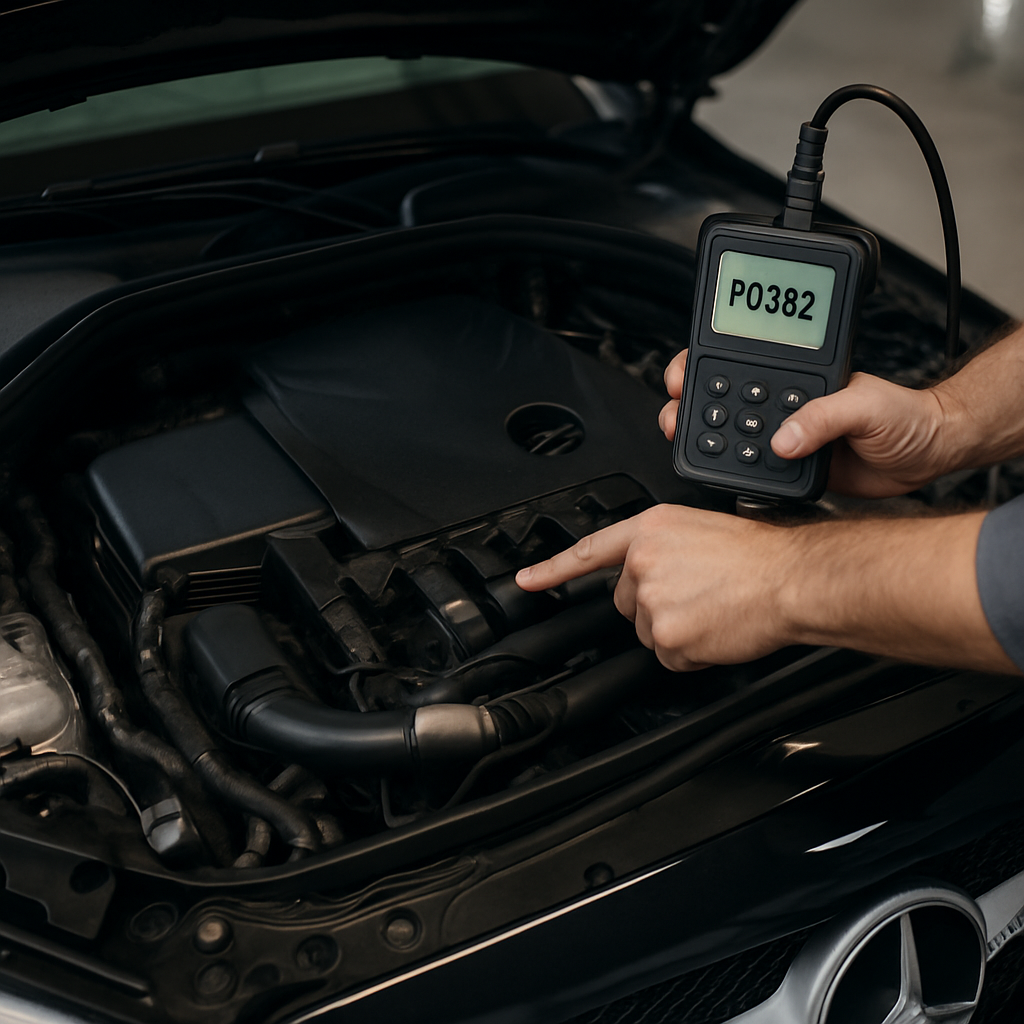
If your Mercedes is showing a cylinder 2 misfire, you are likely experiencing rough idling, poor acceleration, or even a blinking check engine light. The cause often boils down to spark, fuel, or air delivery issues specific to the second cylinder. Immediate attention is key. Addressing a P0302 code or resolving performance troubles early can save you from far costlier repairs down the road. Here’s what you should know—and what to do about it.
What Does Mercedes OBD Code P0302 Indicate?
The P0302 trouble code indicates that your Mercedes-Benz engine control unit (ECU) detected repeated combustion failures specifically inside cylinder number two. This triggers a check engine light, noticeable power loss, and rough idling because the air-fuel mixture fails to ignite properly.
When cylinder two stops firing cleanly, raw unburned fuel passes through the exhaust valve while the crankshaft loses rotational momentum. Common causes on Mercedes engines include worn spark plugs, failing ignition coils, leaking fuel injectors, or low compression due to valve seat wear. According to a detailed breakdown of diagnostic steps for P0302 error codes, pinpointing the issue requires systematic testing of spark, fuel delivery, and mechanical seal integrity. Address it early before mild hesitation turns into total engine stalling at traffic lights.
Identifying Physical Position of Second Cylinder Inside Engine Compartments
On standard inline four-cylinder Mercedes engines, cylinder number two is the second cylinder counting from the front of the vehicle near the radiator toward the firewall. On V6 or V8 models, cylinder two sits on the passenger side or driver side bank depending on specific firing order diagrams.
Finding the correct cylinder is vital before swapping coils or pulling spark plugs. For popular models like C-Class or E-Class sedans equipped with longitudinally mounted four-cylinder powerplants, cylinder one stays closest to the serpentine belt at the front, making cylinder two immediately adjacent. If you own an M274 turbo engine, locating this spot helps you swap components quickly during troubleshooting. Technical documentation for Mercedes C-Class P0302 diagnostic procedures shows that interchanging the second cylinder’s ignition coil with cylinder one remains the fastest way to verify if an electrical fault follows the coil or stays put.
Will Driving With Active Misfires Ruin Your Catalytic Converter?
Yes, driving a Mercedes with a persistent cylinder two misfire can destroy your catalytic converter within a few miles. Unburned gasoline dumps straight into the red-hot exhaust manifold, where it ignites and melts internal precious metal honeycomb structures.
A flashing check engine light means immediate danger. Steady illumination indicates an active fault, but a blinking light warns that severe misfires threaten immediate catalytic converter meltdown. Replacing an expensive Mercedes emissions system costs thousands of dollars. Beyond exhaust damage, raw fuel washes away oil films protecting cylinder walls, accelerating ring wear. If your car stutters violently, pull over safely, turn off the ignition, and arrange flatbed towing rather than risking catastrophic engine and exhaust system damage.
Can Faulty Spark Plugs or Clogged Air Filters Trigger Combustion Problems?
Faulty or fouled spark plugs are the single most frequent cause of cylinder two misfires, while a clogged air filter rarely causes a single-cylinder P0302 code. A dirty filter restricts airflow across the entire engine, causing general power loss rather than isolating failure to one combustion chamber.
High-performance Mercedes engines put immense stress on ignition components. Spark plug electrodes erode over time, widening the gap until high-voltage electrical arcs can no longer bridge the space under boost pressure. Carbon buildup or oil contamination also shorts out spark delivery. If you replace plugs, inspect electrode color. Ashy gray indicates healthy combustion, while wet black soot signals unburned fuel or leaking valve stem seals.
Estimated Financial Outlay For Resolving Ignition System Issues
Fixing a P0302 code typically costs between $100 and $300 if the culprit is a simple spark plug or ignition coil replacement. However, if the misfire stems from a faulty fuel injector, burnt valve, or failed ECU driver, repair bills can climb between $800 and $2,500.
DIY mechanics can save significantly on labor rates by swapping components at home. A fresh set of OEM spark plugs costs around $40 to $80, while a replacement Bosch or Delphi ignition coil runs between $50 and $120. Professional shop labor adds $150 to $250 per hour for diagnostic scanning and labor. If compression tests reveal low pressure due to blown head gaskets or bent valves, major mechanical teardowns become necessary. Addressing simple electrical faults promptly prevents costly internal engine damage.
How Can You Tell If Your Mercedes Has a Cylinder 2 Misfire?
Typical signs of a misfire in cylinder 2 include rough running at idle, hesitation when accelerating, and increased vibration. In most cases, your vehicle will trigger the “Check Engine” light, often accompanied by fault code P0302.
Drivers often describe feeling shakes or notice that their Mercedes accelerates unevenly, especially at low speeds. These symptoms might get worse under load or if the problem persists. If you want to see other Mercedes owners’ experiences and common misfire triggers, you can review the community forum discussion about cylinder 2 misfires and their symptoms.
Advanced diagnostic tools will confirm a cylinder 2 misfire by flagging code P0302. However, sometimes the issue is subtle and only noticeable during short or cold drives, so don’t ignore intermittent warning signs.
What Causes a Cylinder 2 Misfire in Mercedes-Benz Vehicles?
The majority of cylinder-specific misfires trace back to three core areas: bad spark plugs or ignition coils, clogged or failing fuel injectors, or air intake leaks. In the case of the Mercedes-Benz, coil packs and injectors are frequent culprits.
Other potential root causes include faulty engine control units, wiring issues, or, less commonly, a mechanical problem like low cylinder compression. For step-by-step advice on how to narrow down your troubleshooting, you can reference real-world advice from technicians by exploring diagnostic tips on resolving intermittent cylinder 2 misfires in Mercedes models.
Environmental factors, such as contaminated fuel or extended intervals between services, can also trigger or worsen a misfire. Pay special attention if you notice multiple misfires or encounter similar problems on other cylinders.
If you have a Mercedes Sprinter, C-Class, A-Class, or C300, the engine configuration may slightly affect where cylinder 2 is located or how easy it is to access, so always check your owner’s manual or reliable technician resources before starting repairs.
How Do You Fix a Cylinder 2 Misfire in Your Mercedes?
The solution starts with pinpointing the failed component. Most often, the fix will involve:
- Replacing the spark plug: Old or fouled plugs are a classic source of misfires.
- Swapping the ignition coil: Coil packs frequently fail and can be swapped between cylinders to confirm the fault.
- Testing and cleaning the fuel injector: A clogged injector can easily cause misfires.
If repairs to these components do not resolve the issue, further diagnosis such as a compression test or inspecting for wiring faults becomes necessary. According to practical demonstrations, like those in this popular technical rundown explaining P0302 misfires and their solutions, testing components individually saves you from unnecessary part replacements.
For many owners, fixing a cylinder 2 misfire involves a methodical elimination process—start with the cheapest and easiest parts first, such as swapping out the spark plug. If that doesn’t work, move on to coils, injectors, and so forth. If the check engine light remains on after your repair, make sure to clear any codes and test drive the car to ensure the misfire does not return.
Are There Recalls or Common Issues for Cylinder 2 Misfires in Mercedes Models?
Widespread manufacturer recalls specifically for cylinder 2 misfires in most Mercedes models are rare. However, some vehicles experience known issues with ignition coil design or injector failure. Mercedes-Benz C-Class, A-Class, and C300 vehicles, particularly from certain production years, have had technical service bulletins (TSBs) related to misfire complaints. These bulletins inform dealerships on updated parts or repair procedures.
If you suspect your Mercedes could be impacted by a recall or known defect, check with your local dealership using your Vehicle Identification Number (VIN). They can confirm any outstanding recalls or extended warranties for engine components. In addition, online forums and Mercedes communities often discuss patterns of misfires and how dealers are addressing them, so sharing your issue can uncover relevant patterns or solutions.
For Mercedes Sprinter models, misfire complaints do arise but may sometimes be linked to diesel-specific issues, such as injector deposits or EGR valve faults. Make sure to address these possibilities during diagnosis.
How Can You Prevent Future Cylinder Misfires in Your Mercedes?
Prevention comes down to regular maintenance and fast action. Always use quality fuel and stick to recommended service intervals for spark plugs and ignition components. Regularly inspect and replace air filters to ensure balanced airflow and reduce the risk of unburnt fuel in the system.
Don’t ignore the first signs of trouble—addressing a minor misfire quickly can prevent catalytic converter damage and much bigger repair bills. Periodic diagnostics will catch problems before they escalate.
Using Mercedes-approved parts and following your vehicle’s specific service recommendations can extend component life and keep your engine running smoothly. Trust your instincts: if your car feels off, check it out before the symptoms worsen.
By responding quickly to cylinder 2 misfire symptoms and using targeted repairs, you can restore your Mercedes’ smooth performance and reliability for the long term.
Pingback: Why Your Car Cranks but Won't Start Intermittently After Sitting or in the Cold - Premier Motoring Blog
Pingback: P0300 Mercedes-Benz Code: What to Do Before You Clear the Fault - Premier Motoring Blog
Pingback: P0300 Random/Multiple Cylinder Misfire Detected: Meaning, Causes, Symptoms and What to Do - Premier Motoring Blog