Category Archives: Diagnostics & Maintenance

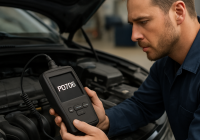
Toyota Camry P26CB Code: Check the Exact Fault Before Replacing the Pump

P26CB is not an automatic instruction to replace a Toyota Camry’s coolant pump. Record the full code, including its suffix, and identify the engine and model year. Toyota’s historical bulletin T-SB-0323-17 addresses P26CB71 on certain 2018 four-cylinder Camrys with an ECM software update. What does the full code mean? The December 2017 bulletin calls P26CB71… Read More: Toyota Camry P26CB Code: Check the Exact Fault Before Replacing… »
Duramax Low Fuel Rail Pressure: What P0087 Means and What to Check

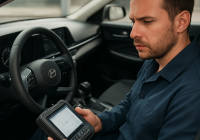
Low fuel-rail pressure on a Duramax is a detected operating condition, not proof of a failed regulator or injection pump. Identify the engine generation, preserve the full scan report and use its matching GM diagnostic information before authorising parts. What does P0087 tell you? GM’s 2009 LMM diagnostic summary describes P0087 monitoring as a comparison… Read More: Duramax Low Fuel Rail Pressure: What P0087 Means and What… »

Hyundai Elantra P0741 Code: Meaning, Causes, and Whether You Can Drive

On a Hyundai Elantra, diagnostic trouble code P0741 generally means the torque converter clutch (TCC) is not performing as expected or is not engaging when commanded. It is a fault clue, not proof that one particular part has failed. A wiring issue, a TCC solenoid or valve problem, or a fault within the torque converter… Read More: Hyundai Elantra P0741 Code: Meaning, Causes, and Whether You Can… »

Is 230°F Too Hot for an Engine? Normal Temperatures and What to Do

If your engine coolant is reading 230°F (about 110°C), treat it as a concerning high temperature. It is above the commonly cited operating ranges for many cars, but the available evidence does not establish one temperature at which every engine overheats. The correct limit depends on the vehicle, so check its owner’s manual and take… Read More: Is 230°F Too Hot for an Engine? Normal Temperatures and… »

2014 Dodge Journey P0420 Code: Meaning, Diagnosis and Repair Cost Factors

On a 2014 Dodge Journey, diagnostic trouble code (DTC) P0420 means “Catalyst System Efficiency Below Threshold (Bank 1)”. It reports that the emissions monitor has measured catalyst efficiency below its programmed threshold; it does not, by itself, confirm that the catalytic converter has failed or identify the root cause. The check-engine light may be the… Read More: 2014 Dodge Journey P0420 Code: Meaning, Diagnosis and Repair Cost… »

Chrysler Town & Country P0123 Code: Meaning, Causes, and Fixes

On a Chrysler Town & Country, P0123 means the engine control module has detected a high electrical input in the Throttle/Pedal Position Sensor/Switch “A” circuit. It identifies an out-of-range circuit signal, not proof that the throttle-position sensor (TPS) has failed. “High” describes the signal reading; it does not necessarily mean the throttle plate is physically… Read More: Chrysler Town & Country P0123 Code: Meaning, Causes, and Fixes »

Bad EVAP Vent Solenoid: Symptoms, Testing, and Whether You Can Drive

A bad EVAP vent solenoid may stop controlling airflow into and out of the evaporative-emissions system, or it may stick open or closed. That can contribute to an EVAP leak, trigger the check-engine light or, in some cases, make refuelling difficult. These signs do not prove the vent solenoid is faulty: wiring, a blocked passage,… Read More: Bad EVAP Vent Solenoid: Symptoms, Testing, and Whether You Can… »

2007 Toyota Camry Hybrid P0A7A Code: Inverter Meaning and What to Do

On a 2007 Toyota Camry Hybrid, P0A7A is identified as Generator Inverter Performance. It means the hybrid control system has detected a performance problem in the generator-inverter system; it does not, by itself, confirm that the inverter, generator, transaxle or hybrid battery has failed. What P0A7A Means on a 2007 Camry Hybrid The inverter is… Read More: 2007 Toyota Camry Hybrid P0A7A Code: Inverter Meaning and What… »

P0706 Code Symptoms: Causes, Diagnosis, and What to Do

P0706 can cause difficulty selecting or changing gears, delayed engagement, an incorrect gear indication, or trouble starting, but some vehicles show no obvious symptoms. The code means the vehicle’s control system has detected a transmission range-sensor signal that is out of range or does not make sense for the selected gear. It does not, by… Read More: P0706 Code Symptoms: Causes, Diagnosis, and What to Do »