Author Archives: PMB

Toyota P0171 Code: Meaning, Causes, Fixes and Whether You Can Drive
P0171 means the engine management system has detected a system-too-lean condition on Bank 1. It describes a condition the system has detected; it does not identify a failed part or prove that a particular sensor needs replacement. The appropriate diagnosis and repair depend on the Toyota’s model, year and engine. What does P0171 mean on… Read More: Toyota P0171 Code: Meaning, Causes, Fixes and Whether You Can… »


2010 Honda Civic P0456: EVAP Leak Locations and What to Check

P0456 means the vehicle’s diagnostic system has detected a very small leak in the evaporative emissions (EVAP) system. It does not identify the failed part or pinpoint the leak on a 2010 Honda Civic. Possible areas to inspect include the fuel cap, filler neck, vapor hoses or lines, purge valve, vent valve, and canister, but… Read More: 2010 Honda Civic P0456: EVAP Leak Locations and What to… »

P0299 Turbo Underboost Code: Meaning, Causes, and What to Do

P0299 means the engine control system has detected that the turbocharger or supercharger is producing less boost than the level specified for that vehicle. It identifies an underboost condition, not a confirmed failed turbocharger or supercharger. Several issues can cause the same code, so the part at fault needs to be diagnosed before anything is… Read More: P0299 Turbo Underboost Code: Meaning, Causes, and What to Do »

2014 Chevy Silverado P0172 and P0175 Codes: Meaning, Causes and What to Check

On a 2014 Chevrolet Silverado 1500, P0172 means the engine control system has detected a fuel-trim condition that is too rich on bank 1; P0175 reports the corresponding condition on bank 2. These codes describe what the system has detected, not which component has failed. When both appear, a shared cause is worth investigating, but… Read More: 2014 Chevy Silverado P0172 and P0175 Codes: Meaning, Causes and… »

Why Your Car Makes Noise Over Speed Bumps: Common Causes and When to Get It Checked

An unfamiliar noise as your car goes over a speed bump can be associated with movement, looseness, wear, or contact in the suspension or steering system. A clunk, squeak, or creak can help describe the symptom, but sound alone cannot confirm which part—if any—has failed. The conditions in which it occurs are useful clues for… Read More: Why Your Car Makes Noise Over Speed Bumps: Common Causes… »

Catalyst System Efficiency Below Threshold: What P0420 Means

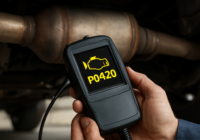
P0420 reports catalyst-system efficiency below the vehicle’s threshold. It is a diagnostic result, not a shopping list. The code alone does not establish that a catalytic converter or oxygen sensor must be replaced, and it cannot tell you whether your particular vehicle is safe to drive. What the warning tells you A vehicle’s on-board diagnostics… Read More: Catalyst System Efficiency Below Threshold: What P0420 Means »

Why Does My Car Whine When Accelerating? Causes and What to Check

A car that whines when accelerating may be producing a noise from the transmission or differential, an engine-driven accessory, the steering system, or a wheel or tyre. A high pitch alone cannot identify the failed part: several different problems can sound similar, and the sound needs to be assessed alongside when and how it occurs.… Read More: Why Does My Car Whine When Accelerating? Causes and What… »

Chevy Silverado Blinking Check Engine Light: Meaning and Next Steps

A flashing check-engine light on a Silverado needs prompt attention. Chevrolet’s 2023 and 2026 Silverado 1500 owner’s manuals describe it as a detected malfunction that could harm the emissions system. That warning does not identify a failed part. The instructions below are drawn from those two manuals; check the manual for your exact truck before… Read More: Chevy Silverado Blinking Check Engine Light: Meaning and Next Steps »