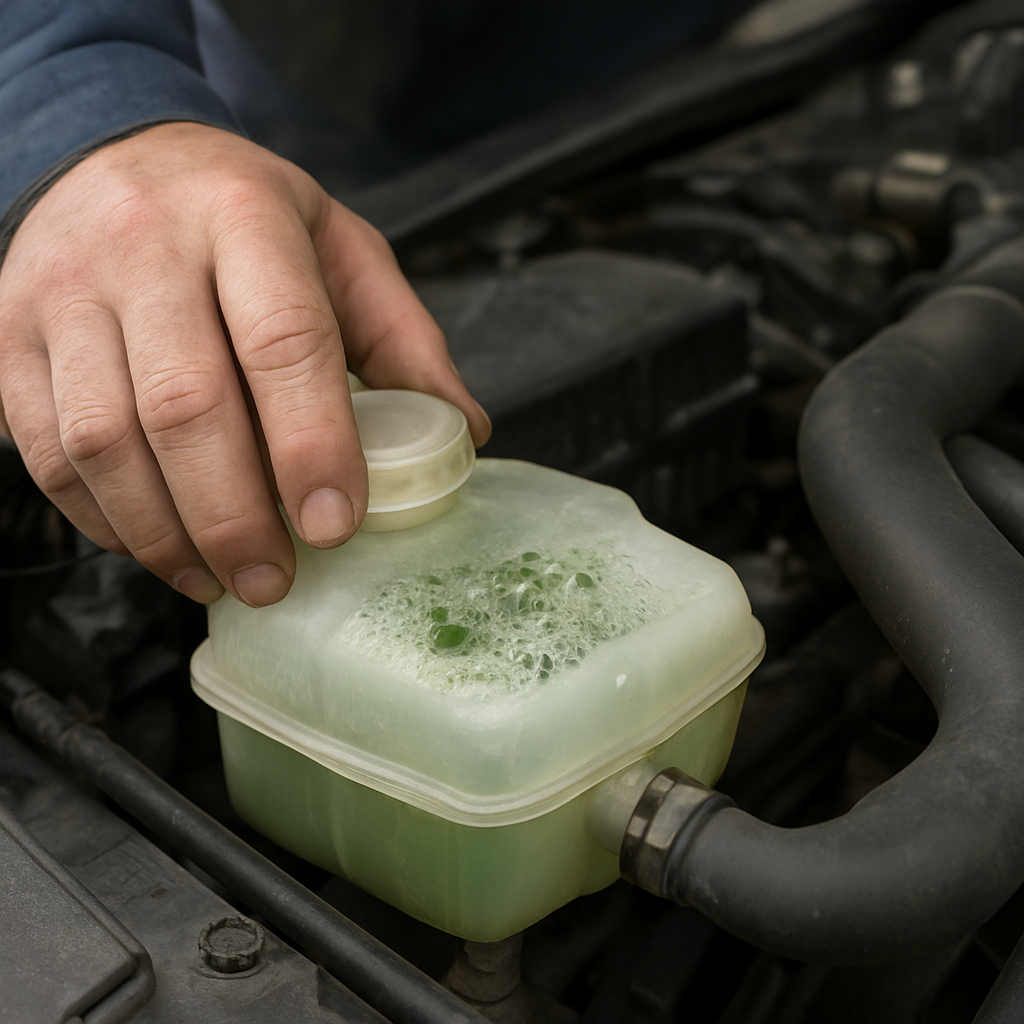
Coolant bubbling in the reservoir while the temperature gauge appears normal can have several explanations, including trapped air or air entering the cooling system through a leak. A head-gasket problem is another possibility, but bubbling alone cannot confirm it. The gauge reading does not identify the cause, and bubbles do not necessarily mean the coolant is boiling.
Small, occasional bubbles that quickly disappear may be associated with air pockets, particularly after coolant has been refilled. Persistent or excessive bubbling, coolant loss, a visible leak, overheating or engine-performance problems deserve closer attention. A normal gauge reading does not establish that the vehicle is safe to keep driving.
Why is the coolant reservoir bubbling if the engine is not overheating?
A normal-looking temperature reading does not rule out a cooling-system issue. Bubbles may be trapped air, gas entering the system, or steam from overheated coolant. The pattern and any other symptoms can help a technician assess the cause, but reservoir activity alone is not a diagnosis.
- Trapped air: Air pockets can remain after coolant service or a refill and may rise into the reservoir.
- Air entering through a leak: A leak in the cooling system can allow air to enter, even if you have not spotted coolant on the ground.
- A possible head-gasket problem: A head-gasket fault can be associated with bubbling, but this symptom alone does not confirm that fault.
- Overheated coolant: Coolant that is overheating can produce steam bubbles. Reservoir activity alone cannot establish whether this is happening.
These are possibilities, not a diagnosis. Cooling-system designs and checks vary by vehicle, so use the owner’s manual or ask a qualified technician for model-specific guidance.
Is bubbling in the coolant reservoir normal?
It depends on the pattern and what else is happening. Small, occasional bubbles that quickly dissipate may be associated with air pockets, while excessive or persistent bubbling may point to a problem. This is not a universal rule for every vehicle. See when reservoir bubbling may be normal or concerning.
Pay attention to whether the bubbling recurs or worsens and whether coolant is being lost. Bubbling accompanied by a leak, overheating or engine-performance problems warrants inspection. Do not dismiss persistent symptoms because the gauge appears normal.
What if the reservoir bubbles but there is no visible leak?
Not seeing an external leak does not explain the bubbles or rule out a cooling-system fault. Trapped air or an internal engine problem may still be possible. Bubbling alone cannot confirm a head-gasket fault or identify another specific cause.
If bubbling persists, coolant is being lost or other symptoms appear, arrange a professional inspection. Do not rely on a visual check alone to diagnose the cause.
Can trapped air cause overheating?
Trapped air can be associated with bubbling, but bubbling by itself does not show whether the coolant is circulating properly or whether the engine is overheating. If the temperature rises, an overheating warning appears or bubbling continues, have the system inspected. The appropriate checks can depend on the vehicle.
Why does the coolant reservoir bubble after shutdown?
The timing of bubbling after switching off the engine does not, by itself, identify its cause or prove that the coolant is boiling. Persistent bubbling, overflow or coolant loss deserves attention, especially if accompanied by a rising temperature or warning.
Observe the reservoir without opening the cooling system. Never remove a cap or open a hot or pressurised cooling system; leave those checks to a qualified technician.
What should you check next?
- Note when it happens: Record whether the bubbling appears while the engine is running, after shutdown or following recent coolant service, and whether it is occasional or persistent.
- Look for other signs: Without opening a hot system, note any visible coolant loss or leak, an overheating indication or changes in engine performance.
- Use vehicle-specific guidance: Follow the owner’s manual for checks appropriate to your vehicle. Do not assume that different makes and models share the same cooling-system design or procedure.
- Arrange diagnosis if it persists: Recurring bubbles, falling coolant, overflow, a leak, overheating or performance issues merit professional inspection. Bubbling alone cannot establish which component, if any, has failed.
If the temperature rises or an overheating warning appears, do not rely on an earlier normal reading. Stop when it is safe to do so and seek assistance rather than continuing to drive on the assumption that the vehicle is fault-free.
Can bubbles show that coolant is circulating, or that a head gasket has failed?
No. Reservoir bubbling alone does not prove that coolant is circulating, and it cannot confirm a head-gasket fault. A qualified technician can assess the system using checks appropriate to the vehicle.