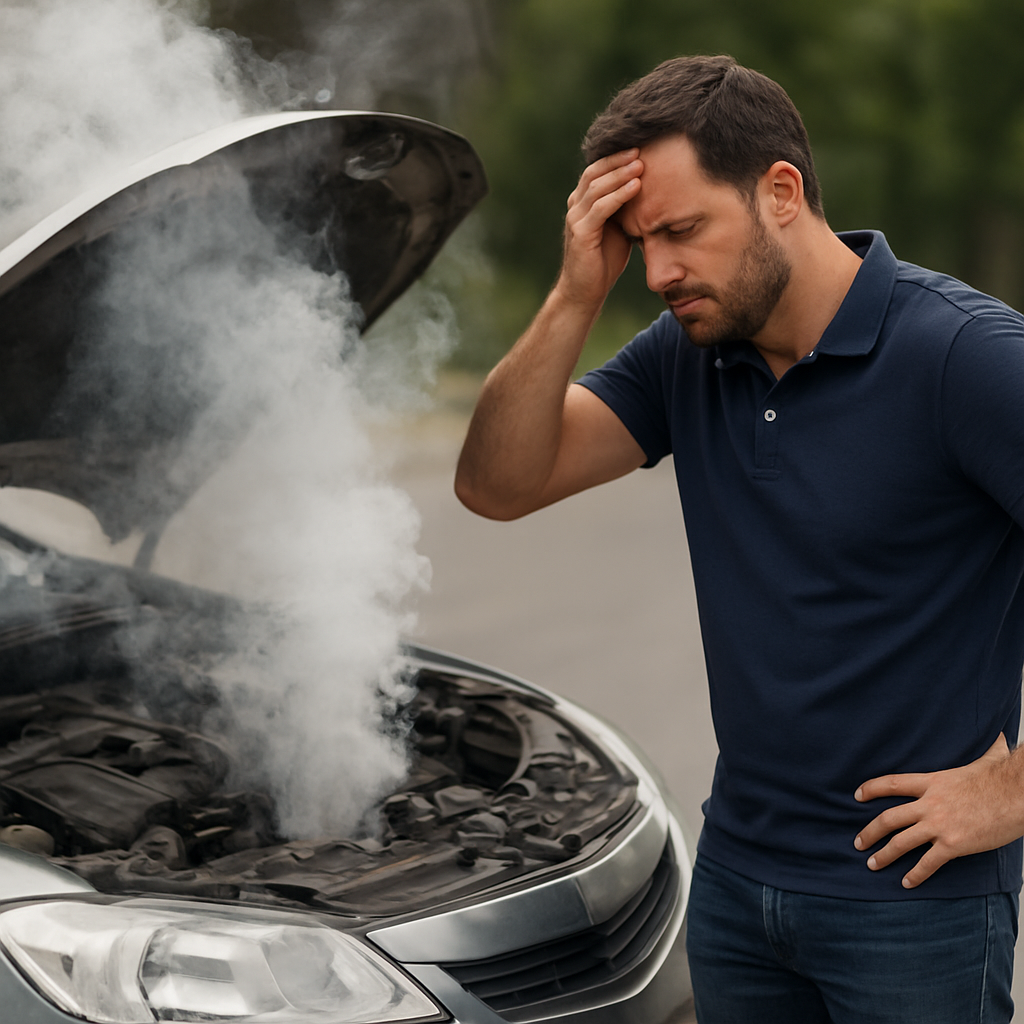
If your car is smoking but the temperature gauge looks normal, a fluid leak or residue reaching a hot engine component is one possible cause. Smoke can also have other causes, and a normal-looking gauge does not confirm that the car is safe to drive. First note whether the smoke is coming from under the bonnet or from the exhaust, then stop safely and arrange an assessment.
Smoke from under the bonnet but no overheating: possible causes and safe next steps
Smoke rising from under the bonnet may occur when a fluid or residue reaches a hot component. Oil leaking onto a hot surface is one possibility described in this overview of car smoke without overheating. The exact source cannot be identified from the smoke alone.
Other possible causes discussed in guides to this symptom include fluid drips, wiring concerns, worn gaskets or seals, and PCV-system issues. See these overviews from Genesis of Milwaukee and Genesis of Littleton. These are possibilities, not diagnoses: smoke colour and smell alone cannot identify the fluid or failed part. Note any burning smell, but do not assume it proves which problem is responsible.
If smoke is coming from under the bonnet, pull over somewhere safe and switch off the engine. Do not continue just because the gauge appears normal. Keep clear of hot components, do not investigate wiring while the vehicle is energised, and do not open or handle a hot cooling system. Arrange a professional inspection, especially if smoke returns, you can see fluid leaking, a warning light appears, or the vehicle is losing fluid.
What to note before the car is inspected
From a safe position, note where the smoke seems to come from and whether it starts while driving, after you stop, or after recent servicing or repair work. Record whether it recurs, what the smell is like, whether you can see fluid, any change in fluid levels, and any warning lights. These details can help a technician, but no single observation establishes the cause.
Only check fluid levels when the vehicle is safely parked and the relevant components are cool, and follow the owner’s manual. Do not touch hot parts or open a hot pressurised cooling system. Give the technician the vehicle’s make, model year and engine details so they can assess it appropriately.
If coolant is boiling or steam is coming from the engine bay
Visible steam, suspected boiling coolant or coolant loss needs attention even if the gauge has not risen. Smoke or steam does not by itself identify why fluid is escaping or prove that a particular component has failed. A normal-looking gauge is not a reason to dismiss visible steam or suspected boiling.
Pull over safely, switch off the engine and arrange an assessment rather than continuing the journey or attempting a roadside repair. Do not open the radiator cap or otherwise handle a hot cooling system; it may be pressurised and hot. Smoke or steam does not by itself confirm a head-gasket fault, and a normal gauge does not establish the cause. Diagnosis requires appropriate testing.
If the smoke is coming from the exhaust
Smoke from the tailpipe is a separate symptom from smoke rising under the bonnet, so do not assume the same cause. Persistent or recurring exhaust smoke merits diagnosis. Note when it happens, its appearance, any unusual smell and any signs of fluid loss, and share those observations with a technician. They are clues, not a diagnosis.
Do not rely on smoke colour alone to identify a failed part. If exhaust smoke persists or returns, have the car assessed rather than relying on a colour chart or guessing at a repair.
Can you temporarily fix an overheated car?
There is no reliable temporary fix for smoke or suspected overheating. If the car is showing an overheating warning or you suspect coolant is boiling, stop somewhere safe, switch off the engine and seek qualified assistance. Do not try to continue driving, top up a hot system or assume the problem has passed because the gauge later looks normal. Smoke without a high gauge reading does not, by itself, confirm that the engine has overheated, but it still calls for a safe response and, when it comes from under the bonnet or recurs, professional assessment.