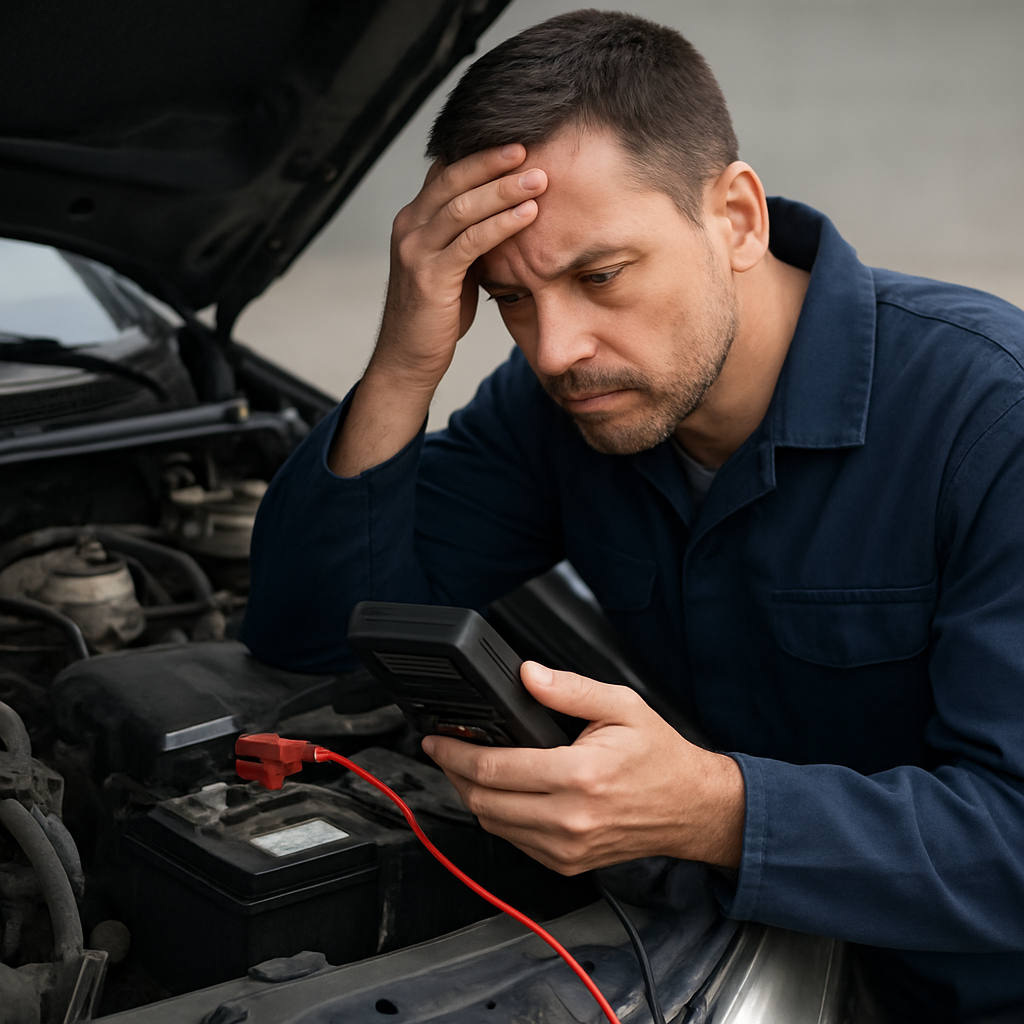
Yes—a bad alternator can leave your battery losing charge. When the engine is running, the alternator should charge the battery and supply the vehicle’s electrical needs. If it is not producing enough charge, the battery may be depleted instead of replenished. That differs from a battery losing charge while the car is parked, which points to a possible parasitic draw. A dead battery or starting problem on its own does not confirm that the alternator has failed.
Can a bad alternator drain your battery while driving?
It can. If the alternator is not charging adequately, the battery may lose charge instead of being replenished while the engine runs. A jumpstart may get the engine started temporarily, but it does not repair a charging-system fault. Continued operation cannot be guaranteed if the battery is not being charged, so arrange prompt testing and assistance rather than relying on a jumpstart. For a comparison of battery and alternator problems, see Firestone’s guide to telling a battery problem from an alternator issue.
There is no dependable driving time or distance to rely on. How long a vehicle continues to run depends on the vehicle and the fault. Do not treat a jumpstart as proof that the problem is resolved; have the battery and charging system tested.
How long or how fast can an alternator drain a battery?
There is no universal countdown for an alternator-related battery discharge. A battery losing charge while the engine is running because it is not being recharged is different from a battery losing charge while the car is parked. The rate depends on the vehicle and the fault, so testing is needed to assess an individual car.
A battery that loses charge while parked may have a parasitic draw, but that does not by itself identify the cause. Have the battery and charging system checked to find out what is happening.
Bad alternator or bad battery: how to tell the difference
A flat battery, difficult starting or electrical trouble can have more than one cause, so these symptoms alone cannot identify the failed part. A failing alternator may not charge the battery adequately, while a battery problem can also cause starting trouble. Testing both is a better basis for a repair decision than replacing a part based on symptoms alone.
Other electrical or charging-system faults may produce similar symptoms. A technician can test the battery and charging system and investigate the cause before recommending a repair. For a closer look at the comparison, read Premier Motoring’s guide to more signs of a bad alternator and how they differ from battery problems.
Can an alternator drain the battery when the car is off?
A charging fault usually affects the battery while the engine is running. If the battery loses charge while the car is off, a parasitic draw is one possibility. An alternator is not automatically the cause, and a battery that is flat in the morning does not identify which component or circuit is responsible.
There is a possible alternator-related exception. Ultra Bright Lightz describes how a faulty alternator diode may allow reverse current; it also identifies a regulator fault as a possible contributor. These are possibilities to investigate, not proof that the alternator is draining a particular battery. Test the parked draw and charging system before replacing the alternator.
For broader troubleshooting, see Premier Motoring’s guide to other causes and tests for a car battery that keeps draining.
What to check and what to do about an alternator-related battery drain
There is no dependable quick fix for a genuinely faulty alternator. A jumpstart can temporarily provide enough power to start the car, but it does not restore the charging system. Have the battery and charging system tested together, and ask for the cause to be confirmed before replacing parts.
A battery going flat overnight does not, by itself, identify the cause. Have the vehicle tested rather than replacing the starter, alternator or another component based on that symptom alone.
A qualified technician can determine which component or circuit is at fault and advise whether repair or replacement is appropriate. Do not rely on a symptom-based diagnosis.
Why would a new battery keep going flat?
A new battery does not rule out an unresolved charging fault or a parasitic draw while the car is parked. If the alternator is not charging the battery adequately, the battery may lose charge while the engine runs; a parked draw can also discharge it. A new battery going flat does not, on its own, prove that the battery is defective or identify the cause.
Have the battery and charging system assessed together. If the battery repeatedly loses charge while the vehicle is off, ask for the parked draw to be investigated as well. Keep the diagnosis open until testing is complete.
How much does it cost to replace an alternator?
Replacement costs vary by vehicle, parts and labor rates. Ask for a vehicle-specific estimate after testing confirms that the alternator is faulty, rather than replacing it before the cause of the battery drain is established.