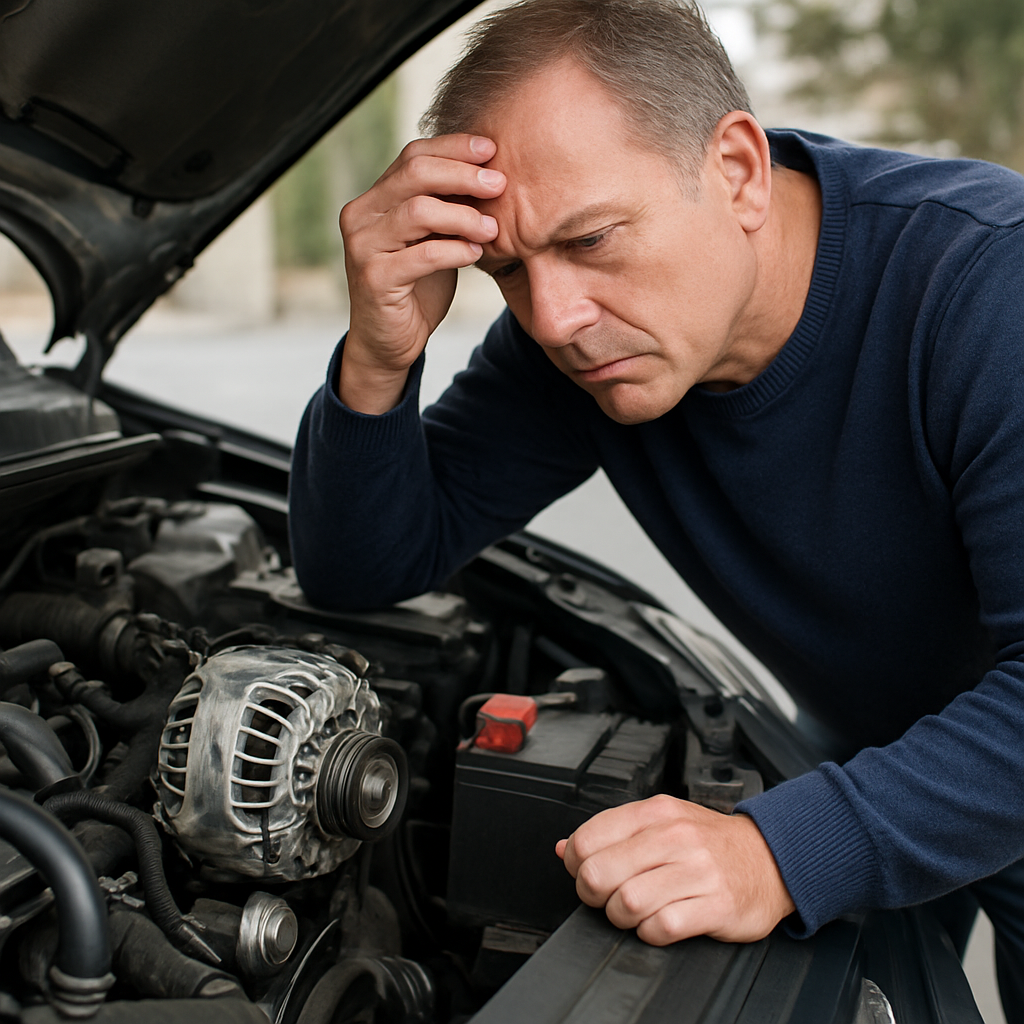
A failing alternator can cause a battery warning light, dimming or flickering lights, electrical glitches, a weak or dead battery, difficulty starting, unusual noises, or a vehicle that will not stay running. These are warning signs of a possible charging-system problem, not proof that the alternator itself has failed: battery faults and other charging-system issues can produce similar symptoms. Testing the battery and charging system is the sensible next step before replacing parts.
Common symptoms of a bad alternator
The alternator helps keep the vehicle’s electrical system supplied with power and the battery charged while the vehicle is running. When charging is inadequate or irregular, the effects may show up in several ways:
- Battery or charging warning light: A warning light on the dashboard can indicate a problem with the charging system. It does not, by itself, identify which component has failed; check the owner’s manual for the meaning of the warning on your vehicle.
- Dim, flickering or unusually bright lights: Headlights or interior lights may change in brightness or flicker. This can be a sign of an electrical or charging issue, but it is not unique to an alternator fault.
- Electrical accessories behaving irregularly: Accessories or other electrical equipment may work inconsistently. A fault elsewhere in the electrical system can cause similar behaviour.
- A weak or dead battery: If the alternator is not keeping the battery charged while the vehicle runs, the battery may become weak. A battery fault can also cause a no-start or electrical symptoms, so this clue alone cannot confirm the alternator is bad.
- Difficulty starting or staying running: The vehicle may be difficult to start or may not keep running. Starting and running problems have several possible causes, including the battery and charging system.
- Unusual noises: An unusual noise can accompany alternator trouble, but noise alone does not establish the source. Other components can also make unusual sounds.
Because a battery, alternator or another charging-system fault can produce overlapping signs, do not treat one symptom as a confirmed diagnosis. Firestone’s overview of alternator warning signs also notes that battery and alternator problems can look alike and that starting, warning-light and electrical-accessory symptoms do not necessarily identify the failed part.
Signs that may appear while you are driving
While driving, you may notice headlights or other lights dimming or flickering, or electrical accessories behaving irregularly. A vehicle may also stop running if the underlying problem affects its ability to keep running. These signs are not exclusive to alternator failure, and there is no dependable symptom sequence that applies to every vehicle.
If the vehicle is losing electrical power or stops running, prioritise reaching a safe location and arranging professional assistance. Do not assume it is safe to continue the trip simply because the engine is still running.
What happens if an alternator stops working while you drive?
If an alternator stops charging properly, the vehicle may develop worsening electrical problems and may eventually shut down. The point at which a vehicle might stop depends on the vehicle and the fault; there is no reliable distance or amount of time you can count on it continuing to run.
If warning signs are accompanied by loss of electrical power or the engine stops running, pull over somewhere safe when possible and arrange roadside assistance or a tow rather than trying to complete the journey. A technician can test the battery and charging system to establish what has failed.
Bad alternator or bad battery? Why the symptoms overlap
The battery stores electrical power used to start the vehicle and support its electrical system; the alternator helps keep the battery charged while the vehicle is running. Because the components work together, a fault in either can lead to a weak or dead battery, starting difficulty, warning lights or electrical-accessory problems.
Symptoms may offer clues, but they do not reliably distinguish a bad battery from a failing alternator. A battery test can be followed, where needed, by testing of the starting and charging systems. That is more useful than replacing a component based on one symptom or the battery’s age alone.
If the vehicle has intermittent starting trouble, there can be causes beyond the alternator; see our guide to other causes of intermittent starting trouble. Battery condition and connections also matter: our article on battery corrosion and related battery problems is specifically about the 2016 Ford Explorer and should not be taken as model-wide guidance for other vehicles.
Can a multimeter tell whether the battery or alternator is bad?
A multimeter may be used as part of electrical diagnosis, but an isolated reading should not be treated as a definitive alternator diagnosis. Correct test steps, conditions and specifications can vary by vehicle.
Have the battery tested and, if the result or symptoms call for it, have the starting and charging systems checked. For test steps and specifications, use service information for the exact vehicle or ask a qualified technician to interpret the results.
Do symptoms differ by Toyota, Chevy or Ford?
The general signs in this guide—such as a battery warning light, changing light brightness, electrical irregularities or starting trouble—can prompt charging-system checks on a Toyota, Chevrolet or Ford. There are no distinct symptom patterns that apply across all models, years or trims from any of those manufacturers.
Warning-light meanings and test requirements can vary by vehicle. Consult the applicable owner’s manual or vehicle-specific service information rather than assuming that a particular warning label or behaviour applies to every Toyota, Chevy or Ford.
Is there a temporary fix for a bad alternator?
There is no dependable temporary repair for an alternator fault. A vehicle with alternator trouble may not start or stay running, and continuing to drive can risk a shutdown. A jump-start or other improvised workaround does not repair the underlying fault or establish that the vehicle is safe to drive.
Arrange prompt battery and charging-system diagnosis. If the vehicle will not stay running, is losing electrical power or is already stalled, arrange roadside assistance or a tow instead of relying on a workaround to continue the journey. Meineke explains the risk of shutdown when driving with a bad alternator.
Can a bad alternator drain the battery when the car is off?
It is possible: a faulty alternator can be one cause of parasitic battery drain while the vehicle is off. That does not mean every battery that goes flat while parked has an alternator fault. The battery, charging system and other possible sources of drain need to be checked before replacing parts.
For a wider look at possible causes and checks, read our guide to other causes of a car battery draining.
Can O’Reilly test an alternator, and do alternators smoke when they go bad?
Store services can vary by location. Contact your local O’Reilly store directly to ask whether it currently offers alternator or charging-system testing.
Smoke is not enough to diagnose an alternator problem or identify its cause. If you see smoke, seek qualified help to assess the vehicle rather than assuming the alternator is responsible.