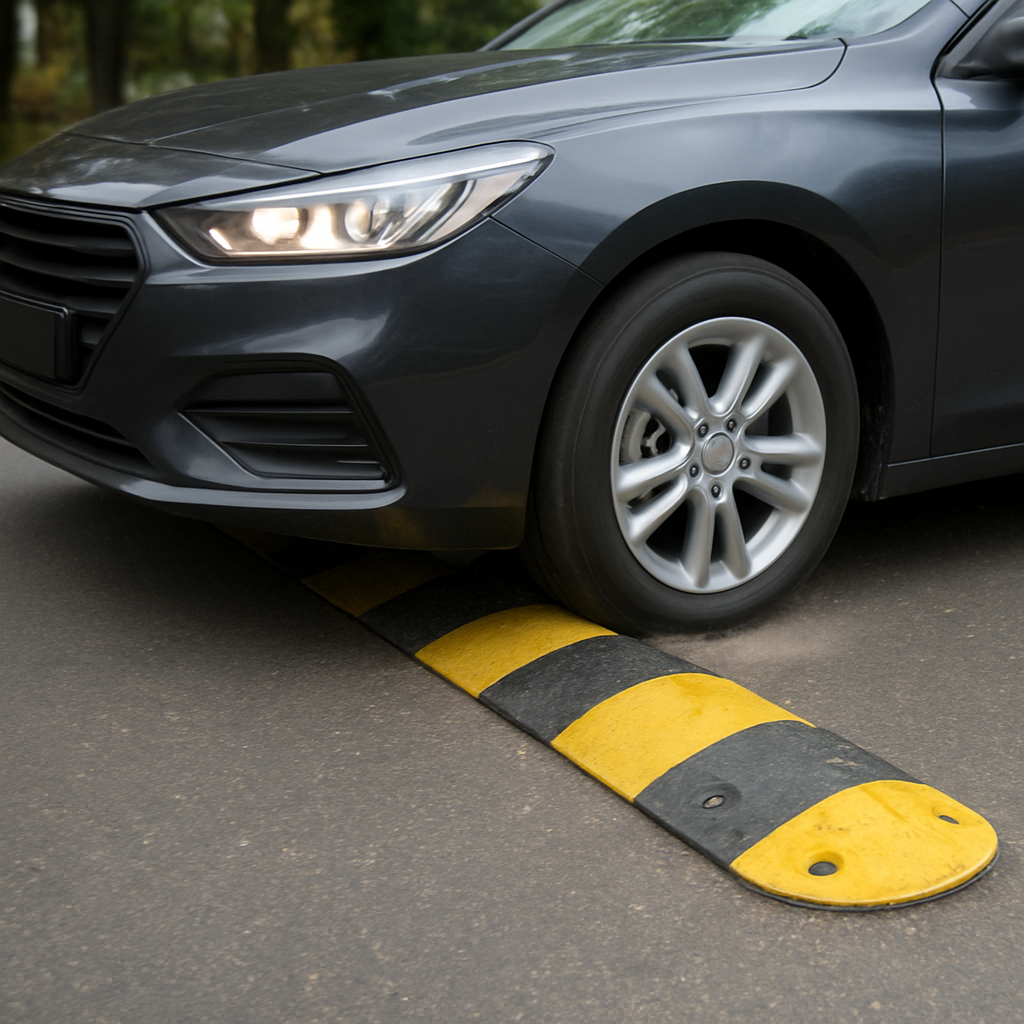
An unfamiliar noise as your car goes over a speed bump can be associated with movement, looseness, wear, or contact in the suspension or steering system. A clunk, squeak, or creak can help describe the symptom, but sound alone cannot confirm which part—if any—has failed. The conditions in which it occurs are useful clues for a technician.
Why a car can make noise over speed bumps
Going over a bump changes how the vehicle moves and loads its suspension. A noise that happens at that moment may point to a component that is moving, worn, or making contact, but several issues can produce similar sounds. The noise may also be more noticeable on rough roads, and its perceived location is a clue rather than proof of where it originates.
Before arranging an inspection, note whether the noise is intermittent or happens every time, whether it changes with speed, and whether it also occurs during braking, acceleration, or turning. Record whether it seems to come from the front, rear, or underneath the car. These are the kinds of observations that can help a technician narrow down the cause; they are not a sound-based diagnosis. The diagnostic guidance on noting when and where a noise occurs recommends sharing those details with a professional.
What a clunk over a bump may indicate
A clunk over a speed bump or rough road is consistent with possible looseness, wear, or movement in suspension or steering components. Stabiliser links are one possible source mentioned in a guide to common car noises, but that does not mean a clunk confirms a faulty link—or any particular part. A technician may need to inspect the vehicle to find out whether a component has excess movement or is contacting another part.
A front-end clunk and a rear-end clunk are both useful descriptions to report, but neither identifies a failed component by itself. The same applies if the noise happens at low speed: that is useful context, not a test that points to one specific fault. If you hear the noise mainly at the rear, report that impression rather than assuming the source is a particular rear suspension part.
Mazda 3 owners can also read our guide to rear clunking over bumps in the Mazda 3. It is a model-specific example and does not establish that another vehicle has the same cause.
What a squeak or creak over bumps may mean
A squeak or creak as the car moves over a bump can be associated with a component that cushions, guides, or supports suspension movement and has dried out, worn, or moved out of position. This is a possible explanation, not confirmation of the part responsible. Guidance on squeaking when a car hits a bump describes these possibilities but does not identify a unique cause from the sound alone.
A creak at low speed or a noise that seems to come from the rear should be included in your description to the technician. The available information does not establish a separate cause for rear creaking, and low-speed occurrence does not prove that a particular component has failed.
Can a noise tell you whether suspension is blown?
No reliable sound-only test for a blown shock or strut is established by the available evidence. Clunks, squeaks, rattles, and other unfamiliar noises can be symptoms to investigate, but they are not proof that the suspension is blown. A professional inspection is needed to diagnose the cause rather than relying on the sound to name a failed part.
Is it safe to drive with suspension noise?
A noise alone is not enough to determine whether a particular car is safe to drive, so it would be misleading to give blanket reassurance or a definite roadworthiness verdict. An unfamiliar or worsening noise warrants professional inspection; Hawkins Automotive’s guidance on unusual driving noises advises having a concerning noise checked rather than waiting for it to get worse.
When you contact a technician, mention any associated change in handling, steering, or braking, and whether a warning light is on. The available guidance does not set a universal driving threshold based on noise alone, so a technician can advise you based on the vehicle and its symptoms.
What to tell the technician
A clear description can help with diagnosis. Note:
- What the noise sounds like: for example, a clunk, squeak, creak, or rattle.
- Whether it seems to come from the front, rear, or underneath; treat this as an impression, not a confirmed source.
- Whether it happens over speed bumps, rough roads, or both.
- The speed at which it occurs and whether the noise is intermittent or constant, or changes as the car moves faster or slower.
- Whether it also occurs during braking, acceleration, or turning.
- Any change in handling, steering, or braking, and any warning light you have noticed.
Those details can help a professional decide what to inspect. Until the cause has been checked, avoid treating a sound pattern or location as a confirmed diagnosis.