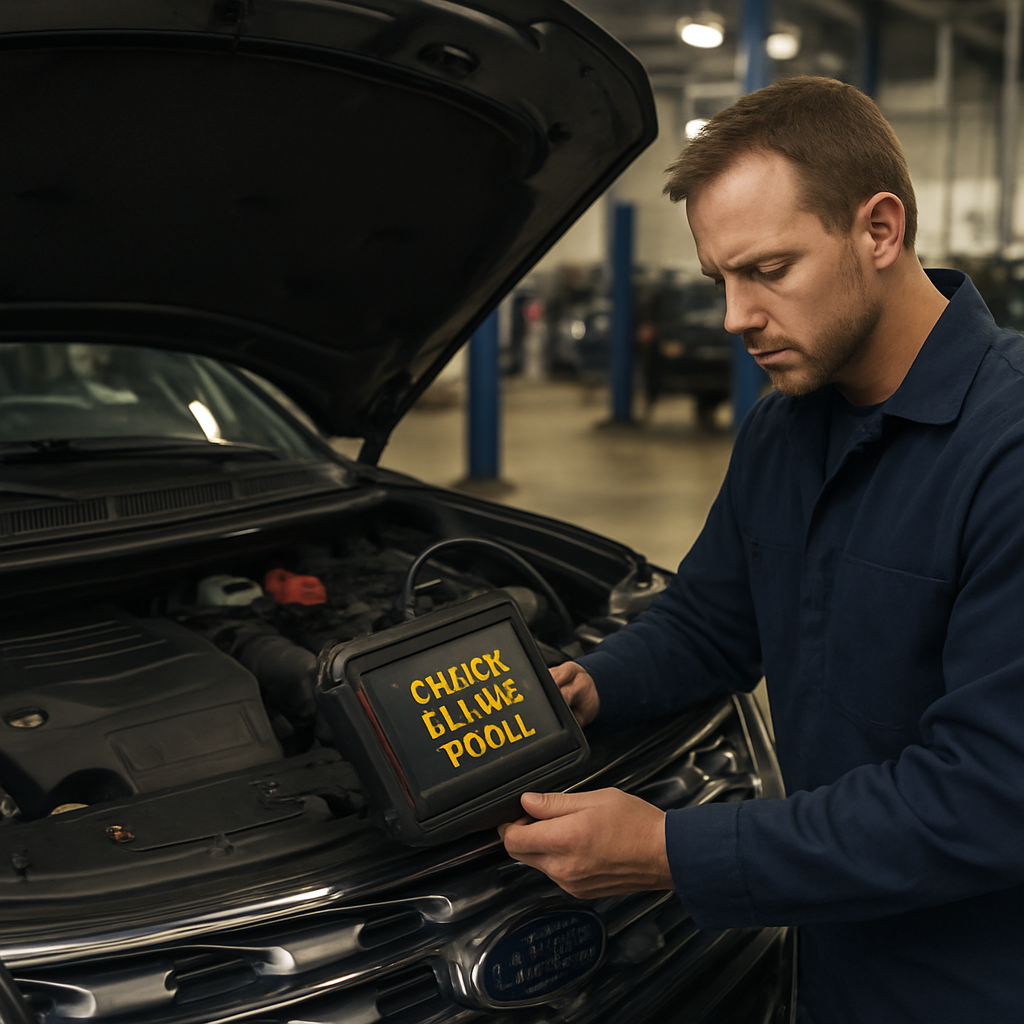
P0302 means the engine computer has detected a misfire on cylinder 2. It tells you which cylinder is misfiring, not which part has failed. On a 2017 Ford Explorer, the cause needs to be diagnosed before deciding what to repair; a spark plug, ignition coil, fuel injector, wiring fault, or mechanical issue could be involved.
What P0302 means on a 2017 Ford Explorer
A cylinder misfires when it does not fire correctly as the engine runs. The code is a diagnostic clue: the computer has identified cylinder 2 as the cylinder experiencing the misfire, but P0302 alone does not confirm a faulty plug, coil, or other component. The general definition is the same when P0302 appears on a Ford, Nissan, or 2017 Jeep Wrangler; the vehicle’s engine layout, likely causes, and repair information may differ.
In other words, “cylinder 2 misfire detected” describes what the computer detected, not the root cause. A code reader can confirm the stored code, but a technician may need to check misfire data and test the relevant components to find the fault. See this P0302 code explanation for the general diagnostic-code definition.
P0302 is also different from P0300, which refers to random or multiple-cylinder misfires. If your Explorer has both codes, read our guide to Ford P0300 code causes and driving risks; the two codes are related, but they are not interchangeable.
Common causes of a cylinder 2 misfire
Common possibilities include an ignition problem, a fuel-delivery problem, or a mechanical issue affecting the cylinder. General P0302 diagnostic references identify spark plugs, ignition coils, and fuel injectors among the potential causes, but the available evidence does not establish one as the most common cause for every 2017 Explorer engine.
- Spark plug: A worn, fouled, or otherwise faulty plug can prevent the cylinder from firing correctly.
- Ignition coil or related wiring: A coil, connector, or wiring fault can interrupt ignition to the cylinder.
- Fuel injector or its circuit: A fuel-delivery problem can also contribute to a cylinder-specific misfire.
- Mechanical or compression issue: If ignition and fuel checks do not explain the fault, further testing may be needed to investigate the cylinder’s mechanical condition.
These are possibilities, not a diagnosis. The code points to the cylinder where the misfire was detected; it does not prove that the component attached to that cylinder is defective. A general P0302 diagnostic overview discusses these cause categories and checks.
How to diagnose and fix P0302
The right repair depends on what testing finds. Replacing a spark plug, coil, or injector solely because P0302 is stored can miss the actual fault. A useful diagnostic process may include:
- Confirm the code and review misfire information. A suitable scan tool can help identify whether the misfire is continuing and provide cylinder-specific misfire data.
- Inspect relevant parts and connections. Check the cylinder’s ignition components, connectors, and visible wiring for damage or loose connections. Inspection should be based on the correct engine configuration.
- Consider a controlled plug or coil swap test. A technician may move a suspect component to another cylinder and check whether the misfire follows it. If it does, the moved part becomes a suspect; if it does not, further testing may still be needed to confirm the cause.
- Check fuel delivery where indicated. If ignition checks do not explain the misfire, the injector and its electrical circuit may need testing. Fuel-system diagnosis is best left to someone equipped to perform it safely.
- Investigate compression or leakage if needed. If ignition and fuel checks do not account for the fault, compression or leak-down testing can help assess a possible mechanical cause. For context on a confirmed result, see our guide to what a no-compression finding can mean.
A repair demonstration for a 2017 Explorer with the 3.5L EcoBoost shows a spark-plug replacement, but that is one example—not proof that a plug is the cause of every P0302 on this model. The demonstration also describes cylinder 2’s location for that specific engine configuration. Use the 3.5L EcoBoost P0302 example as engine-specific context, not as a substitute for diagnosis or service information for your vehicle.
Where cylinder 2 is located on the 2017 Explorer
The available location information applies specifically to the transverse 3.5L EcoBoost V6: its rear bank faces the firewall, and cylinder 2 is the middle cylinder on that bank. Access and cylinder numbering may differ with another engine configuration, so confirm which engine your Explorer has and consult the matching service information or an engine-specific diagram before identifying or removing a component.
The same caution applies to related location searches for other vehicles. P0302 identifies cylinder 2 but does not show its physical position. The available information does not verify a cylinder 2 location for a 2017 Ford Escape or a cylinder 4 location for every 2016 Ford Explorer configuration. Confirm the exact engine and use the correct service information rather than transferring a layout from another model or year.
Can you drive with P0302?
The code alone is not enough to say that your Explorer is safe to drive, and the available information does not establish a safe distance or a blanket drivability rule for this specific vehicle. Arrange a prompt diagnosis rather than continuing routine use while the cause and severity are unknown.
If the engine is running severely or the vehicle’s condition makes continued driving unsafe, stop in a safe place and seek professional assistance. Do not assume that a stored code will clear the problem or that the vehicle is safe simply because it can still move.
A cylinder 4 misfire raises the same general uncertainty about whether a vehicle can be driven: the cylinder number differs, but the code or symptom alone does not establish the cause or make a safety assessment. Have the vehicle checked promptly, and stop driving if its condition makes continuing unsafe.