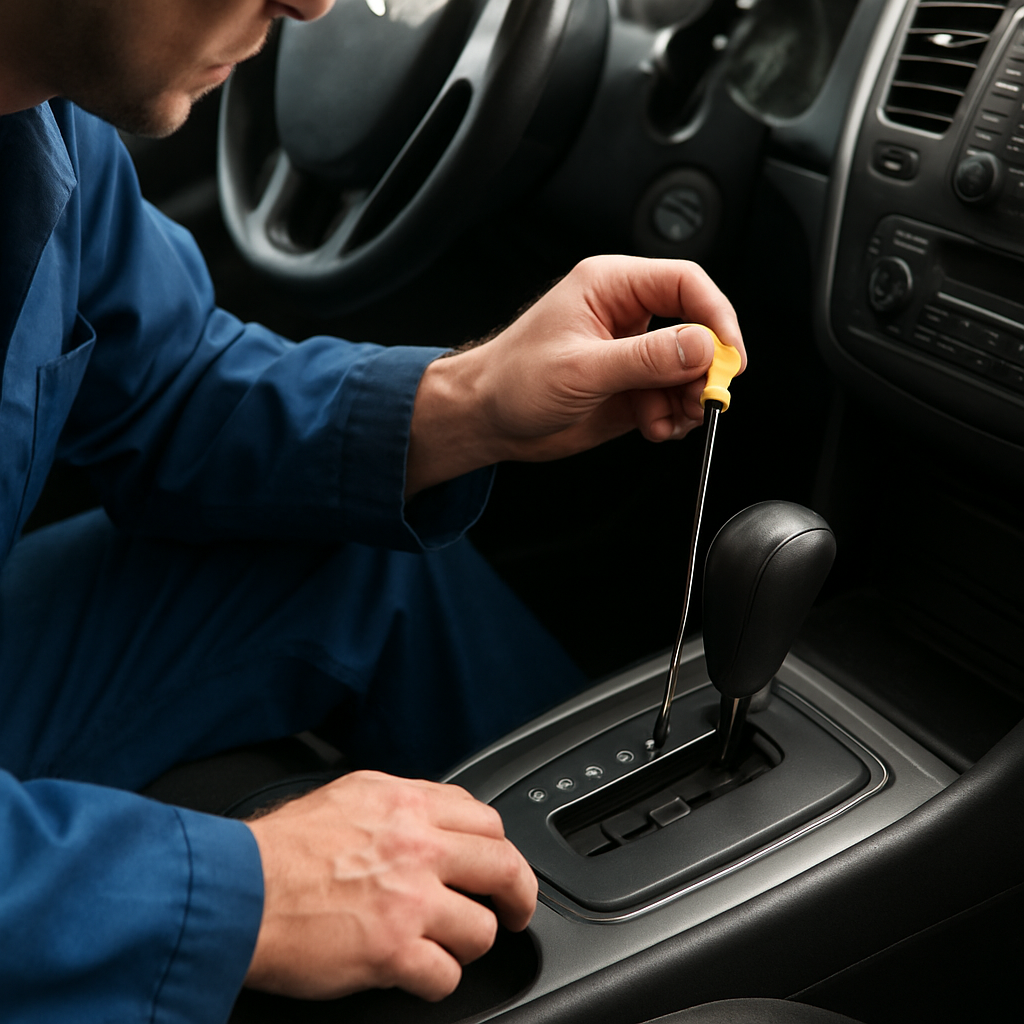
If your car will not shift into 4th gear, it does not automatically mean that the whole transmission has failed. For automatic transmissions, possible causes raised by the available repair information include an incorrect transmission-fluid level or poor fluid condition, incorrect or overfilled fluid, wiring faults, a speed-sensor fault, or a problem with a shift solenoid or valve body. None of these is a diagnosis for an individual vehicle: the correct next step depends on the make, model, year, transmission type, fault codes and exact symptoms.
Why a car may not shift into 4th gear
The available repair sources mainly concern automatic transmissions. They identify fluid-related concerns and electrical or hydraulic-control possibilities, including wiring, speed sensors, shift solenoids and the valve body. A missed 3rd-to-4th upshift can result from more than one fault, so the symptom alone is not a sound reason to replace a particular part.
For example, one repair discussion identifies wiring and solenoid faults as possibilities, while another raises wiring or a speed-sensor problem. These examples do not show that the same fault applies to every car. A 4th-gear problem may also remain even when a scan finds no diagnostic trouble codes, so a lack of codes does not prove that the transmission or its controls are healthy.
Transmission fluid: check it only by the vehicle-specific method
Incorrect fluid level, unsuitable fluid, overfilling and fluid condition are all considerations raised by the supplied repair discussions. One repair discussion mentions checking the specified fluid and whether the transmission is overfilled, but this does not confirm that fluid is the cause of a particular 4th-gear fault.
Use the owner’s manual or manufacturer service information to confirm the correct fluid specification and level-checking procedure. Transmission-fluid checks vary considerably: some require the vehicle to be level, the engine to be running, the transmission to be at a specified temperature, or a particular diagnostic procedure. Do not add or drain fluid until you have confirmed the correct specification, checking conditions and fill quantity. An incorrect fluid type or level can create further transmission problems.
Does it miss 4th gear, or will it not shift at all?
Record whether the fault is limited to the shift from 3rd to 4th, whether other gears operate normally, or whether the vehicle will not select or engage any gear. These are different symptom patterns, and neither one confirms a failed component by itself.
If the car will not shift into any gear, that is a broader problem than a missed 4th-gear shift and needs vehicle-specific diagnosis. The limited evidence concerning 4th gear cannot establish the cause of a complete loss of gear engagement.
It is also useful to note whether the problem is constant or changes once the vehicle has warmed up, as well as any warning lights, scan results and stored codes. These observations can help a technician narrow the investigation, but they are not proof of a particular fault. If a scan or diagnosis specifically points to an output speed sensor, read more about what a bad output speed sensor can mean for drivability. A missing 4th gear on its own does not establish that this sensor is faulty.
What if the vehicle has a manual gearbox?
Do not assume that automatic-transmission explanations such as shift solenoids, valve-body faults or transmission-control sensor issues apply to a manual gearbox. The available information does not establish a manual-transmission diagnosis, nor does it support a universal selector or linkage repair procedure.
For a manual vehicle, tell the technician exactly what happens when you attempt to select 4th gear: for example, whether the lever will not enter the gate, whether the gear engages but jumps out, or whether there is resistance or noise. If there is also grinding when pressing the clutch pedal, that is a separate symptom. See possible causes of grinding when pressing the clutch, but clutch noise is not established here as the reason 4th gear is unavailable.
Can you drive with no 4th gear?
The available information cannot determine whether an individual vehicle with unreliable shifting is safe to drive. Do not assume it is safe simply because some gears still work. Follow the owner’s manual and seek vehicle-specific professional guidance if shifting is unreliable, particularly if the vehicle hesitates, loses drive, selects unexpected gears or displays a warning light.
How do you free a stuck transmission?
There is no verified, universal procedure in the supplied evidence for freeing a stuck transmission. Do not force the shifter or use improvised methods, including attempts to roll the vehicle to release the gear. Consult the owner’s manual and a qualified technician for guidance that matches the vehicle and the actual fault.
How much could a hard-shifting transmission repair cost?
No reliable repair price or cost range can be given from the information available. Costs depend on the vehicle, transmission type, confirmed fault, parts required and labour involved. Obtain a diagnosis first, then ask the repairer to explain the findings and provide a vehicle-specific written estimate before authorising work.
What to tell a technician
- The vehicle’s make, model and year.
- Whether it has an automatic or manual transmission.
- Which gears work, and whether the problem is limited to the 3rd-to-4th shift.
- Whether the symptom is intermittent or changes after the vehicle warms up.
- Any warning lights, diagnostic codes or scan results, including if no codes were found.
- Whether the transmission fluid has recently been serviced, and the fluid used if known.
- Any additional symptoms, such as harsh shifts, slipping, unusual noises or clutch-pedal grinding.
These details help guide diagnosis but do not confirm the cause. If the fault persists, arrange proper vehicle-specific testing rather than repeatedly forcing a shift or replacing parts based on the symptom alone.