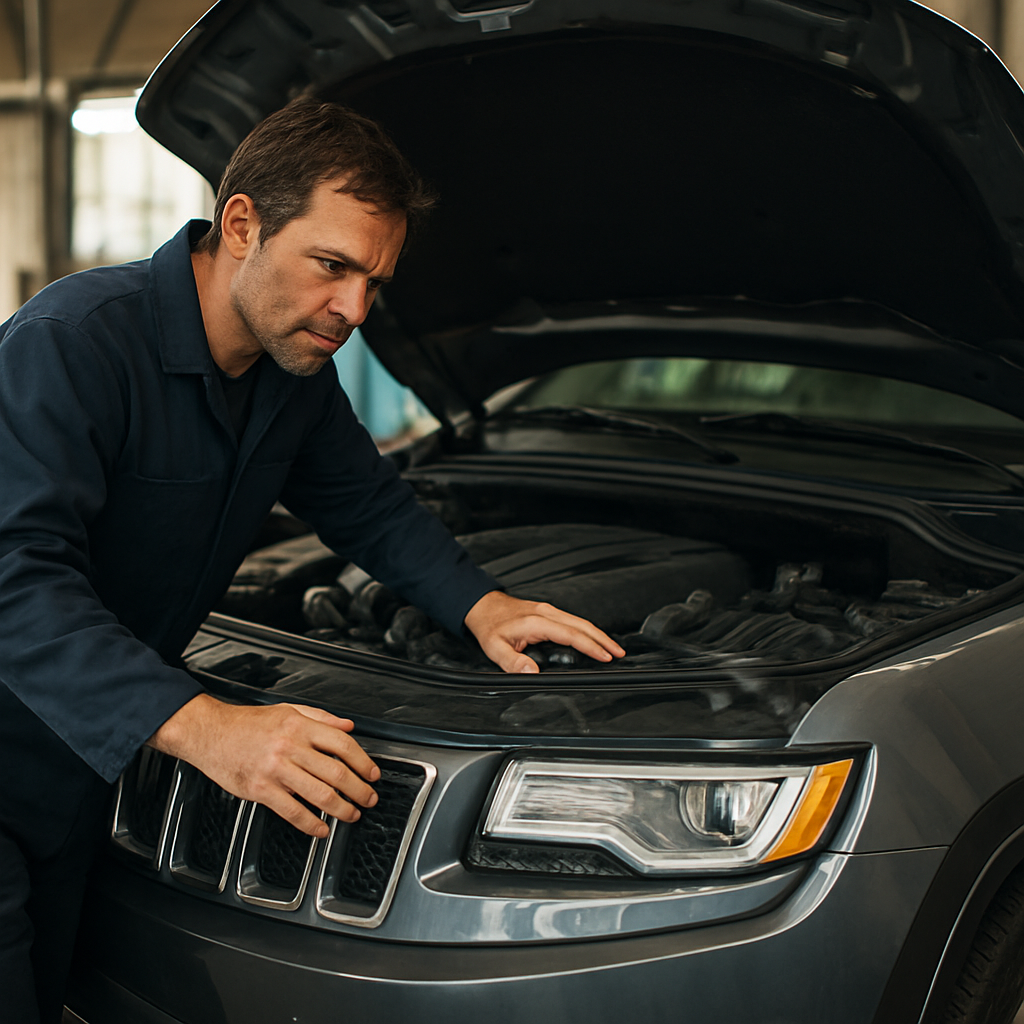
The available evidence does not identify one verified, most common problem across every Jeep Grand Cherokee model year, trim and powertrain. It identifies several systems that may require attention, but the supplied 2021 material does not rank them by frequency, and an individual owner report or a road-test criticism cannot show how often a fault occurs across the range.
What is the most common problem with a Jeep Grand Cherokee?
There is insufficient evidence in the supplied sources to name one fault as the overall most common Grand Cherokee problem. The 2021 Consumer Reports reliability page includes categories such as engine, drive system, cooling, paint and trim, suspension and steering, and noises or leaks. However, the supplied extract does not provide a frequency ranking showing which category, or which individual component, occurs most often.
A problem category, an owner account and a confirmed diagnosis are not the same thing. A reported symptom does not establish its cause, while a single report or reviewer opinion is not evidence of a recall, a confirmed defect or a problem affecting every Grand Cherokee. The relevant checks depend on the vehicle’s year, trim, equipment, service history and present condition.
What problems are reported for the 2021 Jeep Grand Cherokee?
The supplied 2021 Consumer Reports material covers several potential problem areas but does not identify a most frequent fault. It includes one owner account of a radiator that cracked or was punctured while driving, followed by coolant loss and engine warnings. This is an example of a reported cooling-system issue, not a fleet-wide failure rate, a confirmed cause for other vehicles or proof that the radiator is the 2021 model’s most common problem.
If your Grand Cherokee is losing coolant, showing an overheating warning or running hot, arrange prompt professional assessment. Do not continue driving an overheating vehicle, and do not open a hot cooling system. Symptoms alone cannot confirm which component has failed. For related cooling-system information, see our guide to Grand Cherokee water-pump symptoms and repair considerations; the reported radiator incident does not establish a water-pump fault.
What does the 2017 evidence say about the air suspension and gear selector?
A 2017 Business Insider review of a Grand Cherokee Summit criticised the tested vehicle’s Quadra-Lift air suspension, describing its ride as poorly calibrated over small road imperfections. This was a reviewer assessment of that tested Summit, rather than evidence that every 2017 Grand Cherokee has an air-suspension failure.
The review also notes that Jeep moved away from its controversial electric gear selector for 2017 in favour of a traditional PRND lever. That design change does not establish how frequently an earlier selector failed, nor does it prove a defect rate. If your own Jeep is struggling to shift, see what to check when a Jeep is struggling to shift. The selector change by itself is not a diagnosis.
Jeep Grand Cherokee reliability by year: what can be concluded?
The supplied evidence is too limited to create a reliable year-by-year ranking or a definitive list of Jeep Grand Cherokee years to avoid. It provides problem categories and one cooling-system owner account for 2021, plus a review of one 2017 Summit’s suspension and a historical note about the selector design. Those examples cannot establish that either year is universally good or bad.
For a used Grand Cherokee, assess the specific year, generation, engine, trim and optional equipment. Maintenance and repair records, current symptoms and the condition of the individual vehicle all matter. Before purchase, review its history and arrange an inspection by a qualified independent technician. The available evidence does not support declaring any model year universally safe, dependable or unreliable.
What about 2020, 2022, 2025 and 2026 Grand Cherokee problems?
The supplied sources do not substantiate a most common problem for the 2020, 2022 or 2025 Grand Cherokee. The 2022 source is a capability and equipment review, not fault-frequency or reliability evidence. It therefore cannot support a model-year-specific problem list.
For 2026, the supplied material is a product announcement covering powertrain and equipment information, rather than real-world reliability data. It cannot establish whether the model has a recurring problem, and it does not support predictions about faults in a new powertrain. Product specifications are not a substitute for vehicles-in-service reliability evidence.
Are Jeep Grand Cherokees dependable?
The supplied material is not enough to label Grand Cherokees dependable or undependable as a group, quantify reliability or predict an individual vehicle’s breakdown risk. A list of reliability categories and one owner-reported cooling issue are not statistical reliability results. Similarly, a road-test criticism of one Summit’s suspension is a review observation, not a model-wide failure rate.
If you are considering one, assess the exact vehicle rather than relying on a brand-wide verdict. Check its service and repair history, confirm its trim and equipment, note warning lights or symptoms, and have it inspected. If the vehicle has a blinking check-engine light, our guide explains what a blinking Grand Cherokee check-engine light can mean; the warning still requires diagnosis and does not identify the cause on its own.
Does the Jeep Cherokee have the same issues?
No conclusion about the Jeep Cherokee should be transferred from Grand Cherokee evidence because they are different model names. The evidence discussed here concerns the Grand Cherokee and does not establish a problem list for the Cherokee, including the 2014 Cherokee. A search result about a Grand Cherokee, even from a similar year, cannot answer a Cherokee-specific reliability question.
Is there a class-action lawsuit against the Jeep Grand Cherokee?
The supplied evidence does not verify a class-action lawsuit, its status, the vehicles it might involve or any eligibility requirements. An owner complaint, reported incident, recall or NHTSA investigation is not, by itself, proof of a class action. A legal-status answer would require current authoritative court records or official case documents.