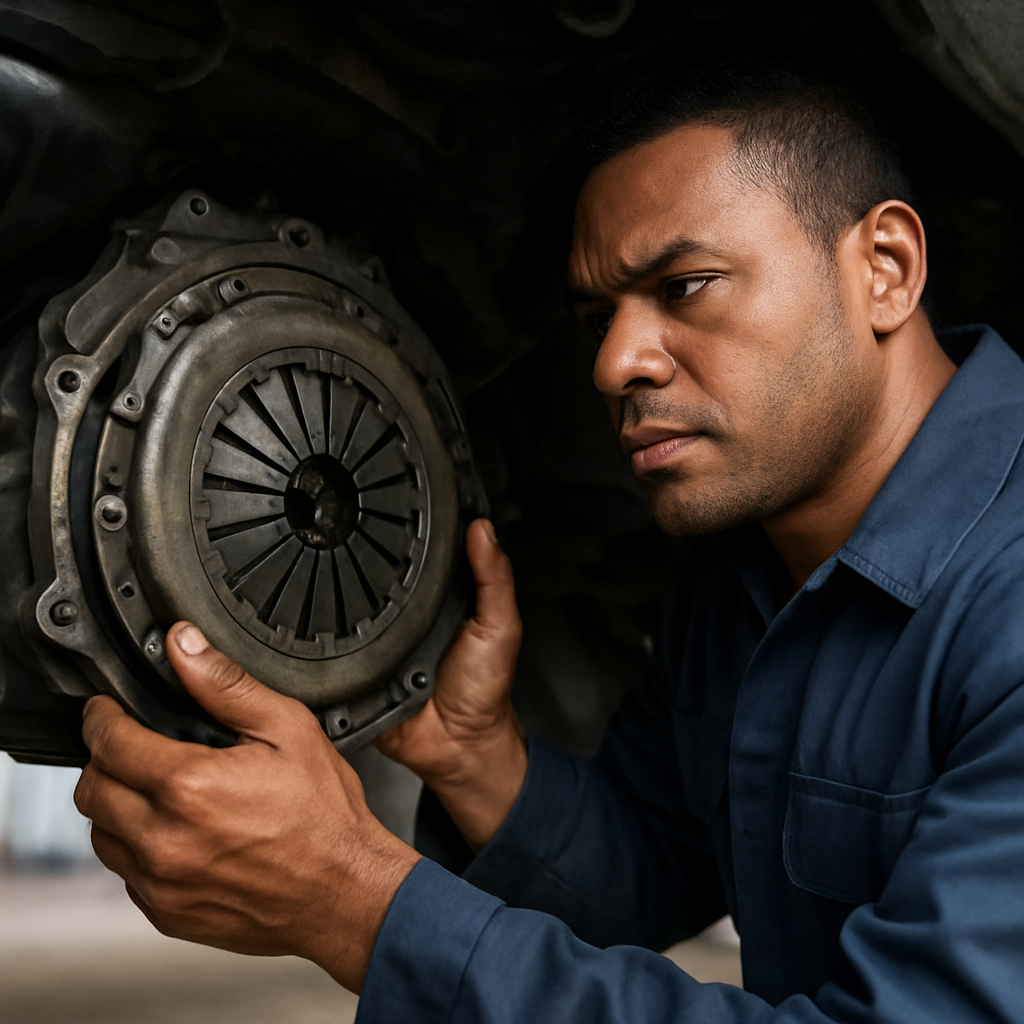
A grinding sound when you press the clutch can involve a worn or incorrectly loaded release (throw-out) bearing, but that is only one possibility. The clutch fork, pressure plate or clutch assembly, pilot bearing and transmission input-shaft bearing may also be considered during diagnosis. Sound alone cannot confirm which part has failed, so note exactly when it occurs and arrange an inspection if it persists or worsens.
Why does the clutch grind when you press it?
Pressing the clutch operates its release mechanism. One technical discussion describes the clutch fork pushing against a bearing as the pedal is operated; a noise that changes with this movement can therefore provide useful diagnostic information. It does not, however, identify the faulty component by itself. Clutch arrangements vary between vehicles, so this is general context rather than a description of every design. See this discussion of clutch-fork and bearing interaction.
Possible causes raised in the supplied repair and owner discussions include:
- Release or throw-out bearing: A worn or improperly loaded bearing is one possible cause, particularly if the noise changes as the pedal is pressed. It should not be treated as a confirmed diagnosis from noise alone.
- Clutch fork or related contact points: Fork movement, vibration or wear at its contact points may contribute to certain clutch noises.
- Pressure plate or clutch assembly: Components within the clutch assembly may be involved in a noise that occurs during clutch operation.
- Pilot bearing: A worn or locked pilot bearing is another possibility. A Honda-Tech discussion notes that a faulty pilot bearing may damage the flywheel or transmission input shaft. That does not mean damage has occurred in a particular vehicle.
- Transmission input-shaft bearing: This may be considered during diagnosis, but a noise heard in neutral is not enough by itself to confirm that this bearing is the cause.
Make a note of whether the sound starts as the pedal moves down, occurs only when it is fully depressed, or continues while you hold the pedal down. Also note whether it changes or stops when you release the pedal, whether the car is stationary or moving, whether it is in neutral, and whether selecting gears has become difficult. These details can help a repairer investigate, but none is a stand-alone test that proves which part has failed.
What if the noise happens when you release the clutch?
Distinguish between a noise made during pedal depression, while the pedal is held down, and as you release the pedal and the clutch engages. If the noise occurs while driving, record that as well. The supplied evidence does not establish one specific cause for a noise that occurs only on release, or across both pedal phases. The release bearing, fork, pressure plate and clutch assembly may all warrant inspection, but pedal timing alone cannot identify the fault.
Tell the repairer if gear selection has become difficult or if clutch operation has changed, as well as when the noise occurs. If you are also struggling to select gears, our guide to what to check when a transmission will not go into gear may be useful. Difficulty selecting gears does not, by itself, prove that the transmission is the source of the noise.
How the type of clutch noise can help narrow it down
Terms such as grinding, squealing, chirping, rattling, spring-like and whining describe what you hear; they do not diagnose the cause. The most useful description combines the type of sound with the pedal phase and driving condition in which it occurs.
- Growling or squealing: The Clutch Industries guide to clutch noises discusses possible bearing wear in connection with growling or squealing. These sounds can have other causes, so an inspection is still required.
- Chirping: The same guide associates chirping with possible vibration or wear at clutch-fork and pivot contact points. This is one possible explanation, not the only one.
- Rattling: Depending on the vehicle’s configuration, rattling may be associated with a dual-mass flywheel or, in a solid-flywheel arrangement, a clutch-disc damper issue. A lightweight flywheel can also be associated with gear rollover or gear rattle. These possibilities do not establish the cause of a particular vehicle’s noise.
- Spring-like sound: The supplied evidence does not establish a reliable cause from this description alone.
- Whining: The available evidence likewise does not identify a specific component reliably from a whining sound alone.
What does a failing clutch sound like?
Possible warning sounds discussed in the supplied material include growling or squealing associated with possible bearing wear, chirping associated with possible clutch-fork or pivot vibration, and rattling that may relate to a flywheel or clutch-disc damper, depending on the vehicle’s setup. None of these sounds is a checklist that confirms the clutch is failing. Similar noises can arise from different components, and the affected parts need to be inspected. Have a persistent or changing noise assessed rather than waiting for it to become severe.
What happens when you press the clutch pedal?
In the limited mechanism described by the supplied source, pedal movement loads the release mechanism, with the fork pushing against a bearing. This helps explain why a noise may change as you move the pedal, but it is not a complete account of every vehicle’s clutch design. A sound that follows pedal movement is useful information for a technician; it does not prove that the bearing, fork or another particular component has failed.
Is it safe to drive with a squeaky or grinding clutch?
A squeak or grinding sound alone cannot establish that a vehicle is safe to drive. Different clutch and transmission components may be involved, and the available evidence cannot predict how a fault will develop in an individual car. Arrange prompt assessment by a qualified repairer. If clutch operation is impaired, or you cannot shift or control the vehicle normally, do not continue driving it; seek appropriate professional help.
How much does it cost to fix a clutch?
The available research does not support a reliable price or cost range. A repairer needs to inspect the vehicle and identify the fault, required parts and labour before providing an estimate. A grinding noise alone is not enough to establish that the clutch itself, or any specific component, needs replacement.