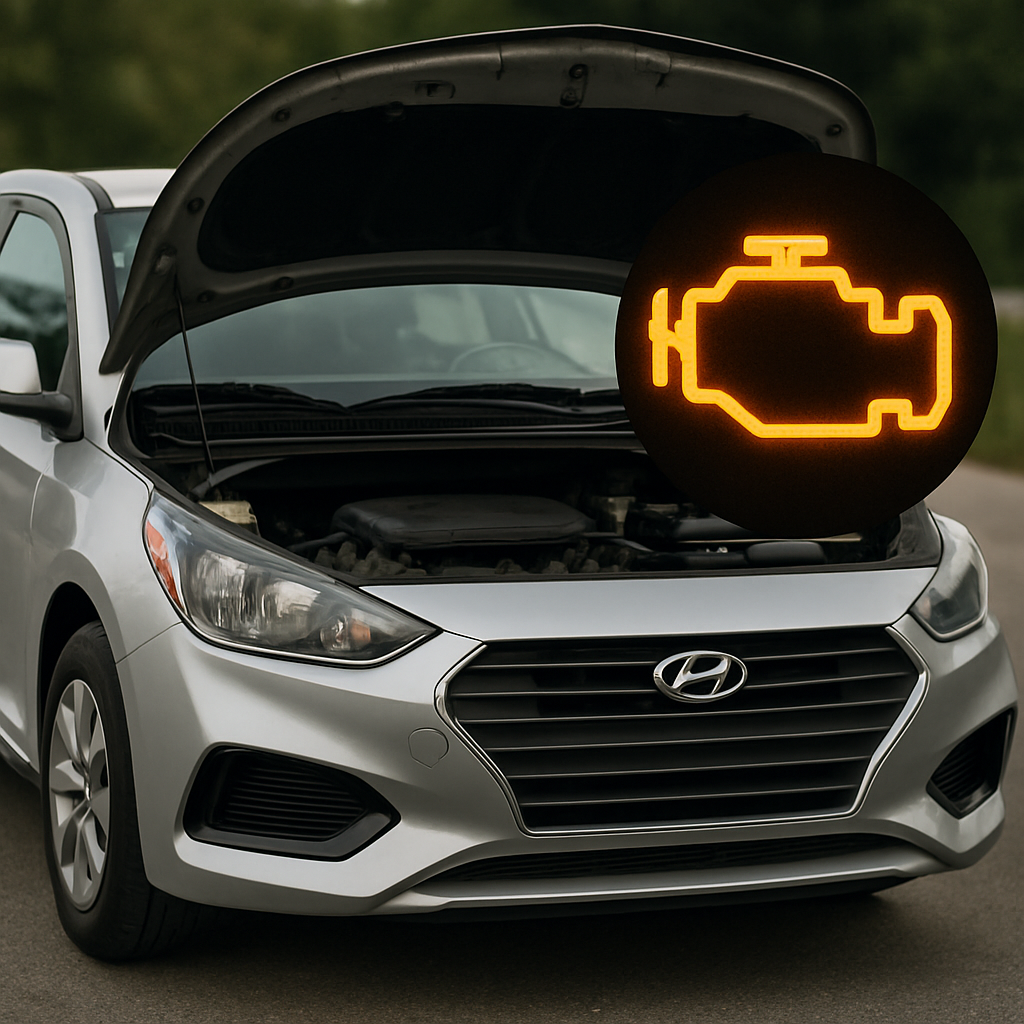
P0326 means the engine computer has detected a knock-sensor signal outside its specified range. Its standard definition is Knock Sensor 1 Circuit Range/Performance, Bank 1 or single sensor. On a Hyundai Accent, the code points to an abnormal signal in the knock-sensor system; it does not, by itself, prove that the sensor has failed or that the engine is knocking.
The code is a diagnostic clue, not a complete diagnosis. Its cause and the car’s drivability need to be assessed alongside any other stored codes, symptoms and test results. The exact sensor layout and repair procedure can also depend on the Accent’s year and engine.
What P0326 means on a Hyundai Accent
A knock sensor detects engine vibration associated with knock and sends a signal to the engine computer. P0326 is set when the computer judges that the sensor signal is outside the acceptable range or is not performing as expected. In plain language, the computer is not receiving a signal it considers normal.
That does not confirm actual engine knock, nor does it identify a failed sensor as the only possible cause. A problem with the sensor, its wiring or connector, or another engine issue affecting the signal may be involved. The standardized code definition is explained in this P0326 technical overview; the exact diagnosis still requires vehicle-specific checks.
“Bank 1” is part of the code’s standard wording, but the code alone should not be used to assume a particular sensor count, location or engine arrangement across every Accent year and market. A scan-tool result should be interpreted with the car’s exact configuration and any other diagnostic information.
If you are researching other knock-sensor codes, our guide to another knock-sensor code, P0328, covers a different code on a different vehicle; it is not a repair guide for the Accent.
Symptoms you may notice with P0326
The Accent-specific demonstration available for this code shows a check-engine light and a scan finding of P0326. That supports the warning-light context, but it does not establish a complete symptom list for every Hyundai Accent.
The evidence available here does not confirm that misfires, hesitation, rough running or loss of power are expected P0326 symptoms on an Accent. You may have a warning light without an obvious change in how the car runs, or you may notice other symptoms that need to be diagnosed separately. Record what you observe, including when it happens, and share it with the technician. The code alone cannot establish how severe the problem is.
How P0326 is diagnosed and fixed
Replacing the knock sensor just because P0326 is stored can miss the underlying fault. A suitable diagnostic process checks whether the signal problem comes from the sensor, its circuit or another engine issue, rather than treating the code as proof that one part has failed.
- Check for other stored codes. A technician can scan the vehicle and consider whether another engine fault needs attention before interpreting P0326 on its own.
- Inspect the sensor wiring and connector. Damaged wiring, a poor connection or a connector that is not properly seated can affect the signal.
- Test the circuit and signal. Use suitable diagnostic equipment and the service information for the exact vehicle. Testing may include assessing the sensor signal with appropriate equipment; the correct method and values are vehicle-specific.
- Repair only what the diagnosis supports. The sensor may need replacement if testing identifies it as faulty, but wiring or connector repairs, or investigation of another engine issue, may be needed instead.
- Verify the repair. After an appropriate repair, clear codes as required and check whether the fault returns during follow-up testing. A replacement sensor is not a guaranteed fix if the original cause remains.
A video titled for the Hyundai Accent range from 2010 to 2017 demonstrates a scan-tool diagnosis, wiring inspection, lab-scope testing, sensor replacement, code clearing and a verification road test. It is an example of a diagnostic sequence, not proof that the same access method, parts or procedure applies to every engine, trim or market version. You can see the Accent-specific P0326 demonstration. For connector pinouts, test values, sensor location, access steps and installation specifications, use service information for the exact Accent or consult a qualified technician.
For a general overview of why the code should be diagnosed rather than prompting an automatic parts replacement, see YourMechanic’s P0326 diagnostic guide. Its general information does not replace the Accent’s vehicle-specific service data.
Can you drive with a P0326 code?
The code alone is not enough to confirm that a particular Accent is safe to drive, and the available Accent-specific evidence does not certify it as safe. P0326 means the computer has received an out-of-range knock-sensor signal, so it may not have reliable information from that sensor system. General technical guidance notes that an unresolved knock-detection problem can carry a risk of engine damage, but that does not mean damage is occurring or is inevitable in your car.
Arrange prompt diagnosis and ask a qualified technician whether the vehicle should be driven. Do not rely on the check-engine light being the only indicator of severity. If the engine makes severe abnormal noise, runs markedly poorly or another urgent warning appears, stop driving and seek assistance rather than continuing the journey.
Does P0326 vary by Hyundai Accent year?
The general meaning remains a knock-sensor signal range/performance fault, but the available evidence does not establish year-specific sensor layouts, test values or repair procedures for every Accent configuration.
- 2010 Accent: The demonstration video is titled for 2010–2017 models, but that stated range does not verify a factory procedure for every 2010 engine or trim.
- 2013 and 2014 Accents: The code has the same general meaning, but the available source does not establish a year-specific difference or a procedure for either model year.
- 2008 Accent: The supplied Accent-specific information does not verify the sensor location, diagnostic values or repair steps for a 2008 model. Do not apply location or access details from other Hyundai or Kia vehicles.
Before ordering a part or attempting access or testing, confirm the exact model year, engine and market, then consult vehicle-specific service information. Procedures demonstrated on another Hyundai or Kia model should not be assumed to apply to an Accent.
How much does it cost to fix P0326?
The available research does not support a reliable dollar estimate, parts price, labour time or repair-cost range for a Hyundai Accent P0326. The total will depend on what testing finds: a wiring or connector issue, a confirmed sensor fault and the access required, or another engine issue are different repairs.
Ask for a written diagnosis and quote that separates diagnostic charges, parts and labour, and explains what test results support the proposed repair. This helps avoid paying for a sensor replacement that has not been shown to address the cause.