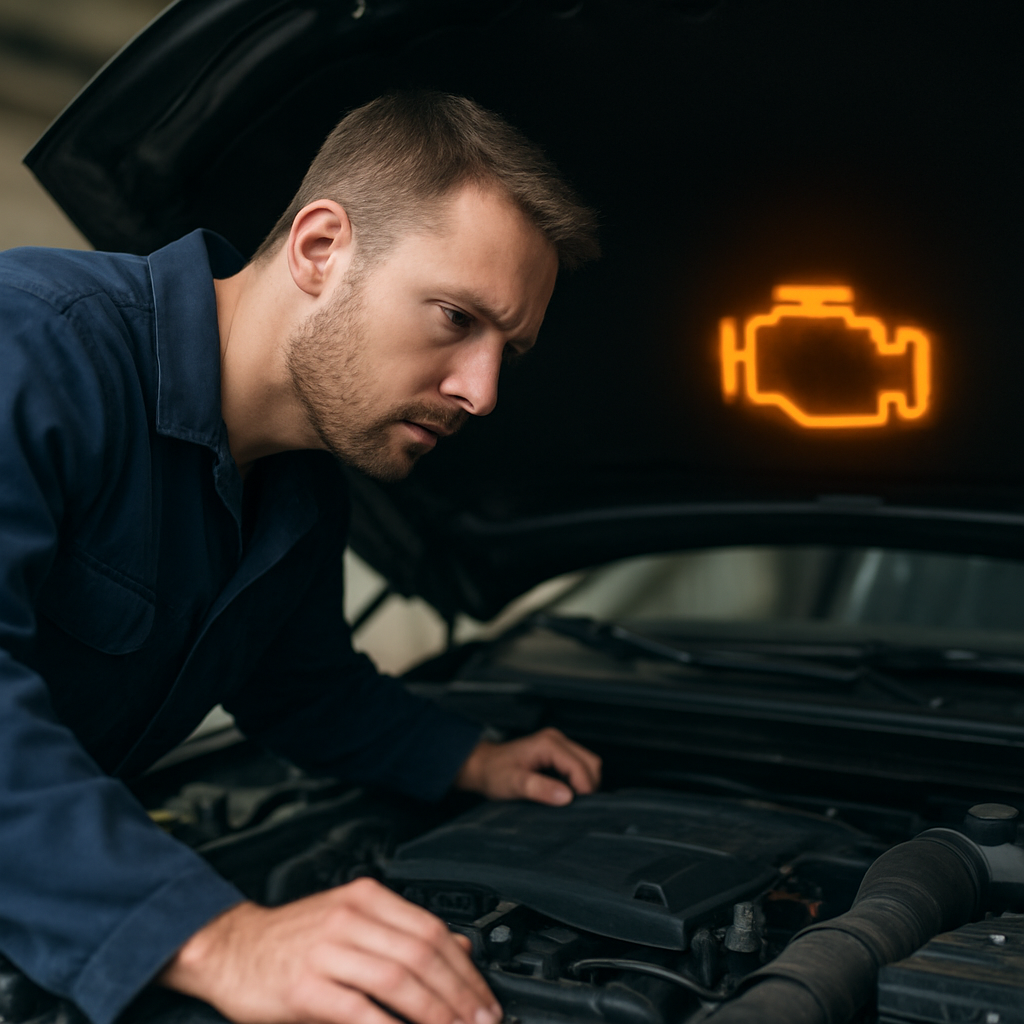
A loose, missing or faulty fuel cap is a common and easy-to-check reason for a check engine light. A cap or related fuel-system seal that does not close properly may be associated with fuel-vapour-system faults. However, the available evidence does not establish that a fuel cap is the single most common cause across every make, model and year. Check that the cap is present and properly secured according to your owner’s manual. If the warning remains on or the vehicle’s operation changes, arrange a diagnosis rather than assuming the cap was the cause.
Braman Miami Hyundai describes the fuel cap as the number-one reason—or, at minimum, the easiest issue to check. That is a useful first check, not a universal statistical ranking.
The most common check engine light cause
Based on the supplied evidence, a loose or faulty fuel cap is the best-supported first item to check. The cap helps seal the fuel system, and fuel-system sealing or vapour issues can trigger an engine warning light. Make sure the cap is fitted and secured as the owner’s manual instructs.
A properly secured cap does not confirm that the issue is fixed, and it cannot explain every warning light. If the light stays on or returns, have the vehicle checked and avoid treating the cap as a confirmed diagnosis.
Other problems that can trigger the light
There is not enough evidence here to verify and rank a long list of causes. Other supported possibilities include:
- A fuel-system sealing or vapour issue: the cap is one item to check, but other seals and related fuel-system components may also be involved.
- Incorrect fuel: an engine warning light may appear after the wrong fuel is added. If the light appeared after refuelling, check what fuel was used and consult the vehicle’s manual or a qualified technician.
- A diagnostic trouble code that needs investigation: a code can point to a system or sensor, but it does not by itself prove that one particular part has failed or needs replacement.
Diagnostic trouble codes are vehicle information, not complete diagnoses. Generic OBD-II powertrain codes commonly begin with P0, while manufacturer-specific codes may require brand-specific references. This overview of check-engine-light causes and codes also notes that freeze-frame data can record readings from the time a fault was detected.
The light is on, but the car seems to run normally
A warning light may be present even when there is no obvious change in how the vehicle drives. Apparently normal operation does not identify the cause or prove that the vehicle is fault-free. If the light remains on, have the diagnostic code read or arrange a professional diagnosis.
What to do when the warning light comes and goes
An intermittent warning is not proof that the underlying issue has disappeared. Note when the light appears, whether it followed refuelling, and any change in vehicle operation. Have the diagnostic codes checked, along with any available freeze-frame data. That information can help establish the conditions present when the fault was recorded.
Do not treat clearing or resetting a code as a repair. If the light goes out before the vehicle is checked, diagnostic information may still be available and may provide a useful starting point for further investigation.
Why the light may appear all of a sudden
Sudden illumination does not identify a failed part or establish one most likely cause. If it happened after refuelling, check whether the cap is present and properly secured, and consider whether the correct fuel was added. These are contextual checks, not a diagnosis.
If the light stays on, returns or is accompanied by a change in vehicle operation, have the code and any available freeze-frame data checked. A code can guide further investigation, but it does not on its own confirm which component requires repair.
What a steady check engine light tells you
A steady warning light does not, by itself, show what has failed or establish how serious the fault is. Check the owner’s manual for the meaning of the indicator and the required response for your specific vehicle. If the light remains on, arrange diagnosis rather than relying on the warning light alone to judge the problem.
What the check engine light looks like
Dashboard indicators and wording vary by vehicle. Consult the owner’s manual to confirm the meaning of the warning shown in your vehicle.
Can you keep driving with the check engine light on?
The warning light alone is not enough to determine whether an individual vehicle is safe to drive. A vehicle that seems to run normally is not necessarily fault-free. Check the owner’s manual for vehicle-specific instructions and seek professional diagnosis if the warning remains on.
If the warning appears with a change in vehicle operation, follow the manual’s specific guidance and seek appropriate help rather than relying on a general rule. The supplied evidence does not support a blanket instruction either to continue driving or to stop in every case.