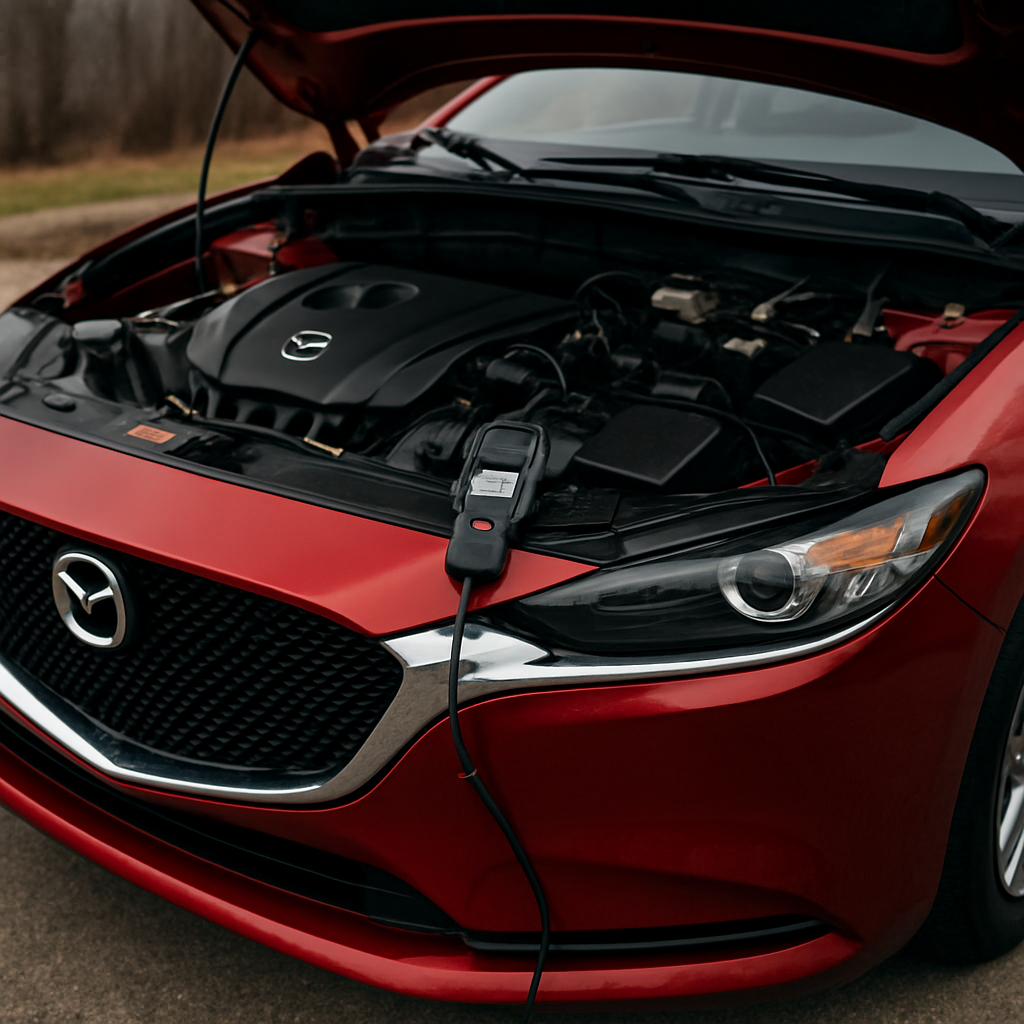
P0455 on a Mazda 3 means the vehicle’s computer has detected a large or gross leak in the evaporative-emissions (EVAP) system. The system captures fuel vapours and routes them towards the engine to be burned rather than allowing them to escape into the atmosphere. The code identifies a leak condition; it does not prove that the fuel cap, or any other particular part, has failed.
A loose or damaged cap is a sensible first check, but the fault could also involve a hose, valve, canister or another seal. Here is what the code can—and cannot—tell you, what you can check safely, and when to seek a diagnosis.
What does P0455 mean on a Mazda 3?
P0455 is a generic OBD-II diagnostic trouble code for a large or gross EVAP-system leak. The vehicle’s computer has detected that the system is not sealing as expected during its checks. A general P0455 explanation from O’Reilly Auto Parts describes the code as a large EVAP leak; it also distinguishes it from P0456, which describes a small leak in general code terminology.
That distinction does not reveal the leak’s location or identify a failed component on your Mazda. In particular, P0455 is not confirmation that the fuel cap is faulty, even though the cap is a common first thing to inspect. Nor does the code alone prove that liquid fuel is leaking: it indicates an EVAP-system leak condition, which concerns fuel vapours.
Common causes and how a P0455 leak is diagnosed
A loose, missing or worn fuel cap is a common possible cause, so check that first. Other possibilities include a cracked or disconnected vapour hose, a vent valve that is not closing properly, a purge-system fault, a damaged charcoal canister, or a leak or sealing problem at the tank or filler neck. These are possibilities, not confirmed Mazda 3 failure patterns; the code alone cannot determine which one applies.
Checks you can make safely
- Make sure the fuel cap is present and correctly tightened.
- Look for obvious damage to the cap or its sealing surface.
- If you can see EVAP hoses without lifting the car or opening the fuel system, look for a visibly disconnected or damaged hose.
If these checks do not resolve the issue, avoid replacing valves, the canister, sensors or the tank based on the code alone. Clearing the code or fitting a new cap without confirming the cause may not fix the fault. A technician can assess the EVAP system as a whole, including the cap, hoses, purge and vent components, canister, filler neck and seals.
Because EVAP leaks can be difficult to see, a technician may use a low-pressure smoke test to locate where vapour is escaping. This is a common diagnostic approach described in AutoLine Pro’s P0455 troubleshooting guidance. Leave system testing and repairs to someone with suitable equipment; do not use flames, high-pressure air or improvised methods to search for a fuel-vapour leak.
For a broader explanation of testing and repair considerations, see our guide to diagnosing an EVAP leak and understanding repair costs.
Can you drive a Mazda 3 with P0455?
P0455 alone does not establish that the engine has an immediate performance problem. One general-code source describes the fault as not immediately critical. However, that is not a guarantee that every Mazda 3 with the code is safe to drive. The code does not tell you exactly where the leak is or what condition the affected part is in.
The known concern is that fuel vapours may escape and the emissions system is not functioning as intended. Arrange a diagnosis rather than ignoring the check-engine light. If you notice a strong fuel smell, visible liquid-fuel leakage or another concerning symptom, stop in a safe place and seek prompt professional assistance. An EVAP code by itself is not proof of a liquid-fuel leak, but a smell or visible leak warrants attention.
How much does it cost to fix P0455?
There is no verified Mazda 3 repair-price range in the available research, so a reliable dollar estimate cannot be given from the code alone. The cost depends on what testing finds: a cap, hose, valve, canister, seal or another part may be involved, and each repair can require a different amount of parts and labour.
Ask a repairer for an itemised estimate that separates diagnostic testing from parts and labour. That way, you can see which fault was identified and what work is being proposed, rather than assuming a cap replacement will necessarily solve the issue.
Does P0455 mean something different by Mazda 3 year?
The general meaning of P0455 is a large or gross EVAP leak. The available evidence does not establish a different basic interpretation—or a particular year-specific failure pattern—for the 2007, 2008, 2009, 2010, 2013 or 2014 Mazda 3.
The exact fault, component access and appropriate diagnostic procedure may depend on the vehicle’s year and configuration. Confirm details against your Mazda’s exact vehicle information and appropriate service data. The limited material available for a 2007 Mazda and general Mazda owner discussions does not support a year-by-year comparison.
P0441 vs. P0455 on a Mazda 3
P0455 describes a large or gross EVAP leak. P0441 is described in general code references as an improper purge-flow code. They are different diagnostic descriptions, not diagnoses of specific failed parts.
If both codes appear, consider the complete scan results and have the system tested. Neither code, alone or together, proves that a particular cap, valve or other component needs replacement.
Is P0455 a permanent code?
The available research does not establish whether P0455 will be reported as a permanent diagnostic trouble code for a particular Mazda 3 model year, or what conditions would clear it. Do not treat a warning light going out, a fault remaining stored, and a permanent DTC as the same thing. If you need to know the status, ask for a check with a scan tool that can report code status, or consult authoritative OBD-II guidance for your vehicle.