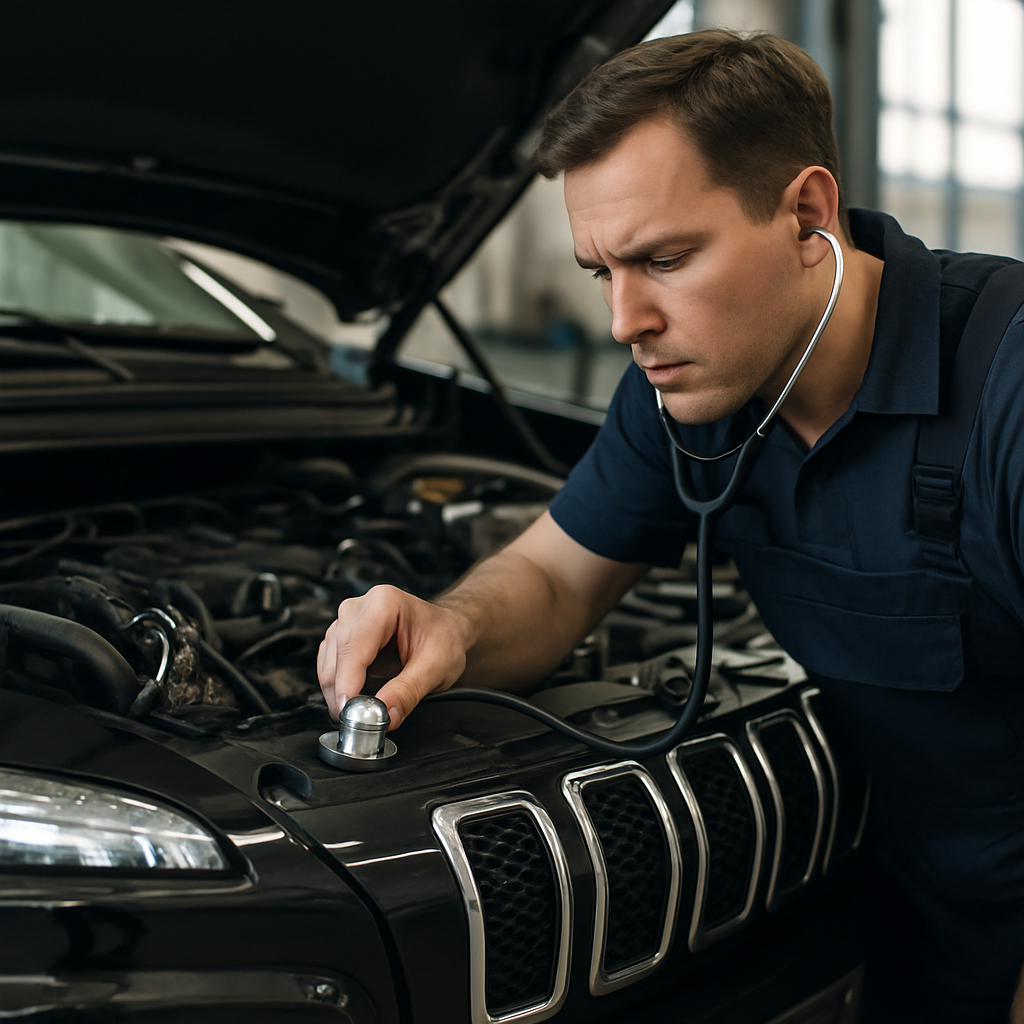
A knocking or clunking noise when your Jeep Cherokee accelerates can come from the engine, engine mounts, driveline, transmission, or wheel and suspension area. The sound alone cannot confirm which part is at fault. A single clunk as power is applied is different from a repeated engine-like knock or ping, so note when it happens and have a persistent or worsening noise checked rather than guessing at a repair.
Likely causes of a clunk when accelerating from a stop
A single clunk as the vehicle begins moving or as the load changes may point a technician toward a mount or driveline component, but it is only a clue. A repeated noise that changes with engine speed or vehicle speed needs a different investigation. Neither pattern identifies a failed part on its own.
- Engine or transmission mounts: Worn or damaged mounts can allow more movement of the powertrain than intended, which may produce a clunk under acceleration. A repair reference describes this as one possible cause of acceleration clunks. There is also a report from one 2015 Jeep Cherokee owner describing broken engine mounts and thumping during acceleration; that individual complaint is an anecdote, not evidence of a problem rate or a defect across Cherokee model years. See the general clunking-noise causes and the reported 2015 Cherokee complaint.
- CV joint: A worn or damaged CV joint can cause a clunk during acceleration or deceleration. A technician will need to inspect the joint and related driveline components to determine whether this is the source.
- Driveshaft U-joint: On applicable rear-wheel-drive or four-wheel-drive vehicles, a worn or damaged driveshaft U-joint is another possible source of a clunk. The relevant driveline layout matters, so this possibility does not apply equally to every Cherokee.
- Wheel or suspension components: If the sound seems to come from near a wheel, a ball joint or another steering or suspension component may need inspection. A wheel-area clunk is not proof that a ball joint has failed; however, steering and suspension parts can affect vehicle control. Arrange prompt professional inspection if you notice looseness, changed handling, or other control issues. A wheel-noise inspection reference describes ball joints as one possible source of a clunk from the wheels.
When describing a low-speed clunk or a single clunk from a stop, tell the technician whether it occurs only as you accelerate or also over bumps or while turning. Note whether it seems to come from the front, rear, or underneath, and whether it is a one-off or repeated. These details help guide an inspection; they are not a substitute for one. Do not crawl beneath the vehicle or raise it to inspect joints or mounts unless you have the proper equipment and expertise.
Is it engine knocking or a clunk from underneath?
The word “knocking” can describe more than one sound. An engine-origin knock or ping may be repeated and seem to come from the engine, while a mechanical clunk may occur as load shifts through a mount or driveline component. Those descriptions can help a technician narrow the investigation, but sound alone is not a reliable way to identify the failed part or distinguish every engine noise from a mechanical one.
Engine-origin knocking or pinging should be taken seriously and diagnosed promptly. The available information does not establish a particular cause for a Jeep Cherokee, so do not assume it is due to fuel octane, carbon deposits, or spark plugs. Avoid accelerating hard to reproduce the noise.
If the knock is loud or worsening, the vehicle loses power or operates abnormally, or an oil-pressure warning appears, stop in a safe place and seek professional assistance. These are conservative reasons to escalate, not a diagnosis or a guarantee about whether the vehicle is safe to continue driving. For guidance on what to do if the oil-pressure warning appears, see our related guide.
Could the transmission be causing the noise?
A clunk by itself does not establish that the transmission is failing. Abnormal or erratic shifting, or a clanking noise alongside other drivability changes, may justify a transmission inspection, but these clues do not confirm a transmission fault. Mounts and other driveline parts can also make noises during acceleration, so a technician should distinguish between them before parts are replaced.
Some supplied discussions of humming and related transmission symptoms concern the Grand Cherokee, not the Cherokee. They can suggest general inspection considerations, but they are not a validated transmission test for a Cherokee. For example, a Grand Cherokee noise discussion mentions clanking alongside other possible transmission symptoms; it does not establish a Cherokee-specific failure pattern. If the clunk comes with shifting problems or other changes in how the vehicle drives, arrange a qualified diagnostic inspection.
Is your vehicle a Cherokee or a Grand Cherokee?
Jeep Cherokee and Jeep Grand Cherokee are different model names. A report or diagnosis for a particular Grand Cherokee year, engine, or drivetrain should not be transferred to a Cherokee as though the vehicles were identical. The same general mechanical possibilities may be considered, but diagnosis depends on the exact model, year, engine, drivetrain, and symptoms.
What should you note before arranging an inspection?
Without attempting an under-vehicle inspection, record what you can observe safely. This can help a technician reproduce the conditions and decide what to check:
- Whether the sound seems to come from the front, rear, or underneath.
- Whether it is a single clunk or a repeated knock, and whether its rhythm changes with engine or vehicle speed.
- Whether it occurs only under acceleration, from a stop, or also over bumps or while turning.
- Whether you notice vibration, altered handling, abnormal shifting, loss of power, or warning lights.
- The vehicle’s exact model year, engine, and drivetrain, if known.
Arrange an inspection for a clunk that persists or gets worse. Seek prompt professional help if steering or handling changes, or if a serious engine-like knock or other abnormal operation develops. Do not continue hard acceleration simply to test the sound.
Can you name the most common Jeep Cherokee problem?
Not from the evidence available here. It does not provide representative, model-year-separated data that would support naming one most common problem across Cherokee generations. A single owner complaint cannot establish prevalence, and Grand Cherokee reports are not evidence of Cherokee-wide reliability. Problems and reported symptoms can vary by year, so this article does not rank a particular fault as the most common.
Pingback: Common VW Golf Diesel DPF Problems: Symptoms and Warning Lights - Premier Motoring Blog