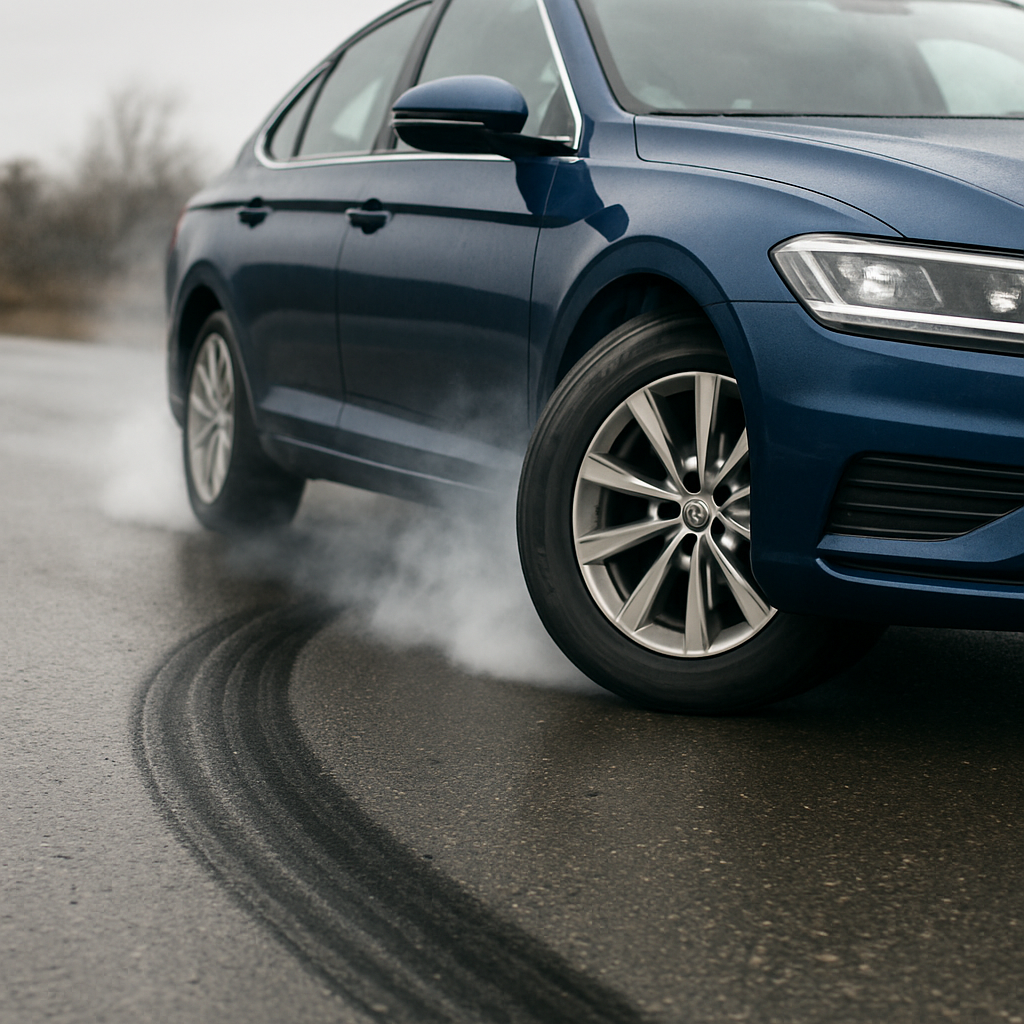
If your front wheels lock during braking, the tyres stop rotating while the car is still moving and slide over the road instead of rolling normally. Because the front tyres also provide steering grip, a locked front tyre may reduce your ability to direct the car. The degree of control loss and what happens next depend on the circumstances; lock-up does not prove that steering response is completely gone or that the car will follow a particular path.
What front-wheel lock-up means—and what happens next
A wheel locks when the braking force acting on it exceeds the grip available between its tyre and the road. In that state, the tyre slides rather than continuing to roll. The basic explanation of brake lock-up describes the same relationship between brake force and tyre grip, and notes that slick or icy roads can reduce the grip available.
When a front tyre is sliding, it has less available grip for steering than it would while rolling normally. That can compromise directional control, but it does not mean the steering must stop responding altogether. The evidence available here does not establish a guaranteed vehicle path, a particular stopping distance, or a specific tyre-damage outcome.
Wheel lock is a traction event: it describes what is happening between a tyre and the road. By itself, it does not identify a failed brake component or confirm that any particular part needs replacing.
Why a tyre or front wheel can lock under braking
The general cause is that braking demand at a wheel exceeds the grip its tyre can find on the road. A slick or icy surface is one example: with less available grip, a wheel can reach that limit sooner under braking. The supplied evidence does not establish why one particular front wheel might lock before the other or identify a specific mechanical fault as the cause.
If only one front wheel appears to lock, that observation alone is not enough to diagnose a collapsed brake hose, seized caliper, adjustment problem, uneven wear, or any other component fault. Those are vehicle-specific possibilities that require proper assessment, not conclusions supported by the general friction explanation. If lock-up recurs or affects one side, arrange a qualified inspection rather than guessing at a repair.
What if a wheel seems to lock while driving, not while braking?
The explanation above applies to braking-related lock-up. If a wheel appears to stop turning or drag when you are not braking, the supplied research does not establish the cause or whether it is safe to continue driving. Do not assume that it is the same event as a tyre locking under braking; seek qualified assessment rather than relying on this general explanation as a diagnosis.
What should you do if wheels lock during braking?
The available sources do not provide an authoritative, vehicle-independent emergency procedure, including specific pedal or steering instructions or separate steps for vehicles with and without ABS. For that reason, this article does not prescribe a manoeuvre. Do not deliberately try to make the wheels lock on a public road. If lock-up happens repeatedly or appears to affect one wheel, have the braking system assessed by a qualified professional.
If your concern also involves an ABS or traction-control warning, see our guide to what ABS and traction-control warning lights mean. A warning light alone does not establish why a wheel locked.
Can you tell from how the brakes feel?
The supplied evidence defines wheel lock mechanically, but does not establish reliable sensations, sounds, pedal feedback, or warning indications that a driver will experience. Those cues should not be treated here as a dependable checklist for confirming lock-up. A wheel stopping its rotation while the vehicle is still moving is the defining event; a sensation alone does not confirm its cause.
Why can an F1 wheel lock under braking?
The general friction principle is the same: a wheel can lock if braking demand exceeds the grip available between the tyre and the track. A technical tuning article says threshold braking is usually preferable in its context, but that is not advice to induce lock-up on public roads. The supplied sources are not F1-specific, so they do not establish how F1 braking systems, driver technique, car set-up, regulations, or race consequences affect a particular lock-up.